Sewing Machine Thread Shredding: Trace Fraying to the Needle Eye or a Rough Thread Path
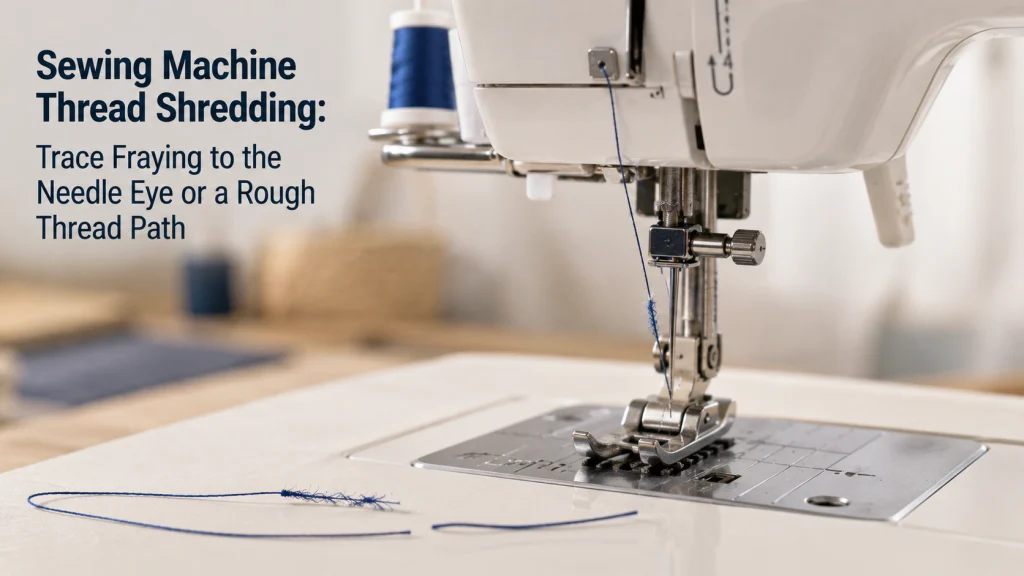
Sewing Machine Thread Shredding

Sewing machine thread shredding is different from a clean upper-thread snap because the thread usually shows progressive abrasion before it finally fails. The useful diagnostic question is where the first fuzz, split filament, or roughened section appears along the upper thread path. Start with a fresh correctly installed needle, verify that the thread moves freely
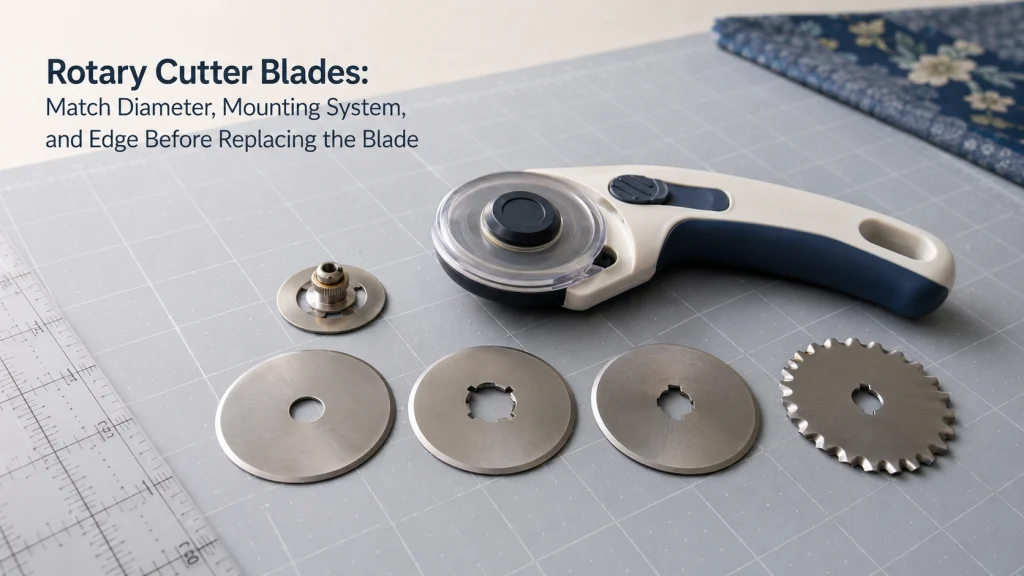
Rotary Cutter Blades: Match Diameter, Mounting System, and Edge Before Replacing the Blade

Rotary Cutter Blades

Rotary cutter blades are not interchangeable simply because the diameter printed on the package matches the blade already in your cutter. A reliable replacement decision starts with the exact cutter model, then checks blade diameter, center mounting geometry, and edge type against manufacturer or exact seller documentation. Straight and specialty edges should be treated as

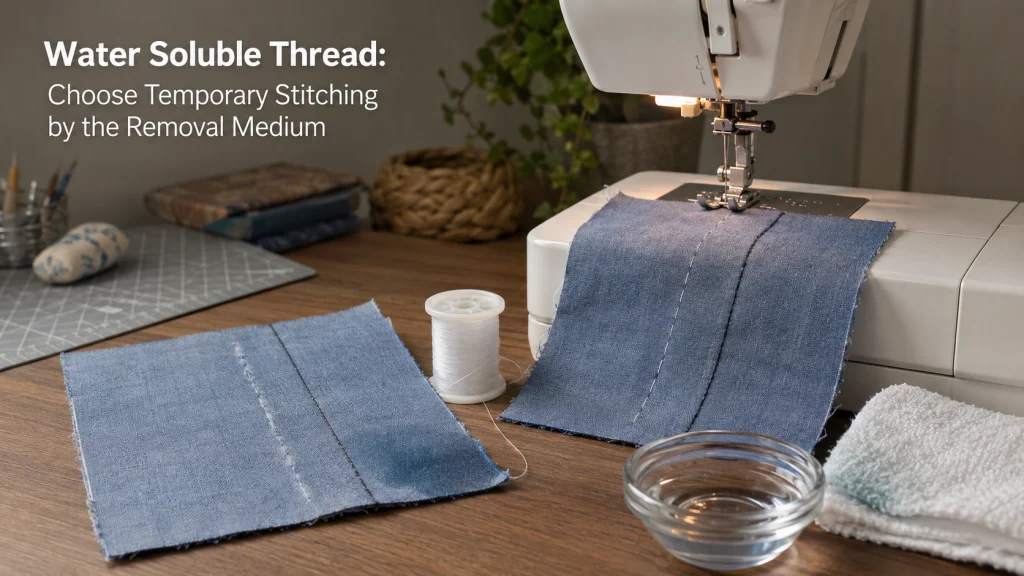
Water Soluble Thread: Choose Temporary Stitching by the Removal Medium

Water Soluble Thread

Water soluble thread is useful when a machine-sewn stitch is meant to hold something temporarily and the finished project can tolerate the method used to remove that thread. The key buying question is not simply whether the spool says water-soluble, because composition labels, removal instructions, handling cautions, and storage requirements can differ by product. Choose

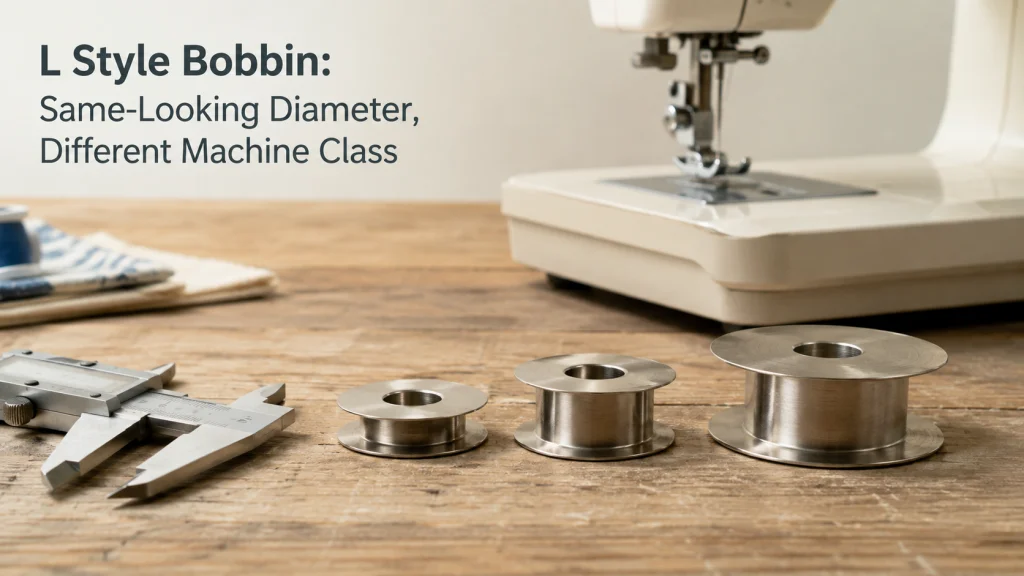
L Style Bobbin: Same-Looking Diameter, Different Machine Class

L Style Bobbin

An L-style bobbin can look deceptively close to a Class 15 bobbin from above, yet the two are not interchangeable simply because their diameters are similar. The reliable way to buy a replacement is to start with the exact machine model, then confirm the bobbin class or manufacturer part number before using dimensions as supporting

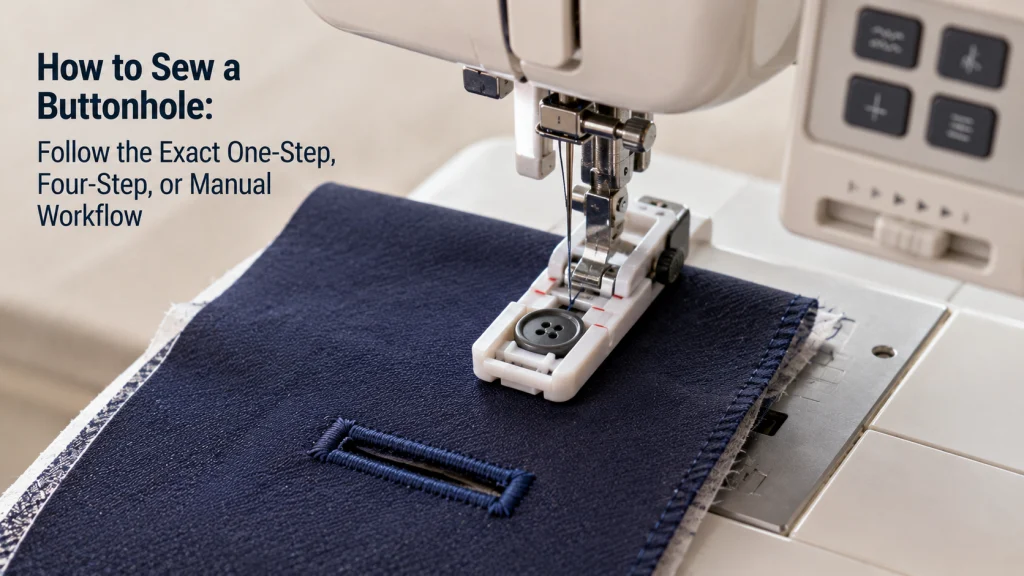
How to Sew a Buttonhole: Follow the Exact One-Step, Four-Step, or Manual Workflow

How To Sew A Buttonhole

How to sew a buttonhole depends first on the buttonhole system built into the exact sewing machine. A one-step system may use a button-guided foot and lever, a four-step system requires deliberate stage changes, and some machines document a more manual zigzag sequence. The safest workflow is to identify that system in the manual, prepare

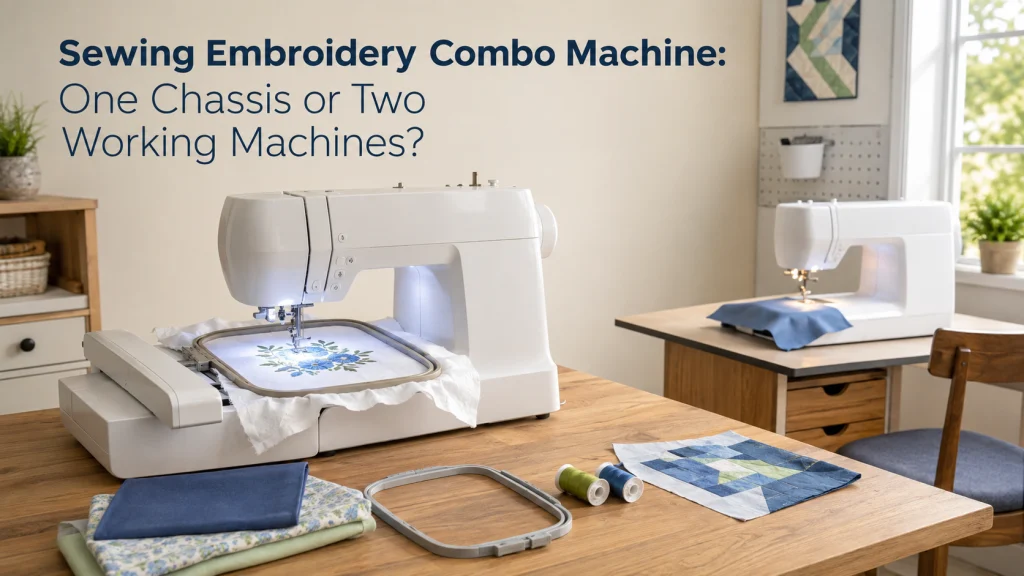
Sewing Embroidery Combo Machine: One Chassis or Two Working Machines?

Sewing Embroidery Combo Machine

A sewing embroidery combo machine can save table and storage space, but it still gives you only one working chassis. The better setup depends on whether sewing and embroidery need to happen independently, the largest embroidery field your projects require, and how often you are willing to change the machine between roles. A combo can

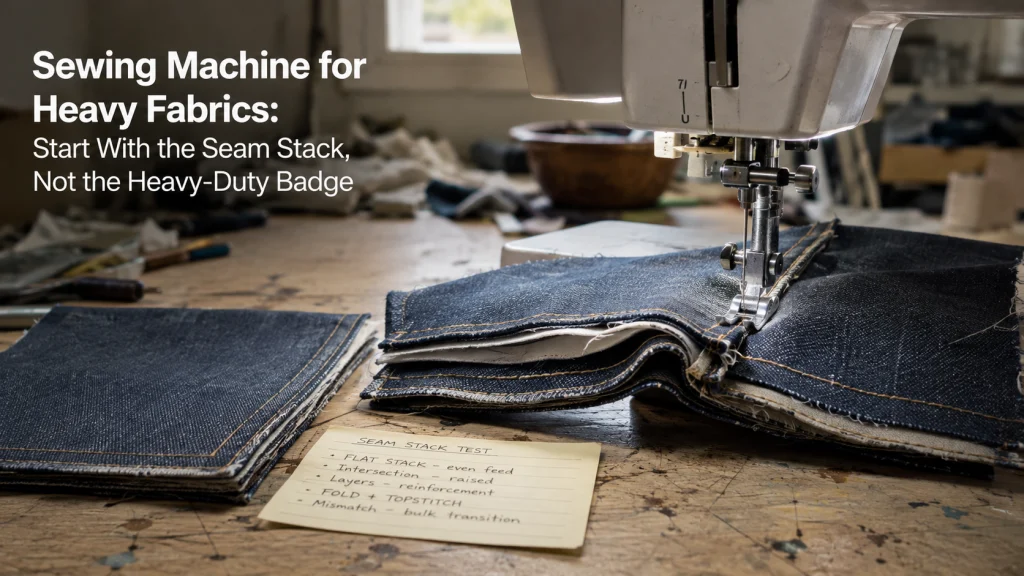
Sewing Machine for Heavy Fabrics: Start With the Seam Stack, Not the Heavy-Duty Badge

Sewing Machine For Heavy Fabrics

A sewing machine for heavy fabrics should be chosen around the hardest material stack you expect to sew repeatedly, not around a heavy-duty label alone. Fabric type matters, but layer count, compressed bulk, seam intersections, reinforcement, feed behavior, and workload can change the demand far more than a single fabric name suggests. Manufacturer specifications can

Stitch Applications vs Built In Stitches: Reconcile the Two Counts

Stitch Applications Vs Built In Stitches

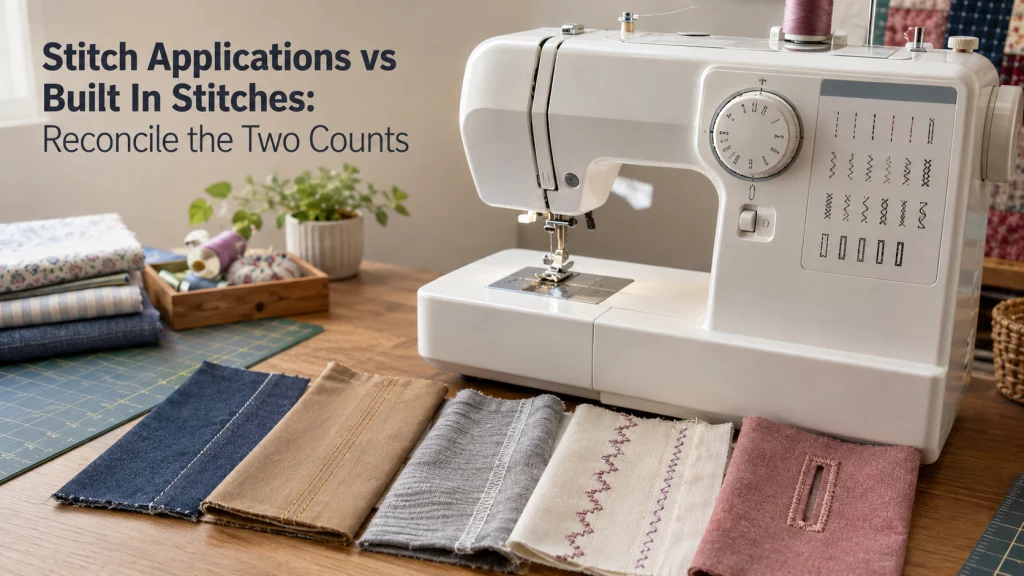
A sewing machine can publish a large stitch-application number and a much smaller built-in-stitch number without either figure being a typo. The two counts may measure different things, so the useful comparison is not the largest number on the feature sheet but what the manufacturer says each number includes. By tracing the product page, stitch

Why Does My Bobbin Thread Keep Breaking? Check Winding, Seating and Lower-Path Damage

Why Does My Bobbin Thread Keep Breaking

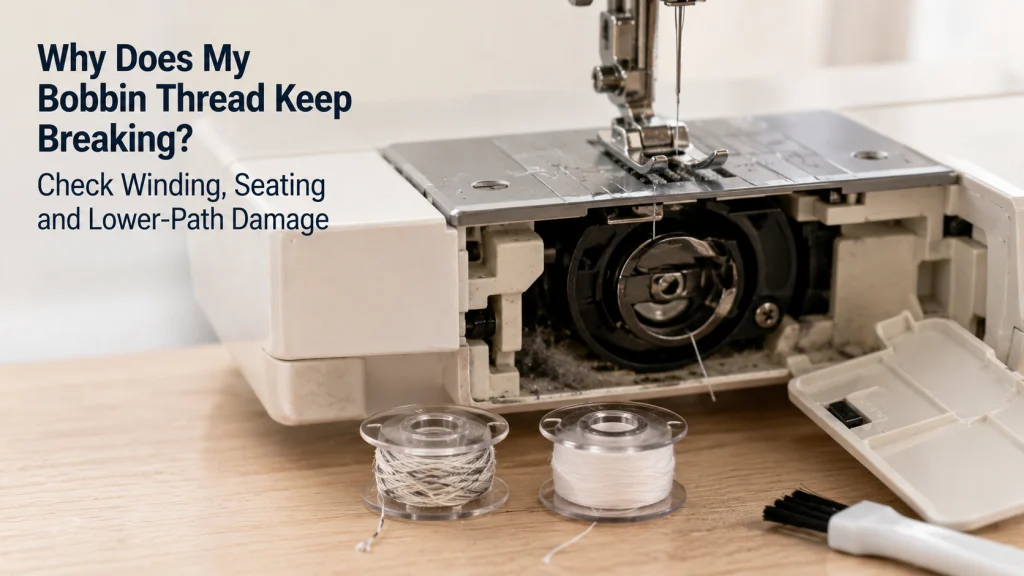
Repeated bobbin-thread breakage is best diagnosed from the lower thread path first, not by immediately changing upper tension. The useful sequence is to prove which thread snapped, inspect the installed bobbin and remaining tail, confirm winding quality and exact bobbin type, verify insertion, and clean only the areas the machine manual makes owner-accessible. A scratched,

Rotary Cutter Sizes: Match Blade Diameter to the Cut Before Choosing the Handle

Rotary Cutter Blades

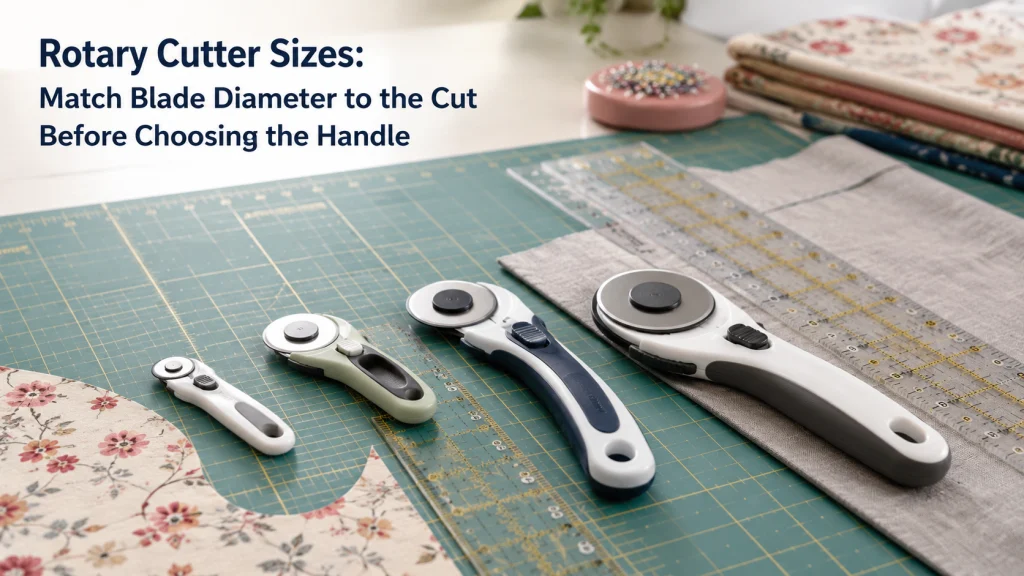
Rotary cutter sizes change how easily a blade follows curves, crosses long straight paths, and works within the material limits documented for a particular cutter. Bigger is not automatically better: smaller diameters suit tighter geometry, while larger diameters are more at home on broad, continuous cuts. For many sewing tasks, 45mm sits in the middle

Does Sewing Thread Go Bad? Judge Storage and Condition, Not Age Alone

Does Sewing Thread Go Bad

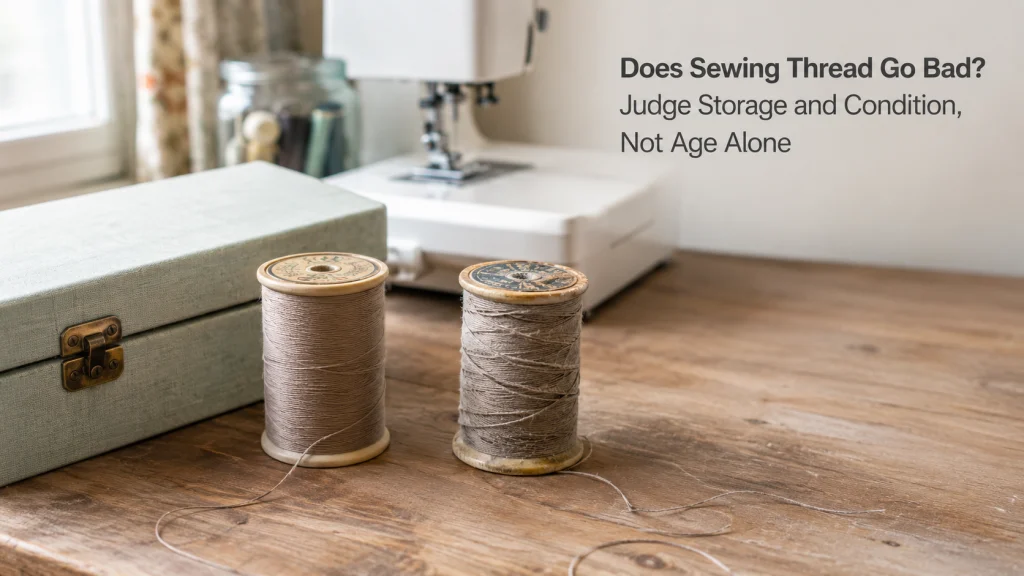
Old thread does not become unusable simply because the spool has been sitting for a long time. Storage history, fiber or product identity, exposure to light, heat, humidity, dirt, chemicals, and the thread’s present condition are more useful evidence than age alone. A spool with a known clean storage history deserves a different decision from

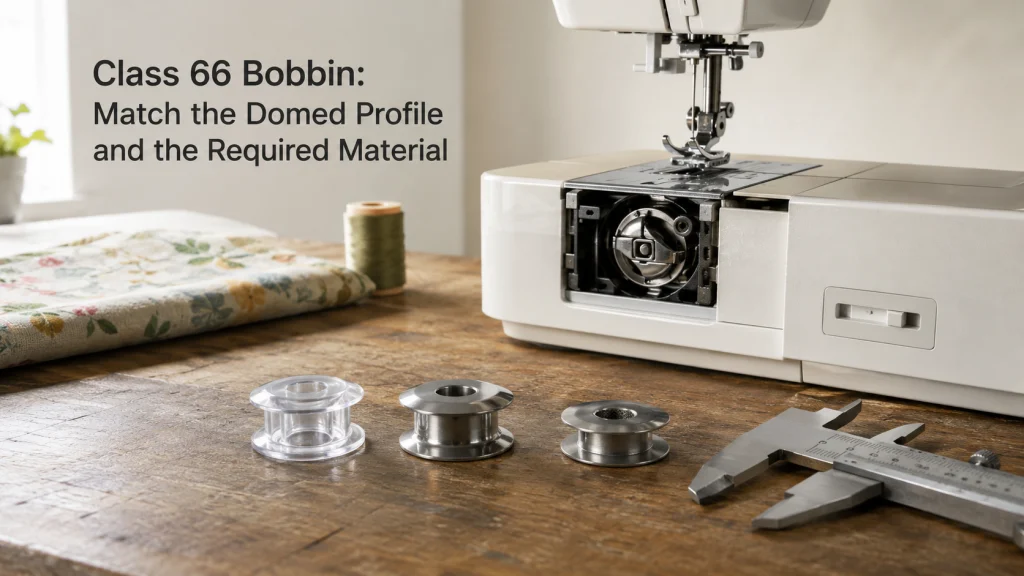
Class 66 Bobbin: Match the Domed Profile and the Required Material

Class 66 Bobbin

A Class 66 bobbin is identified by more than a familiar diameter or a curved silhouette. The exact machine must first call for Class 66, and the replacement must then match the material the machine requires, because transparent and metal Class 66 versions are not automatically interchangeable. Manufacturer documentation is the strongest fit evidence when

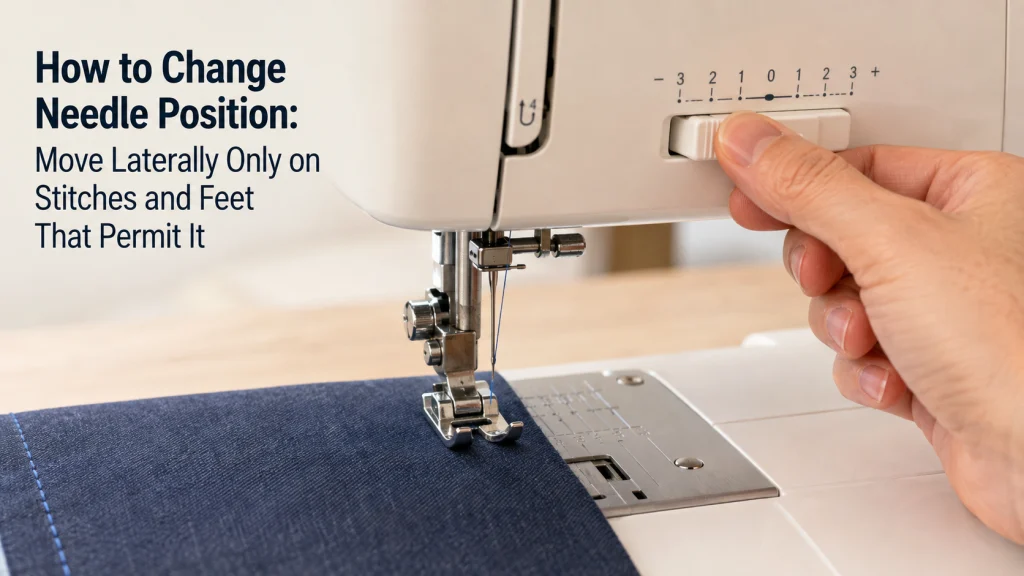
How to Change Needle Position: Move Laterally Only on Stitches and Feet That Permit It

How To Change Needle Position

Needle position on a domestic sewing machine is a stitch setting only when the selected stitch and installed hardware permit lateral movement. Some machines use stitch-width controls to move a straight-stitch needle, while others use dedicated left/right controls or on-screen settings. The safe sequence is to confirm the stitch, identify the exact control in the

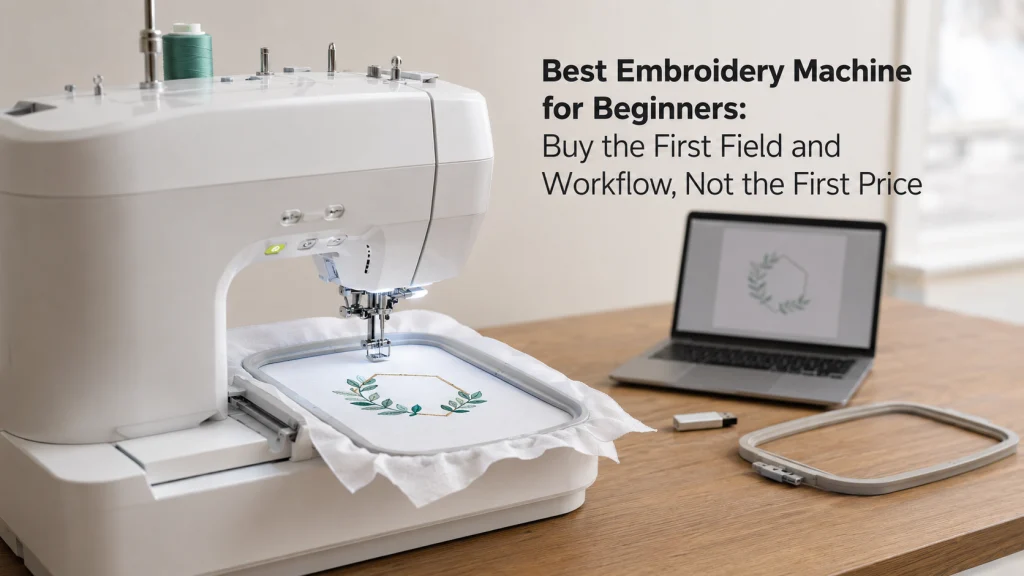
Best Embroidery Machine for Beginners: Buy the First Field and Workflow, Not the First Price

Best Embroidery Machine For Beginners

The best embroidery machine for beginners is not automatically the cheapest machine or the one with the longest feature list. A first machine should match the embroidery field your planned designs actually need, the choice between embroidery-only and sewing-plus-embroidery, the way you expect to transfer files, and the support you can realistically use. A 4

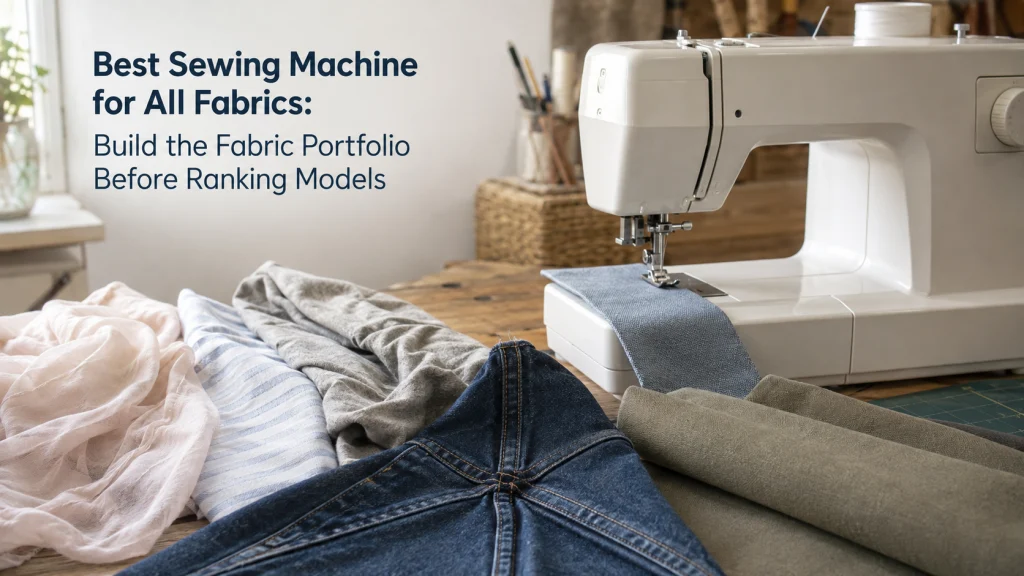
Best Sewing Machine for All Fabrics: Build the Fabric Portfolio Before Ranking Models

Best Sewing Machine For All Fabrics

A sewing machine for all fabrics is only a useful idea when “all” means the fabrics you actually sew, not every material a manufacturer can name. The strongest general-purpose choice is the machine that covers your recurring lightweight fabrics, ordinary wovens, knits, denim, and bulky seam conditions without making the common work awkward. The deciding

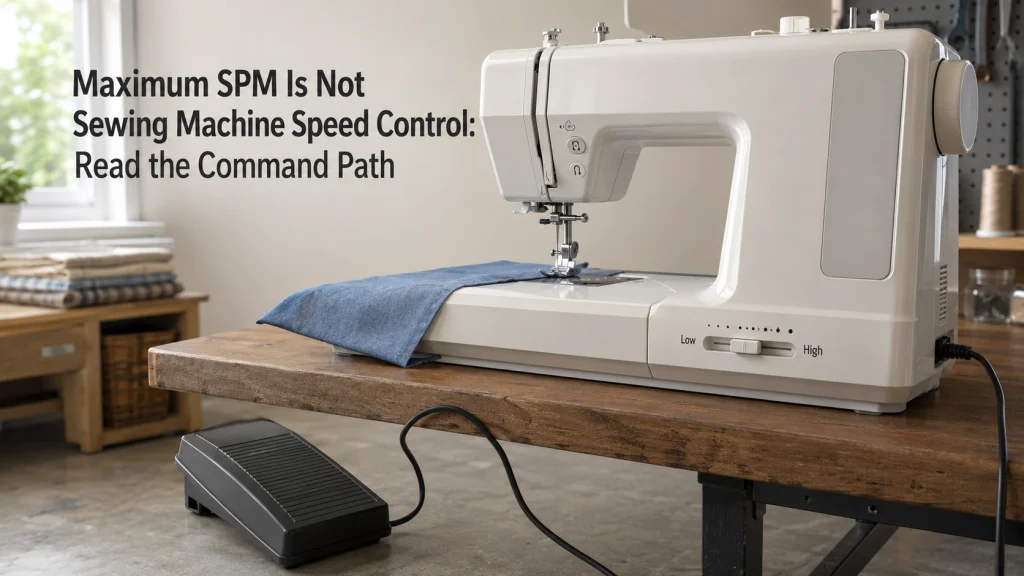
Maximum SPM Is Not Sewing Machine Speed Control: Read the Command Path

Sewing Machine Speed Control

Sewing machine speed control is not the same thing as a machine’s maximum stitches-per-minute rating. A useful pre-purchase check separates four things: the rated ceiling, any selectable speed limit, the command method, and the machine’s actual response at low speed. Manufacturer documentation can usually establish the first three, while smooth starts, gradual acceleration, and predictable