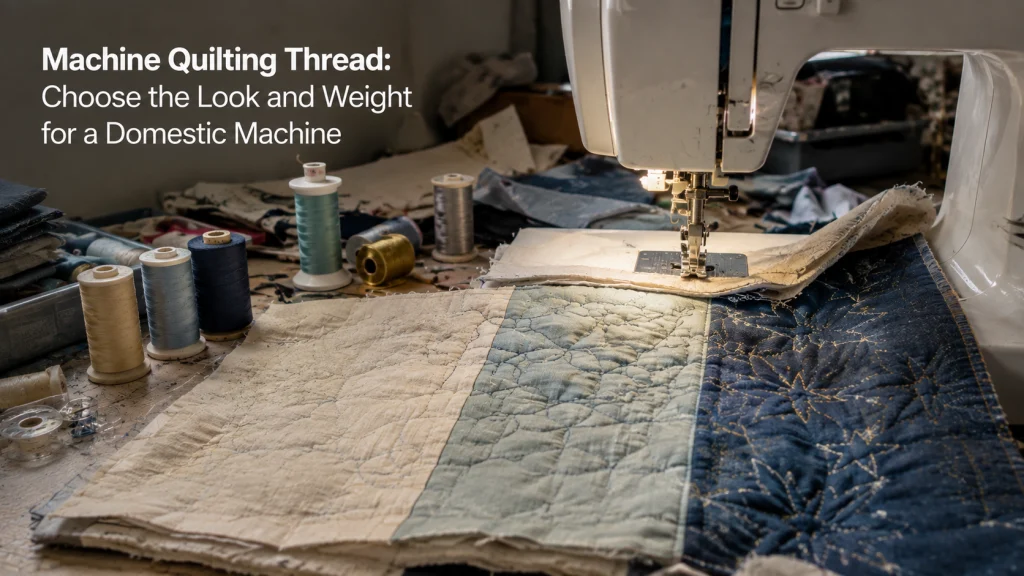
Machine Quilting Thread: Choose the Look and Weight for a Domestic Machine
Machine Quilting Thread

Machine quilting thread should be chosen by the look you want on the quilt, the fiber and size that create that look, and the limits of the domestic machine doing the stitching. Fine thread can blend into the surface, medium thread can make the quilting more visible, and decorative fibers can make the stitch line
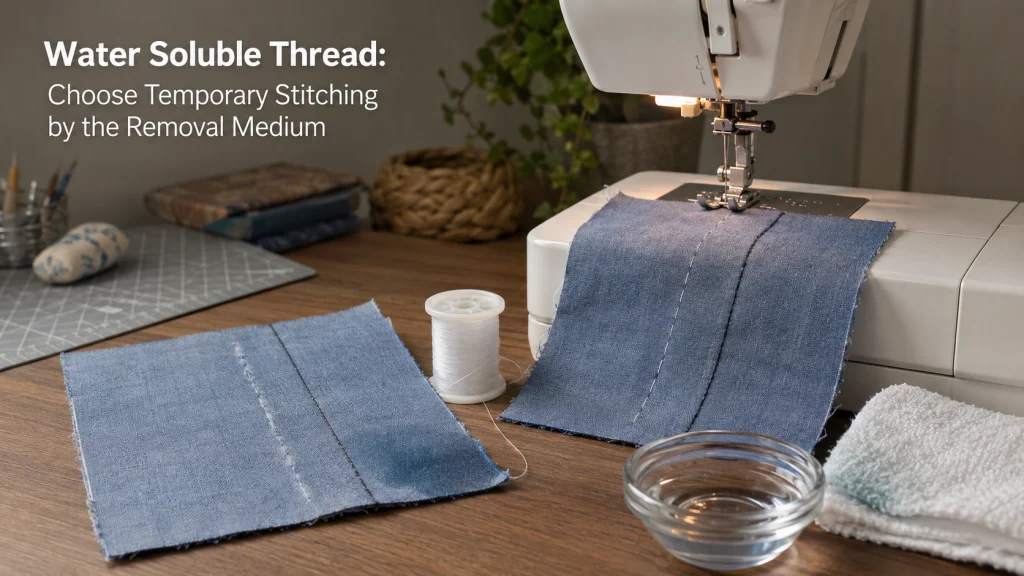
Water Soluble Thread: Choose Temporary Stitching by the Removal Medium

Water Soluble Thread

Water soluble thread is useful when a machine-sewn stitch is meant to hold something temporarily and the finished project can tolerate the method used to remove that thread. The key buying question is not simply whether the spool says water-soluble, because composition labels, removal instructions, handling cautions, and storage requirements can differ by product. Choose

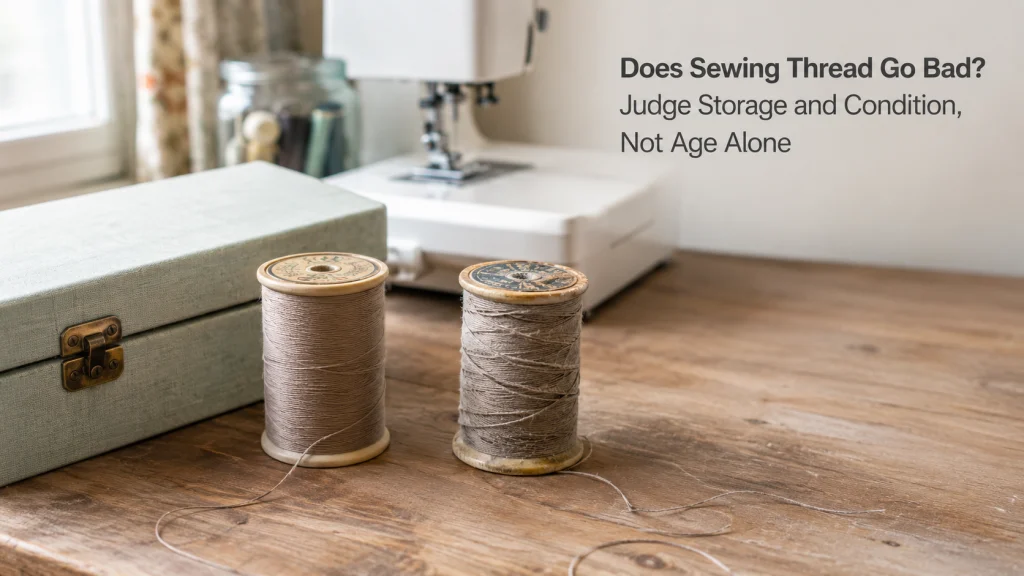
Does Sewing Thread Go Bad? Judge Storage and Condition, Not Age Alone

Does Sewing Thread Go Bad

Old thread does not become unusable simply because the spool has been sitting for a long time. Storage history, fiber or product identity, exposure to light, heat, humidity, dirt, chemicals, and the thread’s present condition are more useful evidence than age alone. A spool with a known clean storage history deserves a different decision from

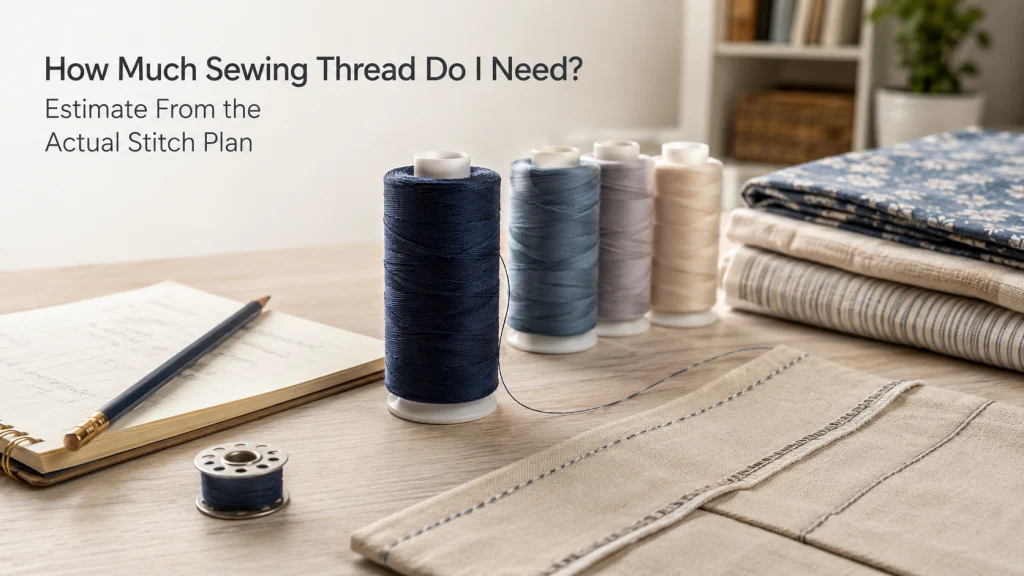
How Much Sewing Thread Do I Need? Estimate From the Actual Stitch Plan

How Much Sewing Thread Do I Need

Two projects can start with the same amount of fabric and still need very different amounts of sewing thread. Imagine two garments cut from the same yardage: one uses short construction seams with minimal visible stitching, while the other adds multiple panels, long topstitching lines, and repeated visible passes. The fabric amount stays similar, but

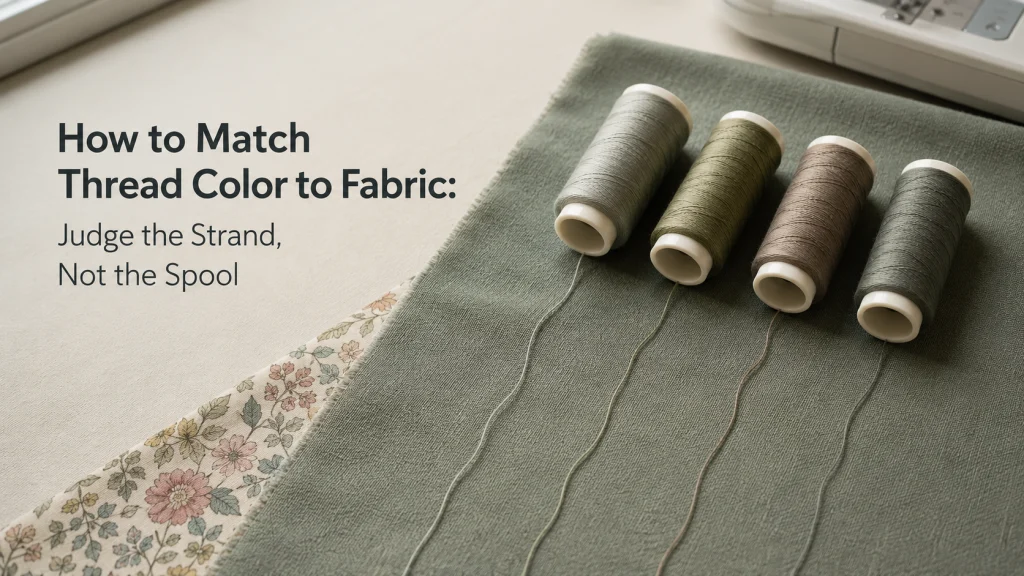
How to Match Thread Color to Fabric: Judge the Strand, Not the Spool

How To Match Thread Color To Fabric

Matching thread color works best when you judge the thread as a single strand against the actual fabric, not as a dense block of color on the spool. First decide whether the stitches should blend into the fabric or show on purpose, then compare a few candidate strands under the light in which the project

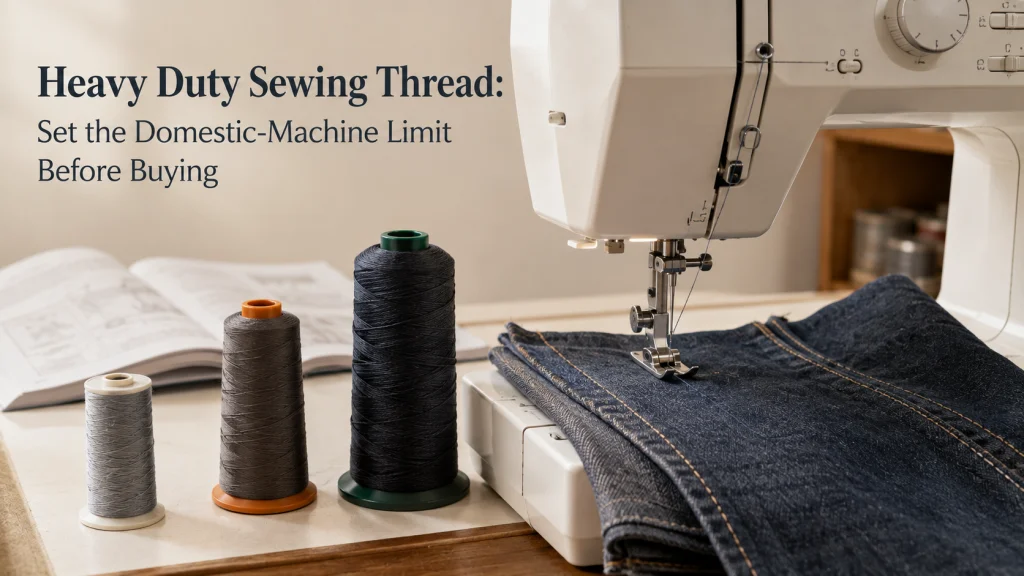
Heavy Duty Sewing Thread: Set the Domestic-Machine Limit Before Buying

Heavy Duty Sewing Thread

Heavy duty sewing thread should be chosen from the seam requirement backward, not from the thickest spool on the shelf. A domestic sewing machine may accept some heavier thread, but the usable range depends on the exact model, thread construction, needle relationship, and whether the thread is used on top or in the bobbin. Industrial

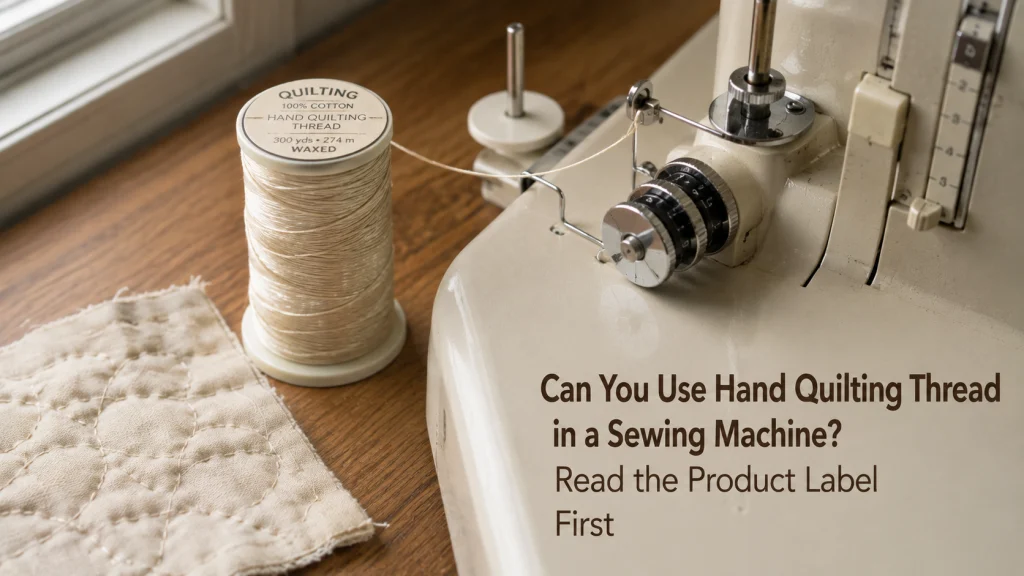
Can You Use Hand Quilting Thread in a Sewing Machine? Read the Product Label First

Can You Use Hand Quilting Thread In A Sewing Machine

Hand quilting thread is not automatically suitable for a domestic sewing machine just because the spool also says quilting. The deciding evidence is the exact product’s intended-use label, any glaze, wax, or coating identified by its maker, and the thread limits published for the exact machine. Some hand-quilting products are specifically made for hand stitching

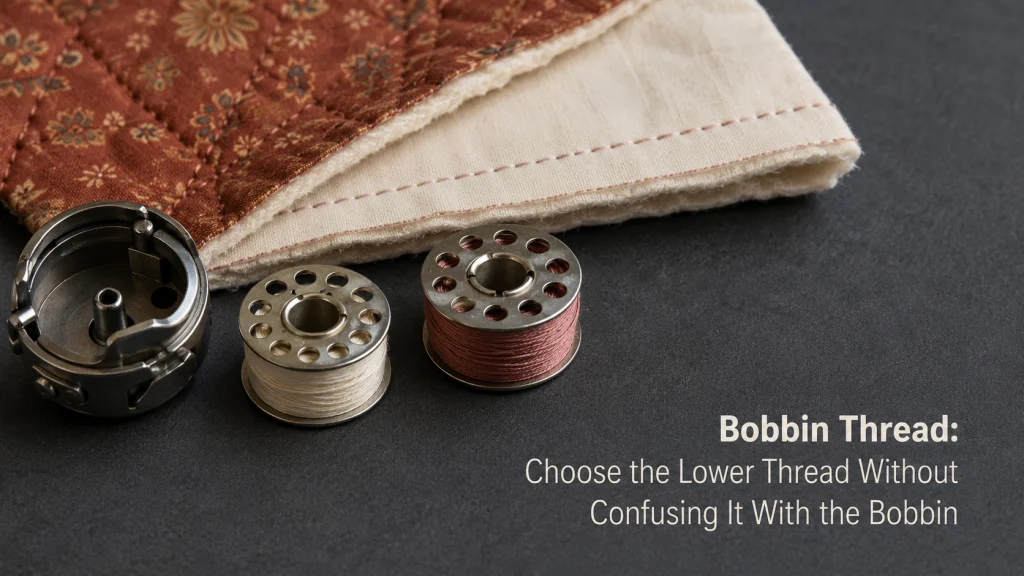
Bobbin Thread: Choose the Lower Thread Without Confusing It With the Bobbin

Bobbin Thread

Bobbin thread is the lower thread carried on a bobbin that already fits the machine. The best choice depends on what the lower side of the stitch should look like, the thread fiber and size the machine can handle, and whether the project benefits from matching or deliberately different top and lower threads. A finer

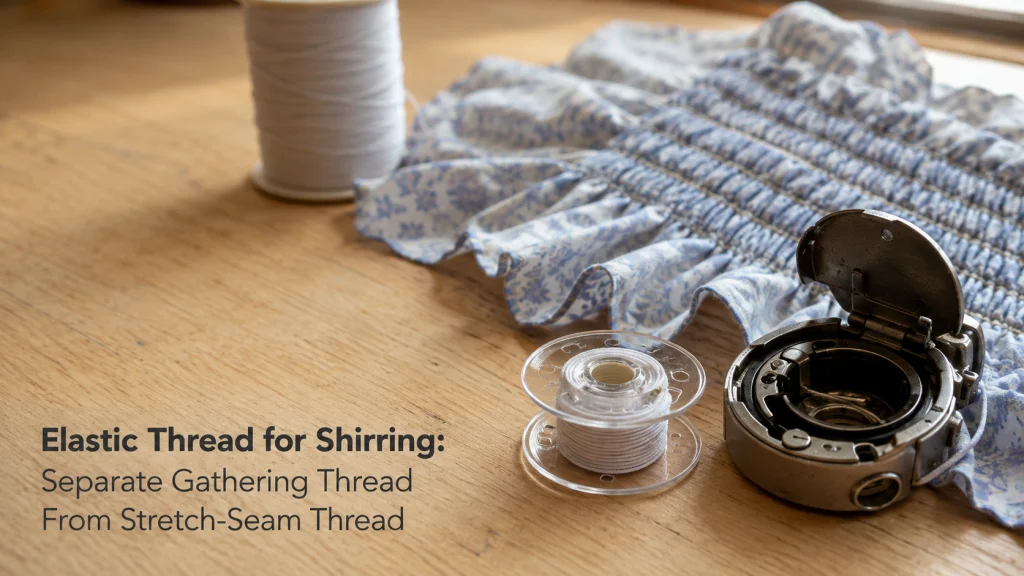
Elastic Thread for Shirring: Separate Gathering Thread From Stretch-Seam Thread

Elastic Thread For Shirring

Elastic thread for shirring is chosen to create gathered elastic rows, not as a generic answer for every seam that needs to stretch. Products that share the word “elastic” can differ in function, fiber, thickness marking, and machine-use instructions. Start with the result you need, then read the exact package or manufacturer directions, including whether

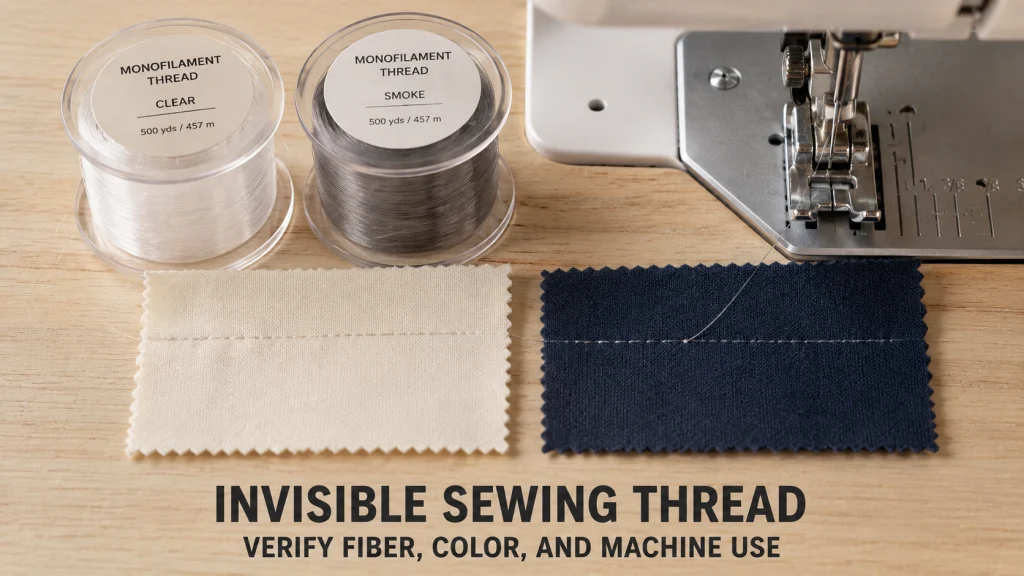
Invisible Sewing Thread: Verify Fiber, Color, and Machine Use

Invisible Sewing Thread

Invisible sewing thread is a visual category, not one standardized fiber. Current manufacturer labels show that monofilament sold for low-visibility machine stitching can be nylon or polyester, with clear and smoke versions used to blend against different backgrounds. Choose by reading the exact fiber, size, color, and intended machine application on the product label or

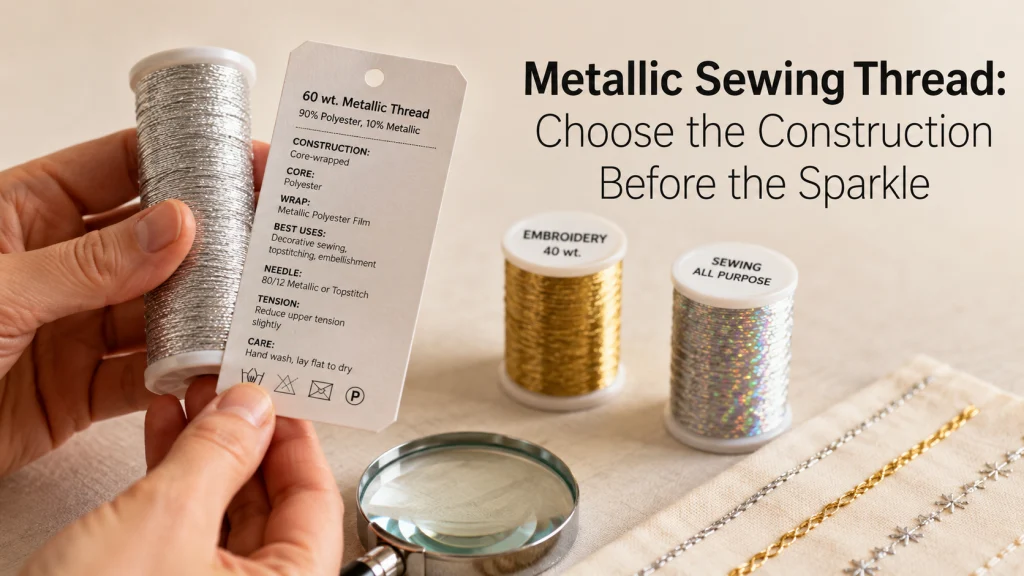
Metallic Sewing Thread: Choose the Construction Before the Sparkle

Metallic Sewing Thread

Metallic sewing thread can add reflective decorative stitching, but shine alone does not prove that a spool belongs in an ordinary domestic sewing machine. Start with the manufacturer’s intended use, then read the thread construction, size label, and application scope before comparing color or finish. A product made for machine embroidery may sit beside a

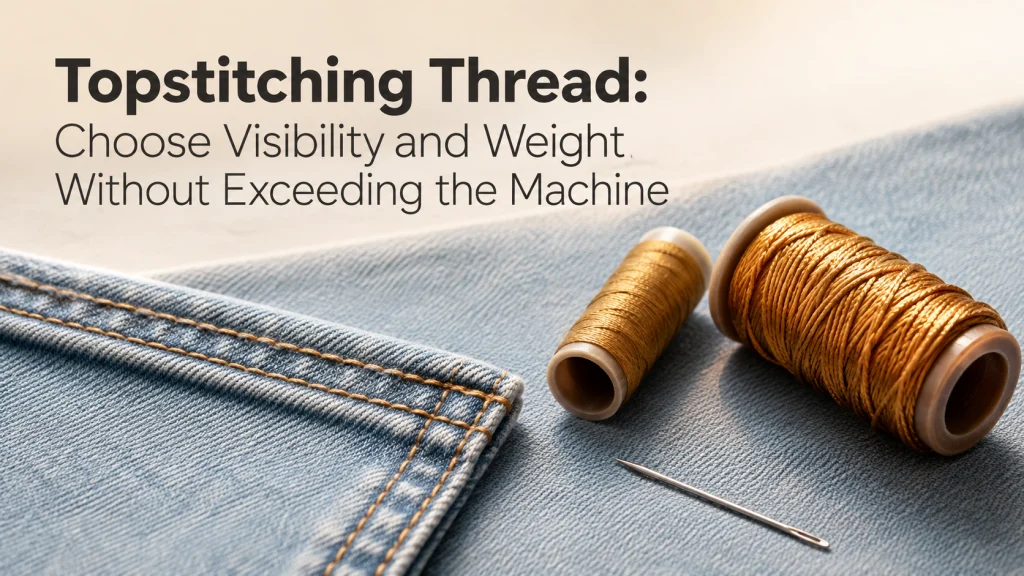
Topstitching Thread: Choose Visibility and Weight Without Exceeding the Machine

Topstitching Thread

Topstitching thread is chosen first for how visible the finished stitch should look, then for fiber, size, finish, and whether the sewing machine supports that thread class. A thicker spool is not automatically a better topstitching choice, and a heavy-duty or bonded thread may cross into a different machine requirement entirely. Product labels and model

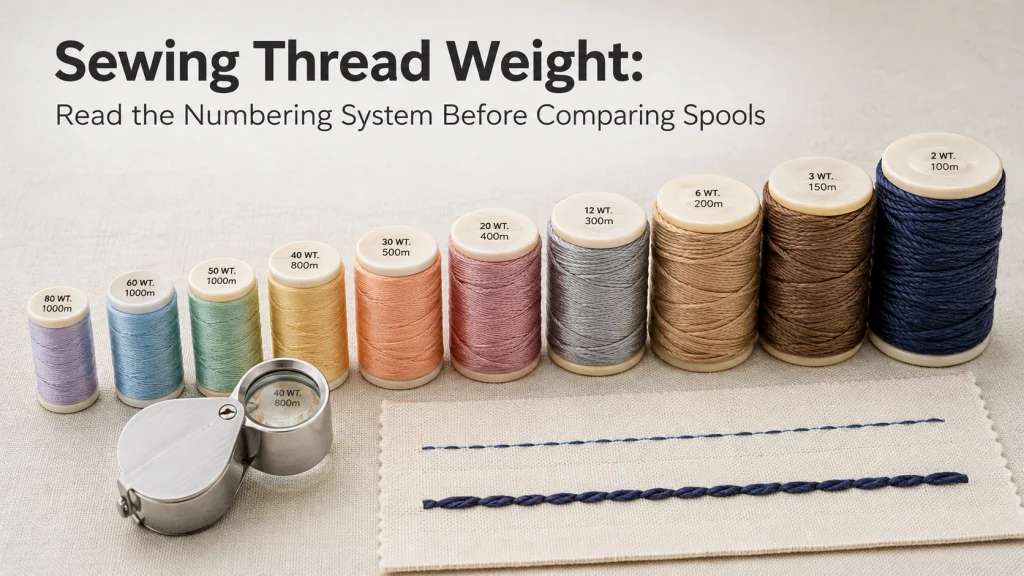
Sewing Thread Weight: Read the Numbering System Before Comparing Spools

Sewing Thread Weight

Thread-size labels are useful only after you know which numbering system they belong to. A 40 wt label, No. 40 label, and Tex 40 label do not describe thread size in the same way, even though the printed number is identical. The practical comparison is to identify the system, note fiber and ply construction, then

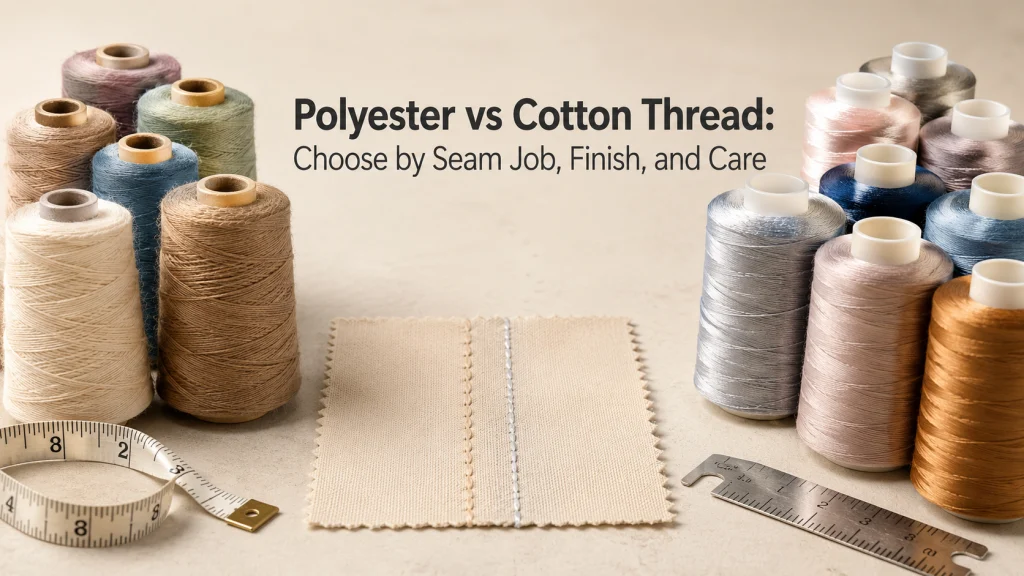
Polyester vs Cotton Thread: Choose by Seam Job, Finish, and Care

Polyester Vs Cotton Thread

Choosing between cotton and polyester thread starts with the seam job, not a rule that thread fiber must always match fabric fiber. Fiber affects useful properties, but construction, size, finish, movement, appearance, care, and the way the finished item will be used can change the better choice. The practical comparison is therefore cotton thread versus

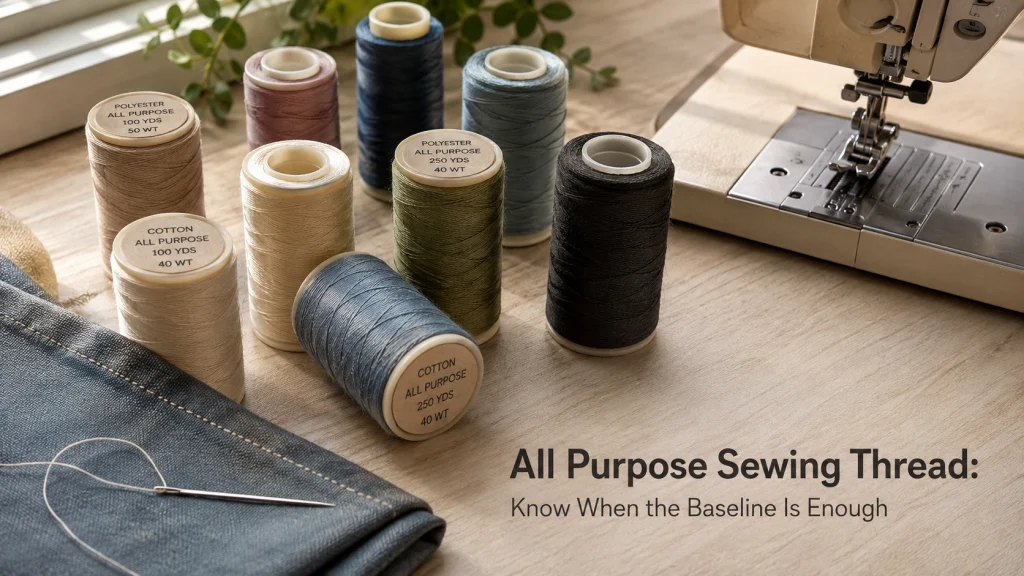
All Purpose Sewing Thread: Know When the Baseline Is Enough

All Purpose Sewing Thread

All-purpose thread is the sensible starting point for ordinary domestic machine sewing, but the label is not a promise that one spool fits every fabric, stitch, or machine. The useful check is simple: read the fiber and size on the spool, compare them with the seam you are making, then ask whether care, appearance, movement,

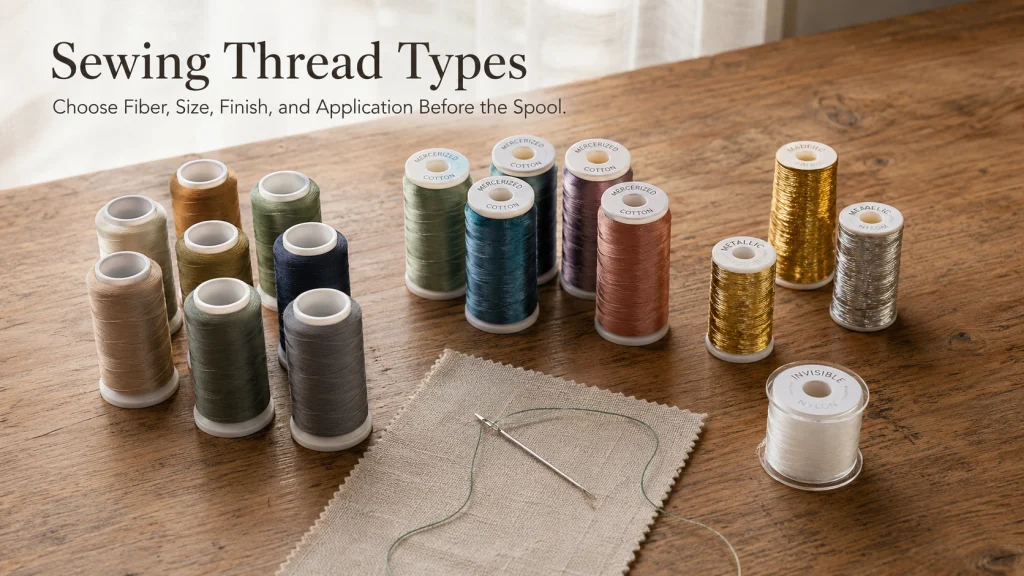
Sewing Thread Types: Choose Fiber, Size, Finish, and Application Before the Spool

Sewing Thread Types

Sewing thread types make more sense when you separate four questions that spool labels often compress together: what the thread is made from, how it is constructed, how its size is expressed, and what job it is intended to do. A polyester core-spun thread, a mercerized cotton thread, a metallic composite thread, and a water-soluble