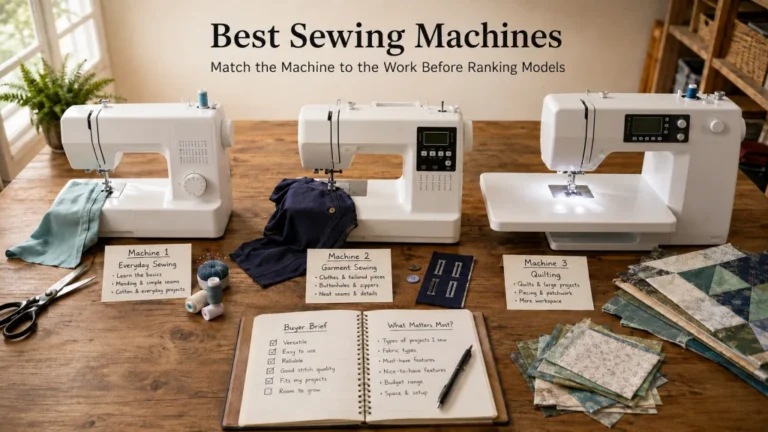
Project supplies are easier to choose when each item is classified by the job it must do in the finished project, rather than by where it sits in a store. Thread, fabric, interfacing, fasteners, trims, batting and incorporated hardware all require different selection questions, while scissors and presser feet belong to different ownership decisions entirely. The practical method is to identify the material family first, then check type or fiber, size or weight, construction, end use and quantity. That keeps a project list focused without turning it into a fixed beginner kit or a pile of unrelated purchases.
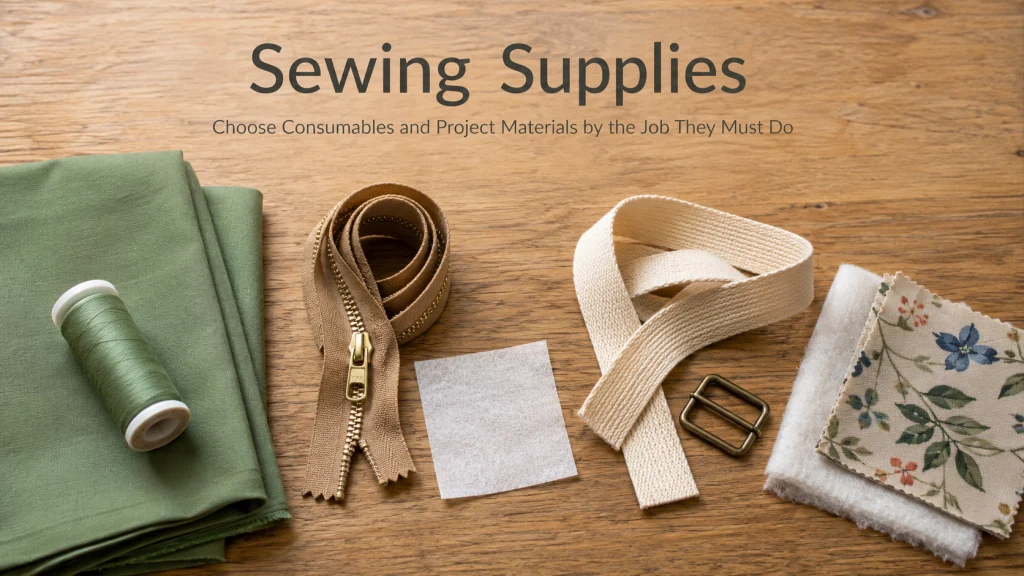
One project basket can contain three different buying decisions
Put thread, fabric, a zipper, interfacing, scissors and a presser foot in one basket and broad sewing supplies lists may place all six together. For a machine sewist, that label is too broad to make a useful purchase decision. Four items become part of the project, one is a reusable tool, and one attaches to the sewing machine.
That separation matters because each group needs different evidence. A zipper is chosen by its closure job, dimensions, construction and application. Scissors are judged as a reusable cutting tool, while a presser foot has to match the exact machine interface. Treating all three as the same kind of “supply” makes it easy to compare the wrong features before the project has even started.
| Item in the basket | What it is | First question to ask |
|---|---|---|
| Thread | Consumable construction material | What seam, material and stitch job must the thread support? |
| Fabric | Primary project material | What structure, drape, stretch and end use does the project require? |
| Zipper | Incorporated fastener | What opening, closure style, size and application are required? |
| Interfacing | Support or stabilizing material | What area needs support, and how much firmness or stability is appropriate? |
| Scissors | Reusable tool | What cutting work must the tool perform repeatedly? |
| Presser foot | Machine-interface component | Is the exact foot or attachment system compatible with the machine? |
Key point: Start with ownership of the decision. If the item is consumed, incorporated or remains inside the sewn project, it belongs in the material-selection path. If it is a reusable tool or attaches to the machine, use the decision process for that equipment instead.
Once that boundary is clear, the rest of the article can stay focused on sewing materials that are selected for a specific project. The goal is not to decide that every sewist needs the same basket. It is to identify what the current project actually consumes or incorporates, then choose within that material family.
What counts as a project supply for machine sewing
On Sewing Fieldbook, this part of the sewing-supplies decision is limited to consumables, notions and project materials that are used up or become part of the finished item. That includes thread, fabric and lining, interfacing and stabilizers, closures, elastic, binding, webbing, cord, decorative trims, batting, foam, fillings and incorporated hardware. The definition is intentionally narrower than a store department labeled “sewing.”
This is also why the word notion needs context. Retail pages often use “sewing notions and supplies” as an umbrella phrase that can include almost anything from thread and zippers to marking tools and machine needles. Here, the useful distinction is functional: if the reader is choosing a project material, the question begins with what that material must do after cutting and sewing are complete.
| Term | How this article uses it |
|---|---|
| Notion | A small sewing item or incorporated component, but the retail term is broad enough that its exact function still needs to be identified. |
| Project material | Fabric, thread, support material, trim, filling or another item selected for a specific sewn project. |
| Reusable tool | Equipment used across projects rather than consumed or left in the finished item. |
| Project hardware | A rigid or mechanical component that remains in the finished bag, upholstery or drapery project. |
The labels are useful only if they lead to the correct next question. A notion that becomes part of the project still needs to be selected by its function and dimensions, while a reusable tool belongs to a different buying decision even if a retailer places both under the same department heading.
A garment may need thread, a lining, fusible support and a closure. A quilt may need fabric, thread and batting. A bag may add webbing, foam and rigid hardware. Those lists are different because the projects ask different things from their materials, not because one sewist has a more complete supply collection than another.

The Coats & Clark Dual Duty XP collection includes 50 spools of general-purpose polyester thread, with 125 yards on each spool. The assortment provides multiple colors for machine or hand sewing projects. It is a practical example of a consumable project material that should be selected for the seam, fabric, and stitch job.
Check On AmazonIf you click this link and buy, we earn a commission at no additional cost to you.
Keep project materials separate from machine-interface parts
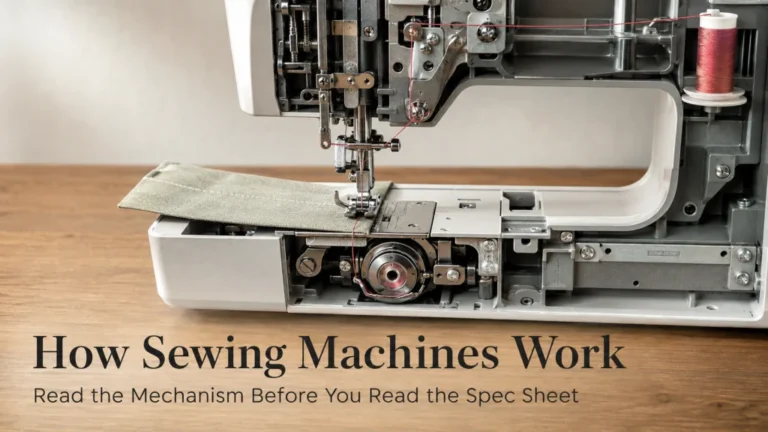
A machine-interface part is chosen by fit with the exact sewing machine or system before any project preference matters. Presser feet, bobbins, bobbin cases, needle plates, adapters, spool parts and similar components can look generic while still using model-specific dimensions, holders or part numbers. Visual similarity is not enough evidence that they fit.
Project materials work differently. A zipper does not need to match a presser-bar interface, and interfacing does not need a machine part number. Their selection begins with the project requirement, then narrows through material type, dimensions, construction and end use. The machine still matters later because needle, thread, feed and setup must handle the chosen material, but that is not the same as proving a component physically fits the machine.
For example, a garment project may need both buttons and a button-sewing foot. The buttons belong to the project and should be chosen for the closure job, dimensions and material. The foot belongs to the machine and should be verified against the exact machine or holder system rather than chosen because a package uses a generic attachment name.
Keep consumables separate from reusable tools and workspace equipment
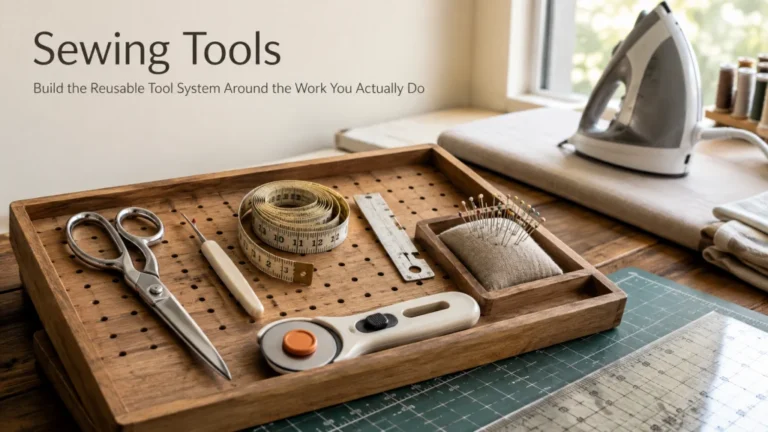
Reusable tools may appear on the same shopping list as project materials, but they solve a different problem. Rotary cutters, rulers, pressing tools, storage systems and task lighting are bought to perform repeated work across projects. Thread, fabric, elastic and batting are bought in quantities that are consumed or incorporated as the project is made.
This difference changes what “enough” means. The same cutting mat can serve many projects, while each garment consumes its own fabric and thread and may commit a particular length of elastic to one waistband. Keeping these decisions separate prevents a project supply list from becoming a permanent-tool checklist.
That also keeps purchasing proportional to the work in front of you. If an owned ruler, cutter or pressing setup already does the job, buying another one does not improve the material selection. The next useful question is what consumable or incorporated item the project still requires.
Build the five-field supply decision before comparing products
Once the item is confirmed as a project material, five fields are enough to prevent most broad-list shopping: type or fiber, size or weight, structure or construction, application and end use, and quantity. They are not a universal specification sheet. They are a way to make sure the comparison is about the actual job rather than a familiar category name.
Specialist suppliers already reflect this logic. Thread may be organized by material, use and weight, while zipper documentation separates element construction, chain size and application. Batting guidance likewise distinguishes end use, washing, quilting method, project size, fabric choice and desired finished appearance. The exact fields vary by material, but the pattern is consistent: category name alone is not enough.
Type or fiber
Start by identifying what the material is made from or what functional type it belongs to. Thread can differ by fiber and intended use, while fabric and batting can differ by fiber content or blend. A closure can be a zipper, button, snap or another mechanism, and those types solve different opening and fastening jobs.
The first-time mistake is assuming that two items with the same broad label are interchangeable. Two “all-purpose” materials can still differ in fiber, finish or construction, and two zippers can use different element systems. Record the exact type shown on the label before deciding that an existing supply is a substitute.
Size, weight or dimensions
Many sewing materials are sold with a size, width, weight, thickness or length that changes how they behave in a project. Thread weight affects the thread and needle relationship, webbing width has to suit the project and any mating hardware, and zipper size or chain type is a real construction variable rather than a decorative number. Batting can also be sold by finished dimensions, loft or weight.
Do not translate one measurement system into another by guesswork. Use the terminology on the current pattern, technical sheet or manufacturer label, especially when a material family uses its own numbering convention. If the project specifies a width or finished dimension, verify that value before comparing color, finish or price.
Structure or construction
Construction describes how a material is built, and it can change handling even when two options share a similar name. Interfacing may be woven, knit or nonwoven, and it may be fusible or sew-in. Zipper elements can use coil, molded plastic or metal constructions, while batting may be bonded, needlepunched or use other structures.
This field is especially useful when a project needs support rather than simply more thickness. A soft material that gains stability from an interfacing is a different decision from replacing that fabric with something heavier. Read the product description for construction and intended role instead of judging structure only by how the material feels in a folded package.
Application and end use
The same material family can be sold for very different jobs. Thread categories may separate general construction from serging, topstitching, embroidery or heavier applications. Fastener manufacturers also publish different applications and precautions for different zipper constructions and sizes.
Match the stated use to the project rather than assuming a specialty label means “better.” A material designed for a different application can add bulk, stiffness or handling requirements without solving the current need. If the project is a lightweight garment, a soft bag, an upholstered item or a quilt, write that end use into the comparison before choosing the supply.
Quantity
Quantity is the field most likely to turn a correct material choice into an interrupted project. Patterns and project instructions may specify yardage, length, package count or finished dimensions, and those requirements can change with size, layout, directional fabric, repeats or matching. Buying by memory is risky when the material is sold in a different unit from the instructions.
Calculate from the project requirement first, then check how the seller packages the material. Add extra only for a reason the project actually creates, such as directional layout, pattern matching, trimming, test pieces or a stated allowance in the instructions, rather than applying one universal percentage to every material. For a bag, one width of webbing may be correct but the purchased length can still be too short for two handles and an adjustable strap. For interfacing, the correct type is not enough if the piece is narrower than the pattern area that must be supported.
| Field | Write down before shopping | Example of what can change |
|---|---|---|
| Type or fiber | Material family, fiber or functional type | Polyester thread versus another fiber; zipper versus snap |
| Size, weight or dimensions | Required width, length, weight, thickness or size system | Webbing width, zipper chain size, batting dimensions |
| Structure or construction | How the material is built | Woven versus nonwoven interfacing; coil versus metal zipper |
| Application and end use | Where the material will be used and what job it performs | Garment closure, bag strap, quilt filling, topstitching |
| Quantity | Total amount plus any pattern-specific allowance | Yardage, package count, continuous length or cut size |
A quilt shows the same framework without relying on closure hardware. The project can call for a particular fabric type, batting with an appropriate construction and finished size, thread suited to the stitching job, and enough material for the planned dimensions and layout. The five fields stay the same even though the material families are different, which is the point of using the worksheet as a repeatable decision method rather than treating one project as the template for every other one.
Use the worksheet before opening a product comparison. If one field is still blank, that missing information usually matters more than another page of reviews. The result should be a short functional specification for the project, not a universal shopping list.

Pellon SF101 Shape-Flex is a medium-weight woven fusible interfacing made from 100% cotton. It is sold by the yard and is designed to add support and stability to sewing projects. Its documented fiber, construction, application, and quantity format make it a useful example of the article's five-field supply decision.
Check On AmazonIf you click this link and buy, we earn a commission at no additional cost to you.
Separate rigid and mechanical hardware from soft materials before purchase
Bag, upholstery and drapery projects can combine flexible materials with rigid or mechanical pieces, and the boundary matters. Webbing, binding, elastic, cord and trim are flexible material decisions. Rings, buckles, sliders, certain clasps and other incorporated hardware add a rigid or moving component that must match the project dimensions and connection method.
A bag strap shows the distinction clearly. The webbing may be selected for width, construction, feel and the amount needed for the strap, while a buckle or slider must also have an opening sized to work with that strap. Matching color does not prove dimensional fit, and a nominal label should not replace checking the actual size information from the pattern and hardware documentation.
Rigid hardware also deserves a separate boundary from structural or safety claims. A category name such as “heavy duty” does not by itself prove load capacity, child safety, protective performance or suitability for an unsupported structural use. For projects where failure could create a safety issue, use the exact current manufacturer information and any applicable project requirements rather than treating general sewing hardware as certified for that purpose.

The Hysagtek purse hardware set includes 20 swivel snap hooks, 20 D rings, and 20 slide buckles. The components use 1-inch inside sizing intended for matching straps and webbing. This makes the set relevant to bag projects where hardware dimensions must be checked against the material and connection method.
Check On AmazonIf you click this link and buy, we earn a commission at no additional cost to you.
Verify the label and current manufacturer guidance before purchase
The product label is where a broad material name becomes an exact item. Keep the fiber or material description, dimensions, construction, application notes, care information and instructions that affect the project. For fusibles and adhesives, follow the current label for heat, timing, surface suitability and any handling warnings instead of carrying settings over from a different product.
This is particularly important with materials that look similar after they leave the package. Interfacing documentation distinguishes fusible from sew-in constructions and woven, knit or nonwoven structures, while manufacturer zipper databases separate element type, chain size and application. Fairfield’s batting guidance likewise asks the user to consider end use, washing frequency, quilting method, quilt size, fabric and desired finished look before narrowing the material choice.
Note: A useful evidence anchor is the way current specialist documentation classifies supplies. WAWAK organizes thread by material, use and weight, YKK publishes zipper construction and size information, and Fairfield ties batting selection to specific project conditions. Those systems support a job-first comparison rather than a single “best supply” list.
Save the label or technical instructions until the project is complete, especially when you buy enough material for more than one project. An unmarked piece of interfacing, elastic or stabilizer can become difficult to identify later because appearance alone may not reveal the original construction or application guidance. If the item cannot be identified confidently, do not invent specifications from memory.

Fairfield Poly-Fil Low-Loft Batting is a 45 by 60 inch crib-size batting made from 100% bonded polyester. Its low-loft construction provides a lightweight batting option for quilting and sewing projects. The clearly stated material, construction, and dimensions make it a useful product to evaluate against the exact requirements of a project.
Check On AmazonIf you click this link and buy, we earn a commission at no additional cost to you.
See more in this section
Once the material job is clear, continue with the family that owns the next decision. Each topic below narrows the comparison around the properties that actually change selection, rather than repeating one broad list of supplies.
| Topic | What to decide next |
|---|---|
| Compare sewing thread types | Match thread fiber, construction, size or weight and intended use to the seam and material. |
| Choose fabric for machine sewing | Compare fabric structure, weight, stretch, drape and project end use. |
| Choose interfacing and stabilizers | Decide how much support, stability or temporary control the project area needs. |
| Compare sewing fasteners and closures | Choose the closure family, dimensions and application for the opening being built. |
| Choose elastic webbing and trims | Compare flexible incorporated materials by function, width, construction and quantity. |
| Choose batting foam and fillings | Match soft volumetric structure to the project’s thickness, feel and end use. |
| Choose sewing project hardware | Check incorporated rigid or mechanical pieces by function, dimensions and mating materials. |
A project may need more than one family, but each choice should still be made separately. A bag can require fabric, thread, stabilizer, zipper, webbing and hardware without turning those six materials into one comparison. Work through the material jobs in the order the project requires them.
Final Thoughts: identify the material job before the product
The useful question is not “What should I own?” It is “What must this item do in this project?” That shift immediately separates consumables from reusable tools and machine-interface parts, then gives each material a smaller and more accurate comparison.
Write down the five fields that matter, verify the current label, and buy the quantity the project actually requires. If the item is thread, fabric, support material, a closure, flexible trim, filling or hardware, continue with that material family instead of relying on a generic starter list.
FAQs
Broad supply terminology creates many of the same questions because stores, patterns and sewists do not always use “notion,” “tool” and “material” in exactly the same way. The answers below use the project-function boundary from this article.
When a pattern or manufacturer gives a more exact specification, use that specification. A broad category name is a starting point, not permission to ignore size, construction, application or quantity.
🧵 What sewing supplies do I actually need for a project?
Start with the project instructions and list only materials that are consumed or incorporated: for example, fabric, thread, support materials, closures, trims, filling or hardware. Add a reusable tool only when the required operation cannot be completed reasonably with the tools you already have.
🧷 What counts as a sewing notion?
The term is broad and retailers use it differently. For project selection, it is more useful to identify whether the item is an incorporated material, a reusable tool or a machine-interface component, then follow the decision process for that group.
✂️ Are scissors a sewing supply or a tool?
They may be sold in the same department, but they function as a reusable cutting tool. Choose them for repeated cutting work rather than treating them as a consumable required in a new quantity for every project.
🦶 Is a presser foot part of the project-material list?
No. A presser foot is a machine-interface component, so exact machine and attachment compatibility must be verified. The project may create a reason to use a certain foot type, but that does not prove a generic foot will fit the machine.
📏 How do I know how much material to buy?
Use the pattern or project dimensions first, including size, layout, repeats, matching and any stated allowance. Then compare that requirement with the seller’s unit, width, package count or continuous length so the same quantity is being measured.
🏷️ Do I need a specialty material when a pattern names one?
Check what function the named material performs, then compare the specified type, dimensions, construction and application with any proposed substitute. Do not substitute from appearance or a broad category name alone when the project instructions depend on a specific property.
References and Sources
These references support the material-classification examples and the instruction to compare project supplies by function, construction, dimensions and end use. They are used as evidence for selection fields, not as endorsements of particular products.
Current labels and technical instructions for the exact material being purchased still control where they are more specific than a broad category page. Recheck them when a manufacturer changes a material, package or application note.
- WAWAK thread category structure: Shows thread organized by material, use and weight, supporting a multi-field selection approach.
- YKK zipper product database: Documents zipper families, structure information, sizing resources and application-specific guidance.
- Fairfield batting selection guidance: Lists end use, washing, quilting method, size, fabric and desired appearance as batting-selection factors.
- Pellon interfacing basics: Explains fusible and sew-in interfacing and distinctions among nonwoven, woven and knit constructions.
Together, these sources show why the useful comparison changes with the material family. A thread, zipper, interfacing and batting do not share one universal specification, so each should be verified using the terminology and instructions that belong to that material.