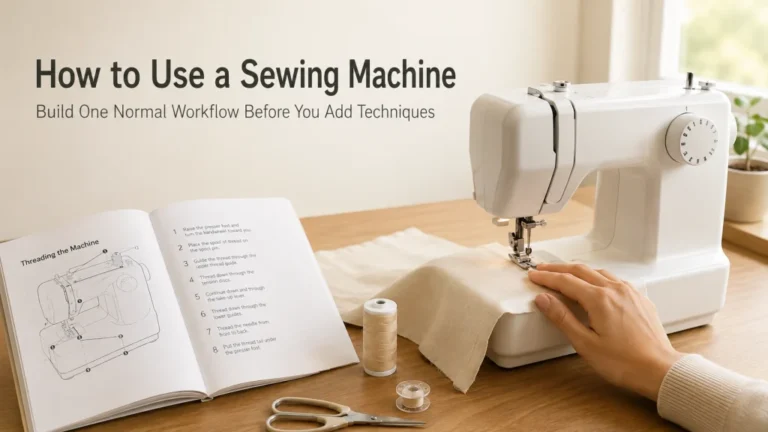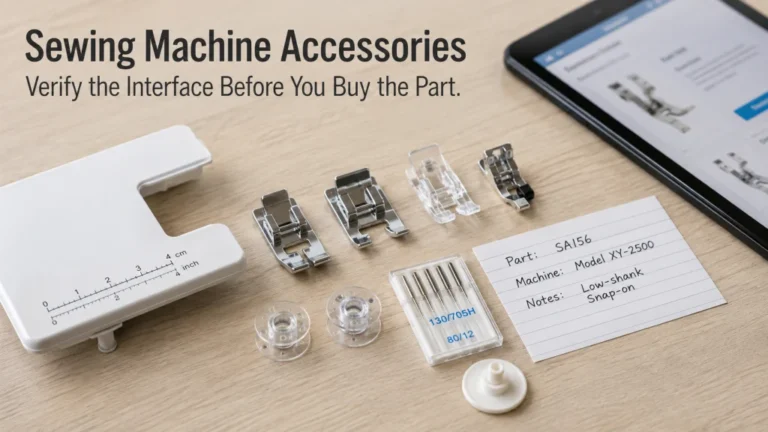
A general-purpose domestic machine remains the right baseline for much of home sewing, so another system should start with a job the current setup cannot handle cleanly. Specialist systems matter when stitch formation, feed, work envelope, guided motion, bed geometry, or workload changes. This decision map shows how to recognize that shift and identify the next machine family to research. Exact capability still depends on the machine, material, setup, workspace, and service requirements.
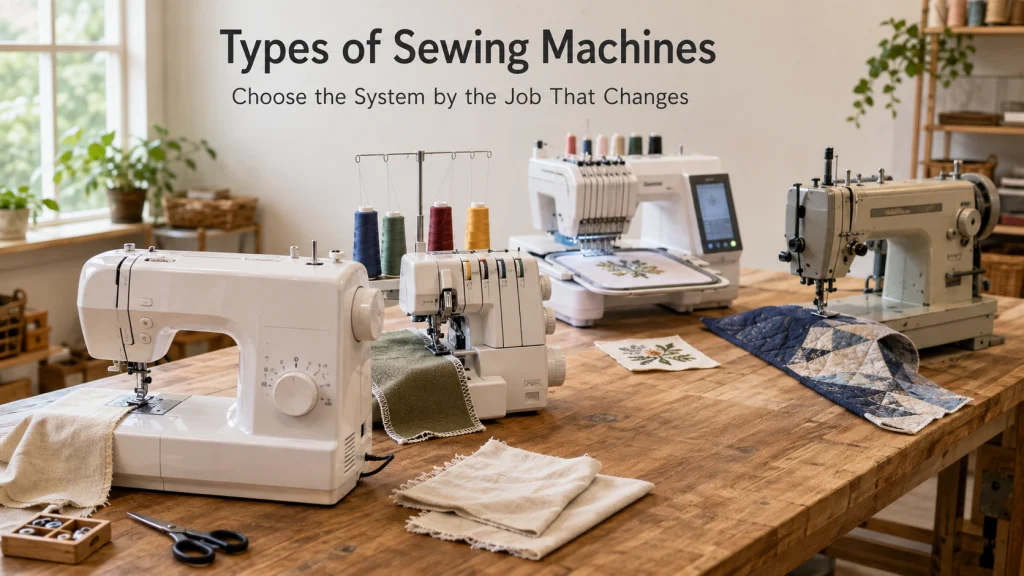
One machine list can mix several different classification axes
Search for types of sewing machines and you can quickly find mechanical, computerized, serger, embroidery, quilting, longarm, walking-foot, and industrial machines in one list. The labels do not all answer the same question. Mechanical and computerized describe controls, while other labels can describe stitch systems, work formats, feed architecture, bed geometry, or production context.
That matters because a computerized domestic machine is not automatically an alternative to a serger, and a mechanical machine is not automatically a lower step than an embroidery system. Before comparing different types of sewing machines, identify the axis that changed in your work.
| Label you may see | What it actually describes | Decision question |
|---|---|---|
| Mechanical or computerized | Controls and interface | Do you need different controls or a different sewing system? |
| Serger or overlock | Overlock stitch formation and edge handling | Is overlock construction the unresolved job? |
| Coverstitch | Cover hems and chainstitch finishing | Are cover hems the recurring bottleneck? |
| Embroidery | Hoop-guided stitch placement | Do you need repeatable guided embroidery? |
| Longarm or dedicated quilting | Quilting work envelope and motion format | Is quilt handling now the limit? |
| Industrial, walking-foot, cylinder-bed, or post-bed | Feed, bed geometry, and workload | Does the work require another machine architecture? |
Do not compare every label as one ladder. Locate the job that changed, then compare systems built around that job.
Define the specialist-system scope before comparing machines
This page is about the point where an ordinary domestic setup stops being the cleanest match for a recurring task. It covers sergers and overlock systems, coverstitch and combination systems, machine embroidery, dedicated quilting and longarm systems, and industrial or specialty architectures used by home sewists and small makers. It does not rank individual machines, and it does not assume a specialist system is better simply because it is more focused.
The boundary is important because a domestic machine can still be the right answer for apparel construction, basic quilting, repairs, bags, home projects, and many other jobs. A specialist system becomes relevant when the work itself changes enough that another stitch formation method, feed method, workspace, automated motion system, or bed shape solves a recurring limitation. That is the standard used throughout this page.
Start from a general-purpose domestic baseline
A domestic lockstitch machine with common utility stitches, suitable presser feet, and the right needle and thread can cover many projects. Frustrations that look like a need for specialty sewing machines can instead be setup problems. A bulky seam, for example, may need better support or a different needle and thread combination rather than another machine.
A first-time owner can easily miss the distinction between one difficult seam and a missing system capability. Struggling at a thick intersection is different from needing an overlock stitch, cover hem, or hoop-guided embroidery.
Key point: Treat the owned domestic machine as the baseline until you can name the specific job it cannot perform in the form you actually need.
Skill level may change what controls you prefer, but it does not by itself determine which machine architecture you need.
Quick terms used on this page: Differential feed changes the relative movement of front and rear feed dogs on machines that support it. Unison feed is a feed architecture for moving layers together. Chainstitch is a stitch family used in coverstitch-oriented work. A cylinder bed changes the sewing-surface shape for tubular or small curved work. Work envelope means the usable sewing space around the needle area.
These definitions are only enough to follow the decisions here. Verify the exact model documentation before treating any term as a buying requirement.
Ask what job forces the machine system to change
The strongest reason to investigate a specialized machine is a recurring task that changes how the stitch must be formed, how the fabric must be fed, how the work must move, or how much physical space the project needs. Start with the failed or inefficient job, not the machine label.
These are not promises that another system will fix every result. Fabric, seam construction, needle system, thread, adjustment, and technique still matter.
Edge finishing and overlock construction
A serger becomes relevant when overlock construction is the missing function, especially for repeated trimmed edges or multi-thread seams. Current manufacturer categories separate sergers from ordinary sewing machines, and many sergers use dedicated differential feed and edge trimming. If occasional edge finishes are already acceptable, a serger may remain optional.
Cover hems and chainstitch-oriented knit finishing
A coverstitch system solves a different finishing problem from an overlocker. It becomes relevant when cover hems or chainstitch-oriented construction are frequent enough that domestic substitutes no longer give the workflow or finish you need. Owning a regular machine and serger does not remove that difference in stitch formation.
Hoop-driven machine embroidery
Machine embroidery changes the work from manually guiding a seam to using a compatible hoop and machine-controlled stitch field. Brother separates compatible hoop size from the maximum embroidery area a machine can stitch in one design, so capability cannot be inferred from hoop size alone. Design field, compatible hoops, file workflow, and stabilizer needs become part of the decision.
Specialist quilting workspace, straight stitch, and longarm work
Quilting can stay on a domestic machine for a long time, so quilt size alone does not force a change. The shift matters when work envelope, quilt handling, frame or table format, stitch regulation, or a dedicated straight-stitch workflow becomes the recurring constraint. The question is whether the process has outgrown the domestic workspace.
Industrial feed, bed geometry, duty cycle, or material handling
Industrial and specialty machines deserve attention when the work demands another feed method or bed shape. JUKI documents both flat-bed unison-feed systems and cylinder-bed machines for tubular or small curved articles, showing why geometry can matter as much as power. A bag body may be awkward because of access and feed architecture, not stitch count.
Separate control type from specialist machine family
Mechanical and computerized controls change how you select stitches, set speed, position the needle, or use automated functions. They do not tell you whether the machine forms an overlock seam, drives an embroidery hoop, provides longarm workspace, or uses a cylinder bed. A domestic control upgrade and a specialist system change therefore solve different problems.
Replacing a mechanical domestic machine with a computerized one may improve control while leaving the basic lockstitch workflow intact. Adding embroidery changes guided motion and hoop compatibility, while adding a serger changes stitch formation and edge handling. Compare those decisions by the job they change, not by how modern the controls look.
Use six system-change questions before buying another machine
Before shopping, write down the exact task that keeps pushing against the current machine. A specialist purchase becomes easier to justify when several answers below point to different architecture rather than to a one-time technique issue.
Keep the worksheet tied to a real project. “I want something more capable” is too broad; “I repeatedly need a cover hem on knit garments” gives you something specific to investigate.
Stitch formation
Ask whether the desired result requires a stitch system your current machine does not form. Overlock construction, coverstitch, chainstitch, and automated embroidery are examples. If the current stitch system produces an acceptable result, another machine may offer convenience rather than necessity.
Material feed
Look at how the layers need to move under the needle. Differential feed, unison feed, walking-foot mechanisms, and ordinary drop feed manage material differently. Confirm the existing setup before deciding that a recurring problem requires another feed system.
Work envelope and bed geometry
Measure the physical problem instead of calling it a power problem. Large quilts may expose limited throat or support space, while bags and tubular pieces can expose flat-bed access limits. If access is the bottleneck, more motor power in the same geometry may not address it.
Automation and guided motion
Embroidery is the clearest case because the machine guides the design within a defined field. Some quilting systems add stitch regulation or guided motion, but those are specific workflow changes rather than general measures of sophistication. Ask what motion you need the machine to control and why.
Duty cycle and repetition
Repeated production can change a machine decision even when a domestic machine completes one sample. Ask whether speed, repetitive handling, heat, service schedule, or architecture becomes a practical constraint during recurring work. Do not turn an industrial label or speed figure into a durability guarantee.
Setup, consumables, and service
Every added system creates another setup to learn and maintain. Thread paths, needles, bobbins, loopers, hoops, stabilizers, feet, software, maintenance, and service vary by machine. Ask whether you can support the system in real use, not only whether it can perform one job.
| Worksheet question | Write down before shopping | What a strong system-change signal looks like |
|---|---|---|
| What stitch must change? | Exact seam or finish | Current machine cannot form it |
| What feed must change? | Material and layers | Correct setup still leaves a feed limit |
| What geometry is missing? | Project size and access | Work cannot be positioned cleanly |
| What motion needs automation? | Current manual operation | Guided motion is central |
| How repetitive is it? | Typical recurring use | The bottleneck appears regularly |
| What ownership burden changes? | Setup, space, service | The added system is supportable |
If the current setup has not been verified, troubleshoot it first. If several answers consistently point to another stitch system, feed system, work format, or bed geometry, specialist research becomes more defensible.
Decide whether the current domestic machine is still enough
The most economical specialist machine is the one you do not need. Before adding equipment, confirm that the current machine is correctly threaded, fitted with an appropriate needle and compatible presser foot, operating within its manual, and being asked to perform a task it is designed to handle.
Several symptoms are easy to misread as proof that you need another system:
- Noise, stalling, or difficulty at one bulky seam intersection can justify checking the needle, thread, presser foot, support, and manual limits first.
- Wavy or distorted knit edges can point to feed, handling, needle, thread, or stitch setup rather than immediately proving a different machine family is needed.
- A large quilt that is difficult to maneuver may be limited by support and work space rather than by stitch formation.
Those checks do not prove the domestic machine is sufficient. They prevent a correctable setup problem from being mislabeled as an architecture requirement.
A useful decision flow moves from the present job outward rather than from a shopping list inward:
- Name the exact recurring job that is failing or taking disproportionate effort.
- Verify setup, compatible accessories, needle, thread, material handling, and manual limits.
- Identify whether the remaining bottleneck is stitch formation, feed, workspace, guided motion, bed geometry, or repeated workload.
- Check whether technique or a compatible accessory solves it without changing machine family.
- Research another system only when the remaining limitation belongs to that system’s architecture.
If the domestic machine still completes the work with acceptable setup time, control, and result, keeping it is a valid decision. Specialist equipment should remove a specific recurring constraint.
Count the ownership cost of adding a specialist system
Purchase price is only the first line of the decision. Another system can add dedicated thread, needles, bobbins or loopers, compatible feet, hoops, stabilizers, tables or frames, software, cleaning supplies, service visits, storage, and learning time. Some systems also need a permanent footprint that changes how often the machine is realistically available for use.
Do not assume every item below applies to every machine. Use the exact model manual, current manufacturer support information, and local service availability to build the real ownership footprint before buying.
- Space: machine, table or frame, thread stand, hoop storage, and working clearance.
- Setup: threading, conversion time, hooping, stabilizing, and configuration.
- Consumables: needles, thread, bobbins, loopers, stabilizers, oil, and model-specific items.
- Compatibility: supported feet, hoops, attachments, tables, frames, and parts.
- Service: manual-approved maintenance, professional service, parts access, and transport.
- Learning: time to set up, test, troubleshoot, and switch systems.
A specialist system can still be worth the added footprint, but the benefit should be measured against this whole list. That is especially important when the machine solves a task that appears only a few times a year.
Route serger decisions to overlock construction and edge finishing
If the unresolved job is repeated overlock construction, edge trimming, differential feed, or a dedicated finishing workflow, keep the next comparison inside the serger family. Mechanical versus computerized domestic controls do not answer whether you need an overlock stitch system.
The next step is to compare serger systems for your work by fabric, seam type, threading, workspace, and ownership cost. Keep the exact model manual in the loop because supported stitches, feed controls, maintenance, and setup are model-specific.

The Brother 1034D is a 3/4-thread serger built for overlock seams, edge finishing, and hems. Its differential feed helps manage fabric feeding, including thin and stretchy fabrics. It also runs at up to 1,300 stitches per minute and includes three accessory feet.
Check On AmazonIf you click this link and buy, we earn a commission at no additional cost to you.
Route coverstitch and combination-system decisions to knit finishing needs
If the recurring problem is a cover hem, chainstitch-oriented construction, or knit finishing that remains awkward after setup checks, compare coverstitch systems rather than treating them as upgraded sergers. Combination machines can place more than one stitch family in one body, but conversion still needs to match how often you use each function.
Use the dedicated comparison to choose a coverstitch system by task and decide whether separate or combination format fits your workflow. Focus on stitches, conversion, fabric handling, service, and how often you use the finish.

The Brother 2340CV is a dedicated coverstitch machine for cover hems, chain stitching, and decorative finishing. It supports wide and narrow cover stitches, tri-cover stitch, and differential feed. Its color-coded threading and maximum speed of 1,100 stitches per minute suit frequent garment and knit finishing work.
Check On AmazonIf you click this link and buy, we earn a commission at no additional cost to you.
Route machine embroidery decisions to hoop-guided work
If the job requires repeatable machine-guided embroidery, research embroidery field size, compatible hoops, file support, stabilizer workflow, and whether sewing and embroidery must share one machine. Maximum embroidery area is a model specification and cannot be inferred from a larger hoop alone.
The focused next step is to compare embroidery systems by workflow. Tie the decision to intended design size and workflow rather than built-in design counts or screen features.
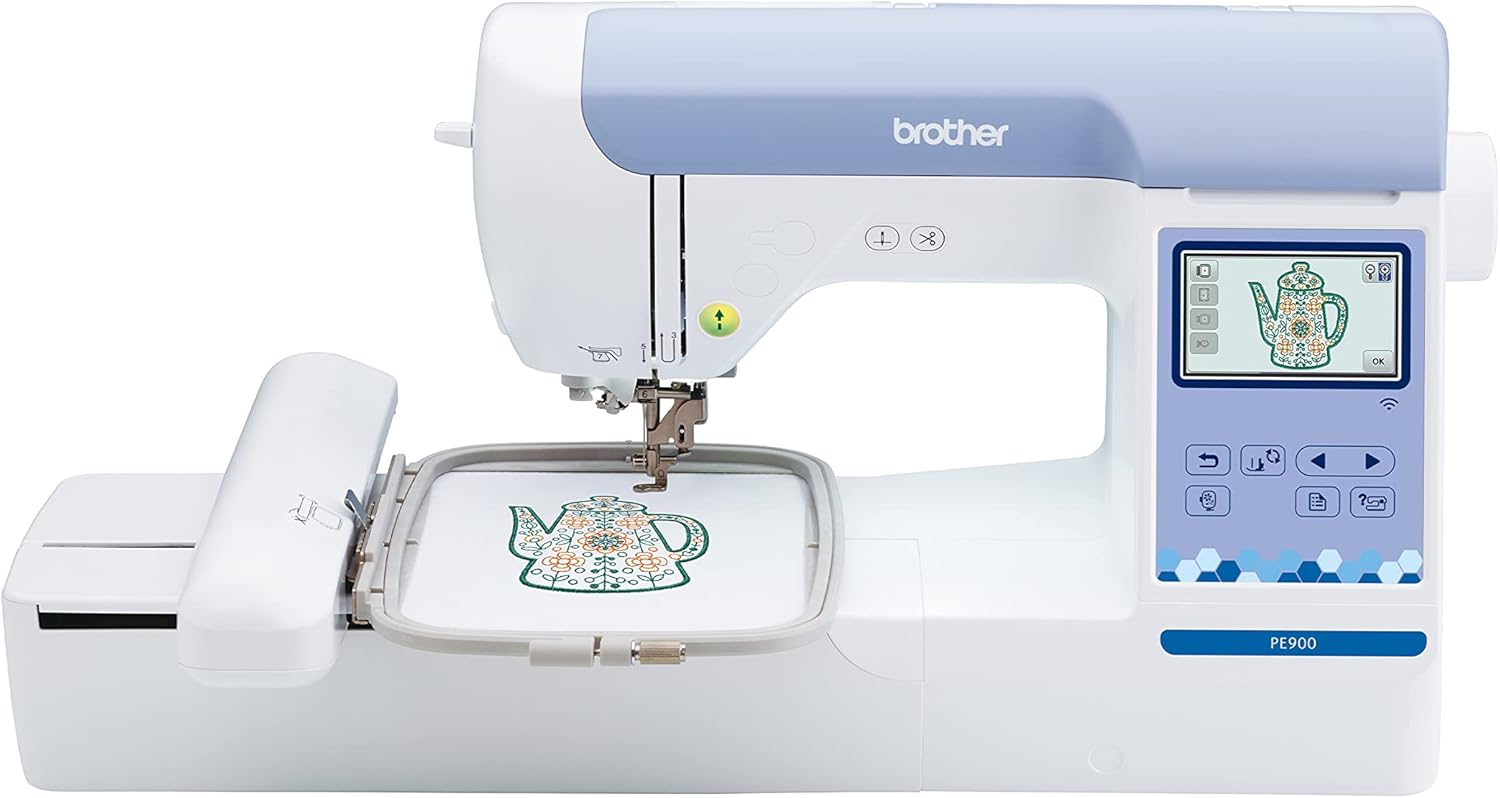
The Brother PE900 is an embroidery-only machine with a 5 x 7 inch maximum embroidery area. It includes 193 built-in embroidery designs, a 3.7-inch color display, and wireless LAN for transferring designs from a computer. Color Sort and Jump Stitch Trimming support a more streamlined machine-embroidery workflow.
Check On AmazonIf you click this link and buy, we earn a commission at no additional cost to you.
Route dedicated quilting and longarm decisions to workspace constraints
If ordinary piecing and quilting are still comfortable on the domestic machine, there is no automatic reason to move to a dedicated quilting system. The route changes when throat space, table or frame format, quilt movement, stitch regulation, or a dedicated straight-stitch workflow becomes the limiting part of the process.
At that point, compare longarm quilting system formats around available room, project size, motion style, setup, service, and the way the quilt is physically supported. A bigger machine is only useful if its work format solves the bottleneck you actually have.

The Handi Quilter Moxie XL is a longarm quilting machine with 18 inches of throat space. This package pairs the machine with an 8-foot Loft Frame for a dedicated frame-based quilting workspace. Bright lighting and touchscreen controls support free-motion quilting across a larger working area than a typical domestic setup.
Check On AmazonIf you click this link and buy, we earn a commission at no additional cost to you.
Route industrial and specialty bed-geometry decisions to material handling
If the unresolved job involves heavy or difficult material stacks, repeated straight-stitch production, tight tubular work, awkward curved assemblies, or a need for a different feed and bed architecture, move the research toward industrial and specialty systems. The decision should be based on documented feed type, bed geometry, needle and thread system, stitch specification, motor and table requirements, maintenance, electrical setup, and service access.
Use the specialist route to compare industrial sewing machine architectures without assuming that an industrial label is automatically better for home use. A domestic machine may remain the better all-purpose tool while a specialty machine handles one recurring job, or the specialist system may not be justified at all if the workload is occasional.
Warning: Follow the exact machine manual for setup, maintenance, lubrication, electrical requirements, and service boundaries. Do not remove guards, observe powered exposed mechanisms, force material through the machine, or perform internal electrical or mechanical service that the manufacturer reserves for trained personnel.
The decision ends with architecture and ownership fit, not with a promise that one machine family can handle every material. That is why exact documentation matters more than a broad marketing label.
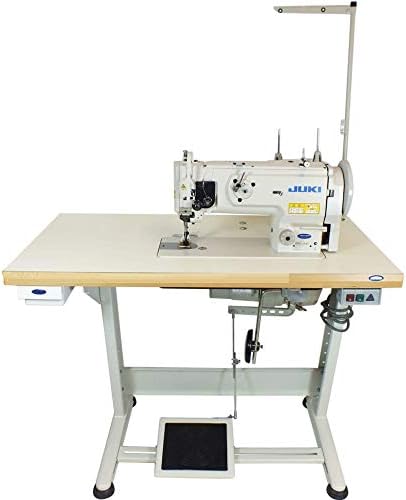
The JUKI DNU-1541S is a 1-needle unison-feed lockstitch machine with a double-capacity hook. Its feed system is designed for consistent stitching on heavy materials and multilayer work. The S model includes a safety mechanism, and JUKI specifies a maximum sewing speed of 2,500 stitches per minute.
Check On AmazonIf you click this link and buy, we earn a commission at no additional cost to you.
Final Thoughts: add a system only when the job changes
The decision does not have to end with another machine. If the recurring limitation disappears after setup, compatibility, handling, or workspace checks, keep the system that already does the job.
If the limitation remains, carry that exact requirement into the relevant specialist comparison along with space, consumables, service, and learning needs. That makes the next decision about fit for a defined job rather than about moving to a supposedly more advanced machine.
FAQs
🧵 Do I need a serger if I already have a sewing machine?
Not automatically. A serger becomes relevant when overlock construction, edge trimming, differential feed, or a dedicated finishing workflow is a recurring need that your current domestic setup does not meet cleanly.
👕 Is a coverstitch machine the same as a serger?
No. They can overlap in garment workflows, but coverstitch and overlock systems form different stitches and solve different finishing jobs. Compare the exact stitches and conversion requirements of the machine you are considering.
🪡 When should I move from a domestic machine to an industrial machine?
Look for a recurring need for different feed architecture, bed geometry, material handling, straight-stitch production, or workload. Do not use an industrial label alone as proof that the machine is a better fit.
🖼️ Does a larger embroidery hoop mean a larger embroidery area?
Not necessarily. Brother’s support documentation explicitly separates compatible hoop size from a machine’s maximum embroidery area, so verify the exact model specification before assuming a larger hoop increases the single-design field.
🧶 Do I need a longarm machine to quilt large quilts?
No fixed quilt size creates that requirement. The decision depends on how well you can support and move the quilt, the work envelope of the current machine, your quilting method, available space, and how often that limitation affects your projects.
⚙️ Is a computerized sewing machine more advanced than a serger or embroidery machine?
That comparison mixes different axes. Computerized describes control, while serger and embroidery describe different sewing systems, so decide based on the job and architecture rather than a beginner-to-advanced ladder.
References and Sources
- Brother sergers and coverstitch category: verifies that current overlock and coverstitch systems remain distinct specialist product families with dedicated functions.
- Brother differential feed support: explains how front and rear feed dogs are controlled relative to one another on a supported serger.
- Brother embroidery area support: verifies that compatible hoop size and maximum embroidery space are separate specifications.
- Janome longarm quilter category: verifies the current longarm machine family and its dedicated quilting format.
- JUKI cylinder-bed unison-feed documentation: supports the distinction between specialty bed geometry, feed architecture, and ordinary flat-bed sewing.
- JUKI flat-bed unison-feed documentation: supports the role of walking-foot and unison-feed architecture in repeated heavy-material handling.
- Sewing community machine transition discussion: provides current reader language around changing machines for specific features or projects rather than following a fixed skill ladder.
- Sewing community coverstitch question: documents the practical question of adding coverstitch capability after already owning a regular sewing machine and serger.