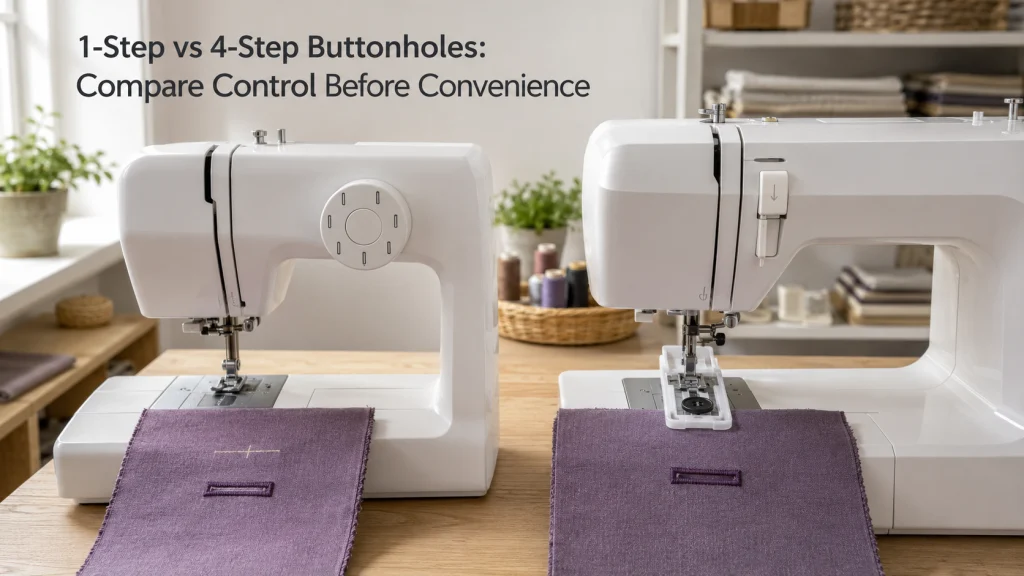
1-Step vs 4-Step Buttonhole: Compare Control Before Convenience
1 Step Vs 4 Step Buttonhole

A 1-step buttonhole and a 4-step buttonhole can produce the same basic feature while assigning different parts of the sequence to the machine and the operator. The useful pre-purchase questions are who advances the stages, how the buttonhole length is established, which foot the exact model requires, and whether that foot is actually included. A
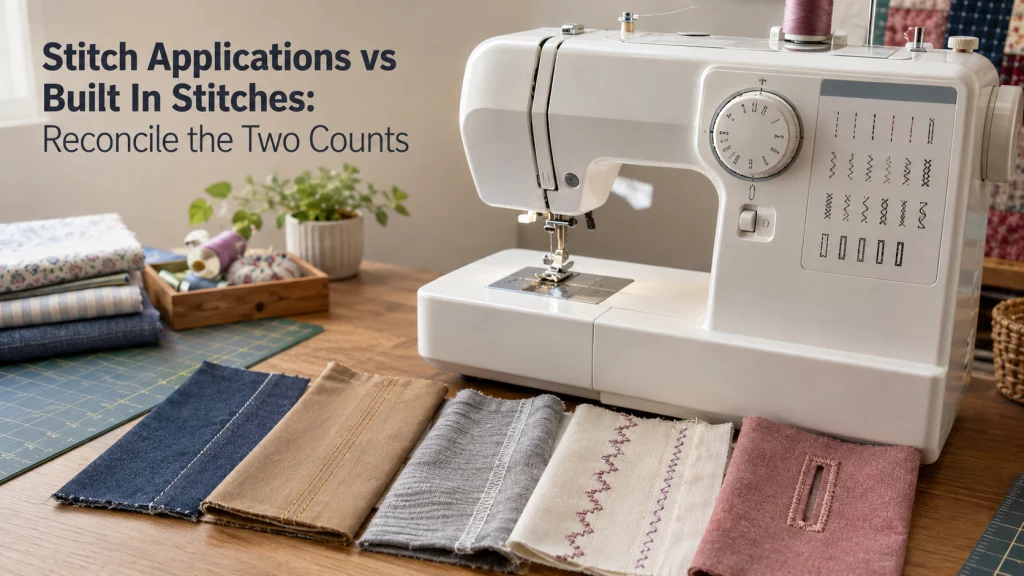
Stitch Applications vs Built In Stitches: Reconcile the Two Counts

Stitch Applications Vs Built In Stitches

A sewing machine can publish a large stitch-application number and a much smaller built-in-stitch number without either figure being a typo. The two counts may measure different things, so the useful comparison is not the largest number on the feature sheet but what the manufacturer says each number includes. By tracing the product page, stitch

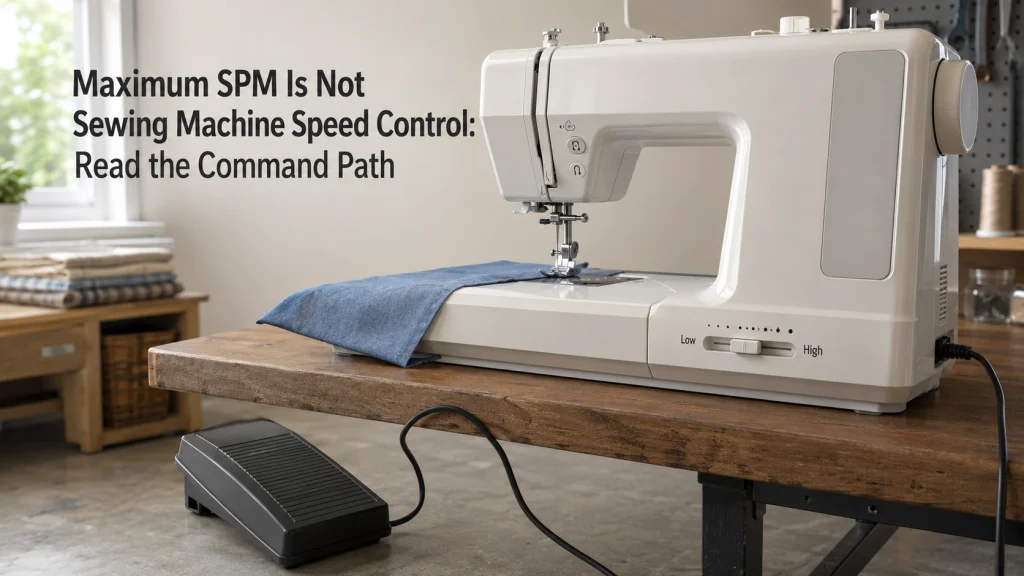
Maximum SPM Is Not Sewing Machine Speed Control: Read the Command Path

Sewing Machine Speed Control

Sewing machine speed control is not the same thing as a machine’s maximum stitches-per-minute rating. A useful pre-purchase check separates four things: the rated ceiling, any selectable speed limit, the command method, and the machine’s actual response at low speed. Manufacturer documentation can usually establish the first three, while smooth starts, gradual acceleration, and predictable

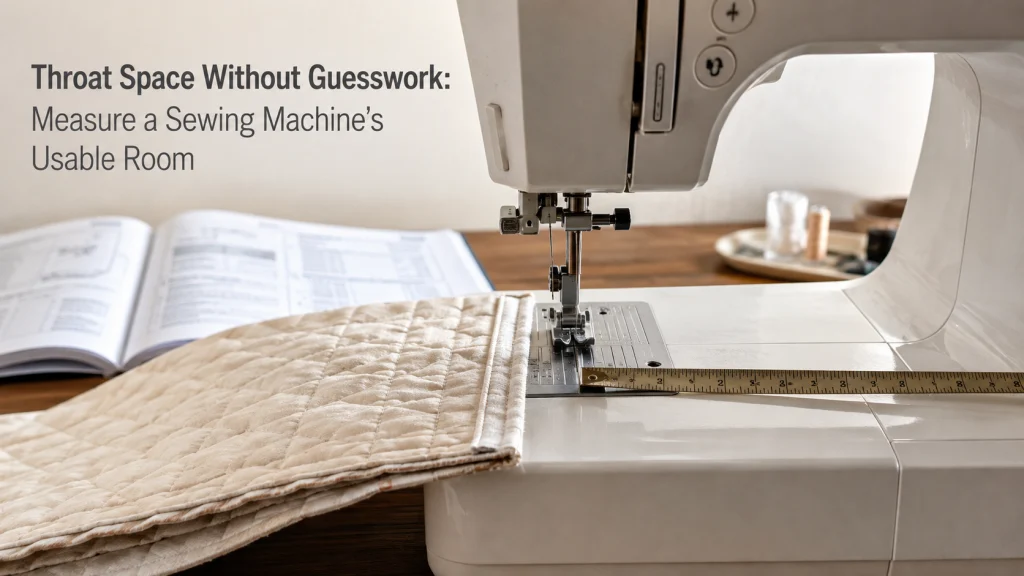
Throat Space Without Guesswork: Measure a Sewing Machine’s Usable Room

Sewing Machine Throat Space

Sewing machine throat space is a measurement that describes the room around the needle area, but the number alone does not always describe the same physical distance across brands. A useful comparison starts by identifying the exact measurement endpoints, separating horizontal clearance from vertical opening and support area, and recording what the manufacturer actually publishes

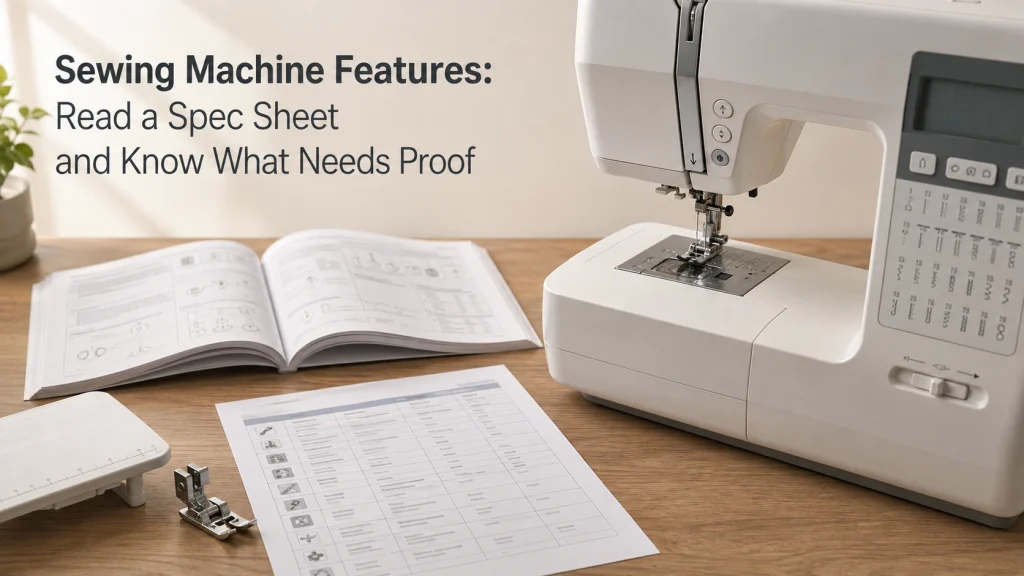
Sewing Machine Features: Read a Spec Sheet and Know What Needs Proof

Sewing Machine Features

A sewing-machine spec sheet becomes useful only when each line is translated into a job, measurement, control, included item, or claim that can be checked. Large stitch totals, high maximum speeds, and long feature lists are not automatically better because brands may count, label, and measure different things. The practical comparison starts by asking what

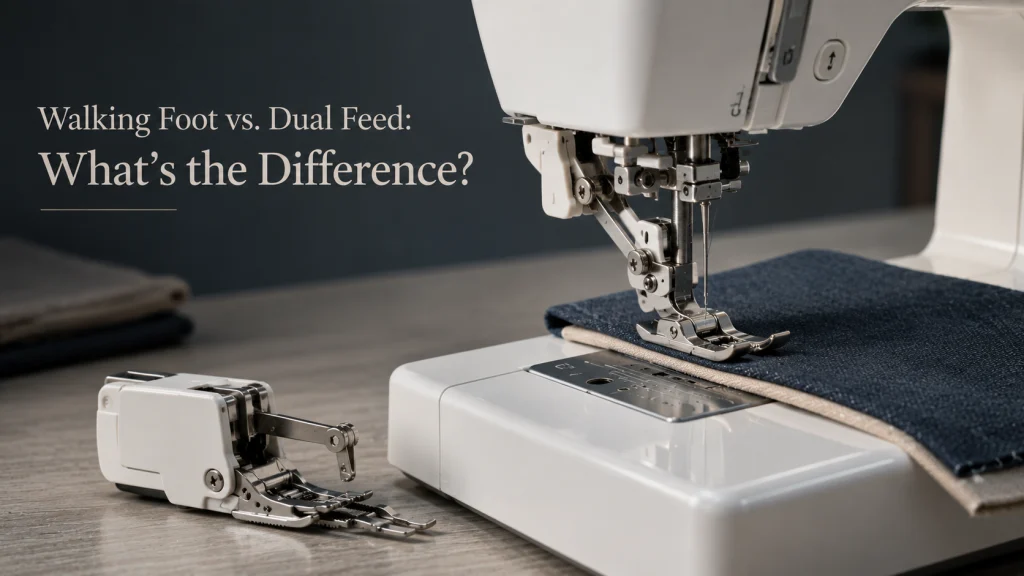
Walking Foot vs Dual Feed: Attachment, Integrated System and the Limits of Each Label

Walking Foot Vs Dual Feed

A walking foot and a dual-feed system can both add upper-side fabric transport, but they are not automatically the same mechanism or the same ownership decision. A removable walking-foot attachment, an integrated mechanical feed drive, and a digitally controlled motor-driven feed foot can differ in where motion comes from, how the feed engages, which presser

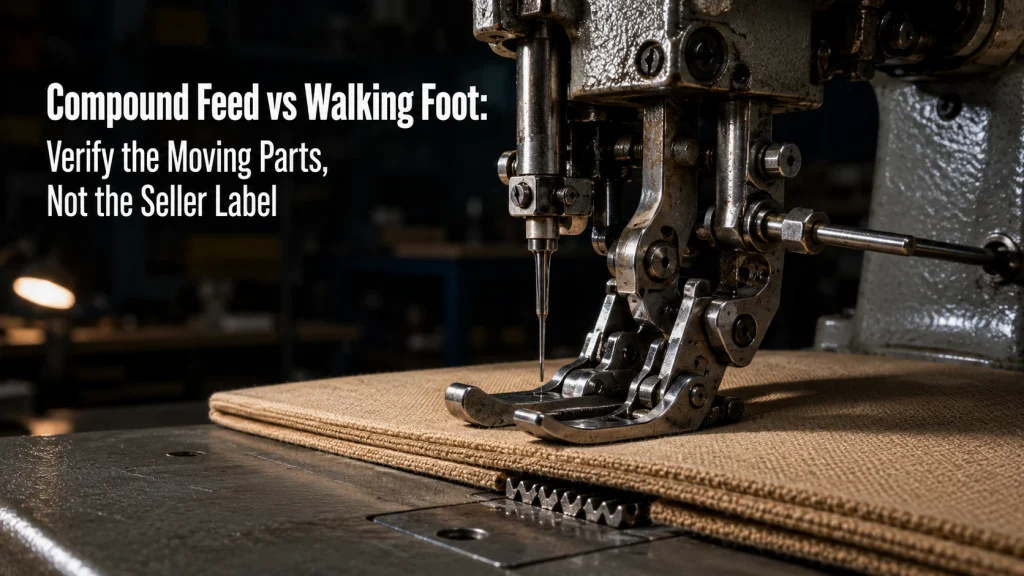
Compound Feed vs Walking Foot: Verify the Moving Parts, Not the Seller Label

Compound Feed Vs Walking Foot

Compound feed vs walking foot is not a reliable comparison if you start with the seller label alone. In industrial and portable-machine listings, similar words can describe different combinations of lower feed, needle transport, driven upper feed, and alternating presser-foot motion. The practical way to identify the system is to verify which components move the

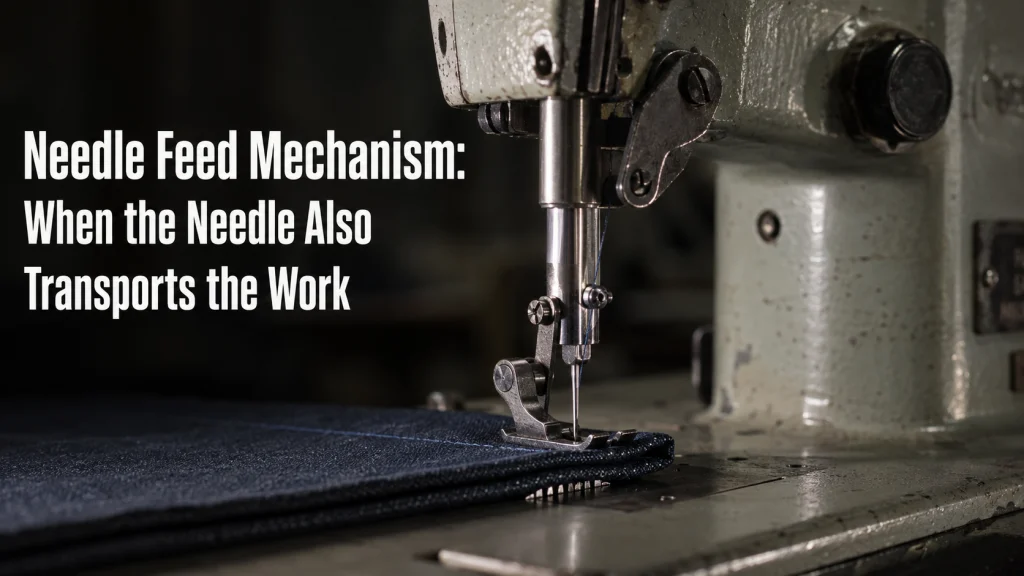
Needle Feed Mechanism: When the Needle Also Transports the Work

Needle Feed Mechanism

A needle feed mechanism does more than move a needle up and down to form a stitch. During the material-advance part of the cycle, the needle stays engaged as it moves together with the material while the lower feed advances in coordination, so the needle itself becomes one of the transporting elements. That is different

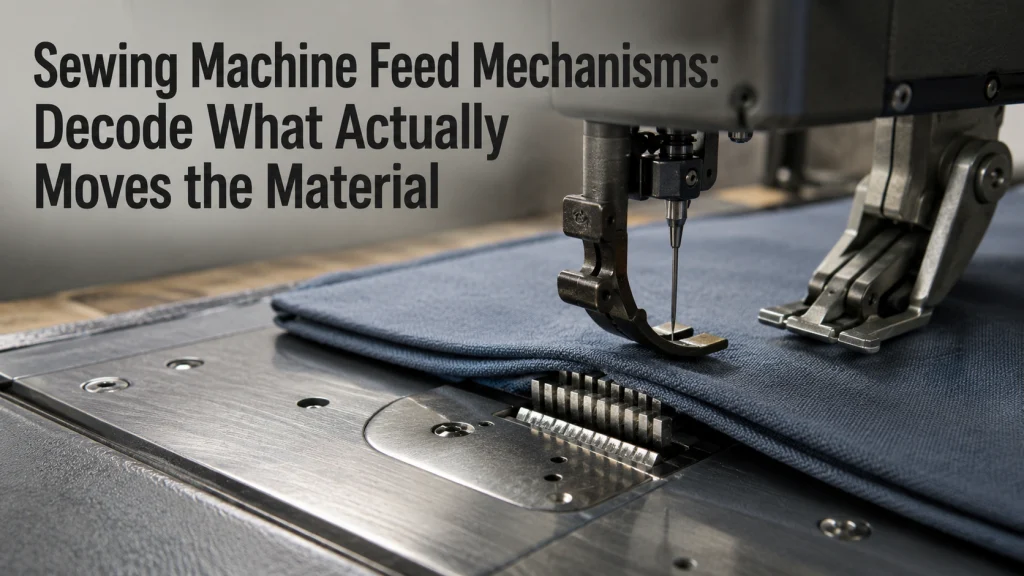
Sewing Machine Feed Mechanisms: Decode What Actually Moves the Material

Sewing Machine Feed Mechanisms

Sewing machine feed mechanisms make more sense when you stop comparing labels and start identifying which parts actually contact and move the material. A feed-dog count, needle-feed label, unison-feed specification, or domestic dual-feed feature can describe different layers of the transport system rather than competing versions of one feature. The practical way to read a

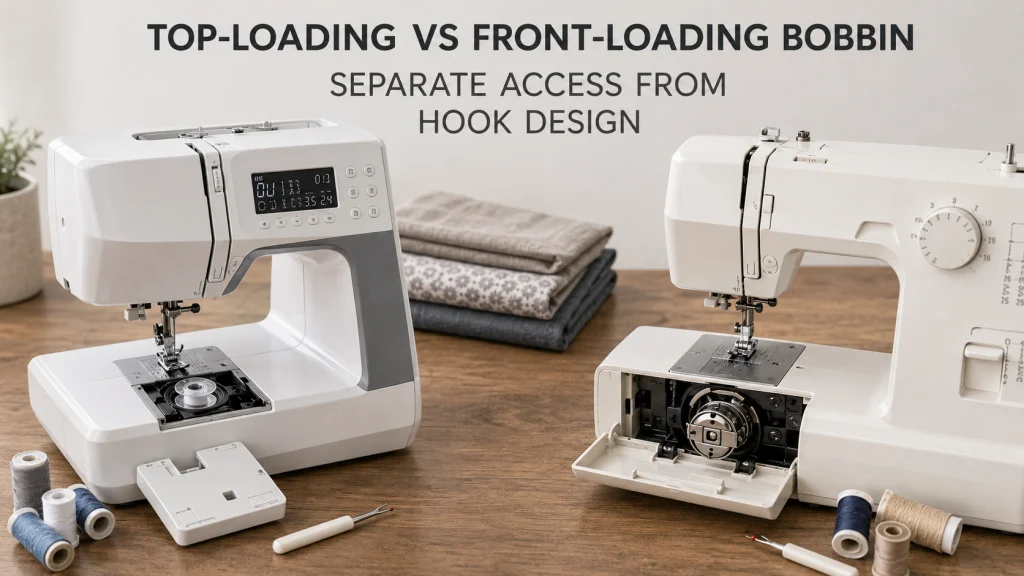
Top-Loading vs Front-Loading Bobbin: Separate Access From Hook Design

Top Loading Vs Front Loading Bobbin

A top-loading or front-loading label mainly tells you where you access the bobbin, not how the hook moves or how well the machine will sew. The useful comparison is physical: access path, bobbin orientation, case or holder arrangement, cover visibility, and what the exact manufacturer documentation says about the hook system. Those details can affect

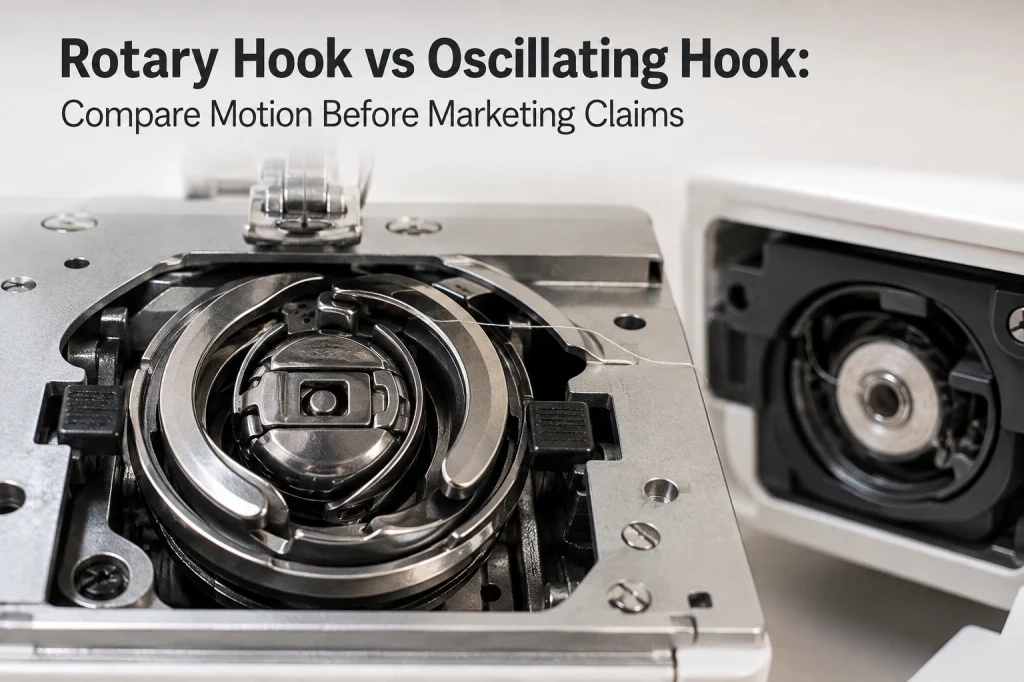
Rotary Hook vs Oscillating Hook: Compare Motion Before Marketing Claims

Rotary Hook Vs Oscillating Hook

Rotary and oscillating hooks describe how the hook moves while carrying the upper-thread loop around the bobbin area, not where the bobbin is loaded or how powerful the whole machine is. A full rotary hook continues around a circular path, while an oscillating hook travels through an arc and reverses direction. Current machine specifications also

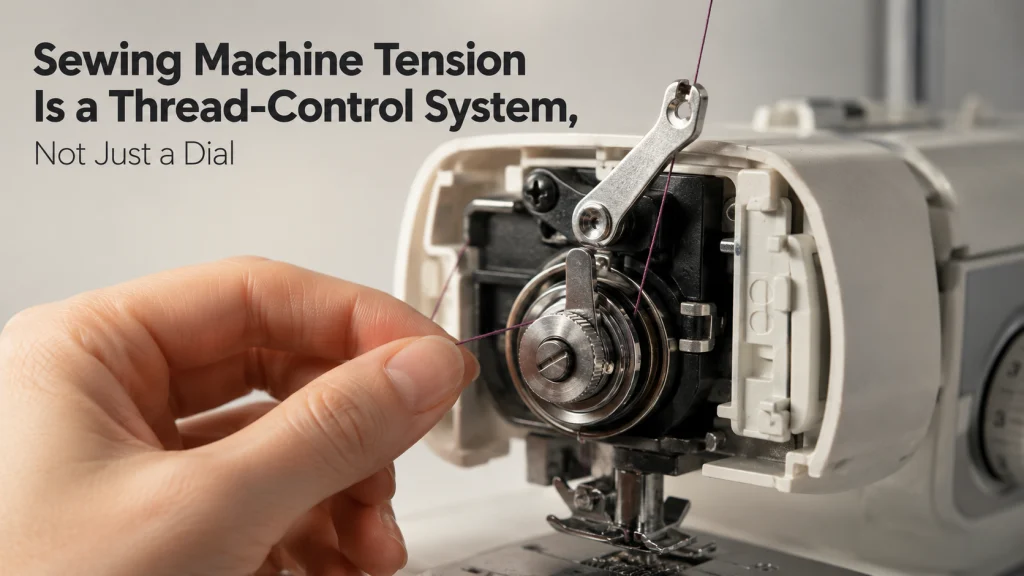
Sewing Machine Tension Is a Thread-Control System, Not Just a Dial

How Does Sewing Machine Tension Work

Sewing machine tension is a system for controlling thread resistance and temporary slack, not simply a number on a dial. On a typical domestic lockstitch machine, the upper thread passes through guides, tension discs and the take-up system, while the lower thread meets its own controlled resistance at the bobbin area. The presser-foot position can

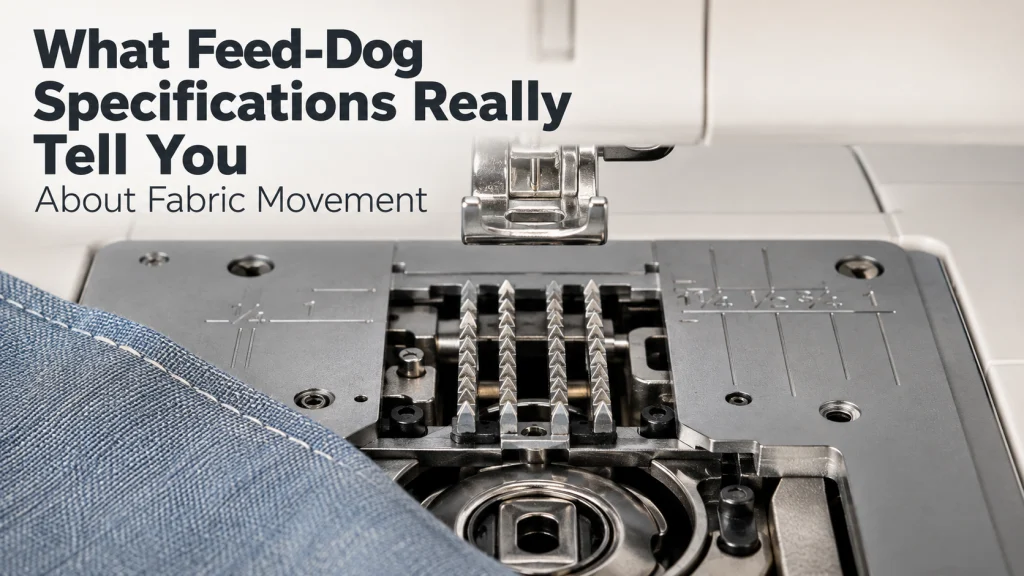
What Feed-Dog Specifications Really Tell You About Fabric Movement

Sewing Machine Feed Dogs

Sewing machine feed dogs are the toothed parts below the presser foot that advance fabric during ordinary machine feeding, but their job makes sense only when they are viewed as part of a timed system. In a common domestic drop-feed arrangement, the feed dogs rise, contact the fabric, travel through the feed stroke, then drop

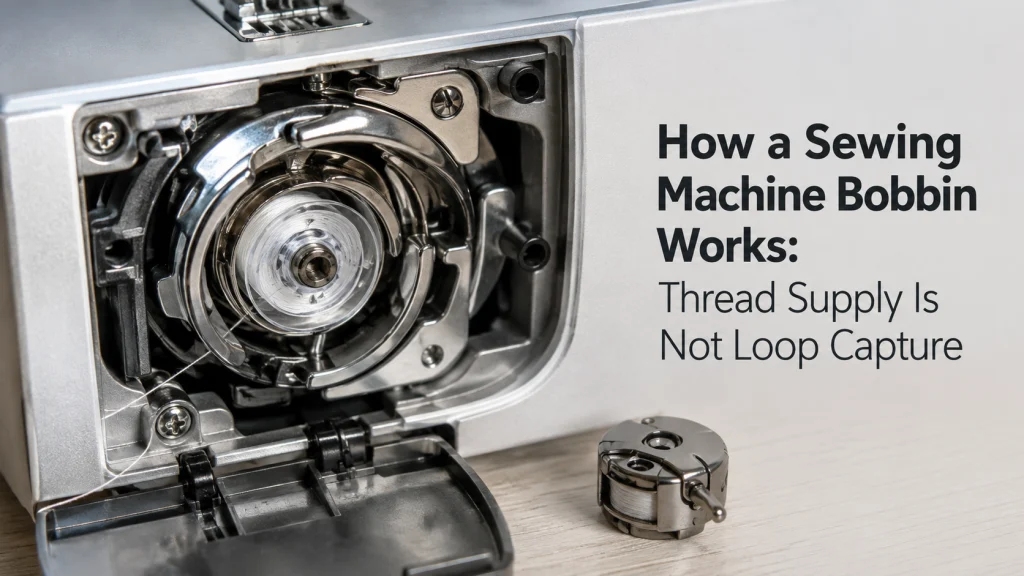
How a Sewing Machine Bobbin Works: Thread Supply Is Not Loop Capture

How A Sewing Machine Bobbin Works

The bobbin is the lower-thread supply in a common domestic lockstitch system, but it is not the part that performs every action below the needle plate. Loop capture belongs to the hook or shuttle, while the case or holder and its thread-control path manage how the lower thread leaves the bobbin. The exact arrangement depends

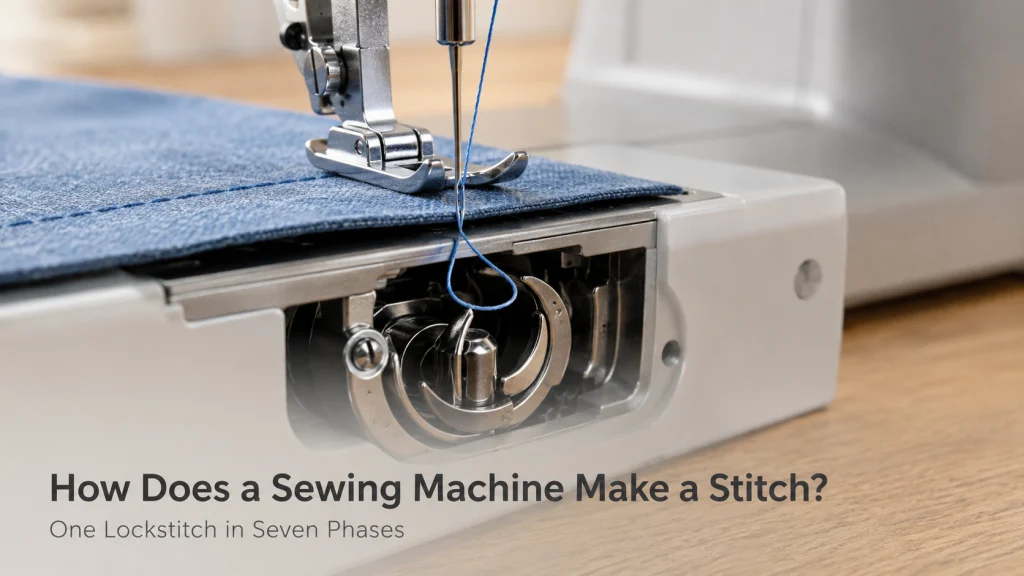
How Does a Sewing Machine Make a Stitch? One Lockstitch in Seven Phases

How Does A Sewing Machine Make A Stitch

A domestic lockstitch is formed by a timed sequence, not by the needle simply grabbing bobbin thread. The needle carries upper thread through the material, a loop forms as the needle begins to rise, the hook or shuttle enters that loop, and the upper thread passes around the lower-thread assembly before take-up removes slack and

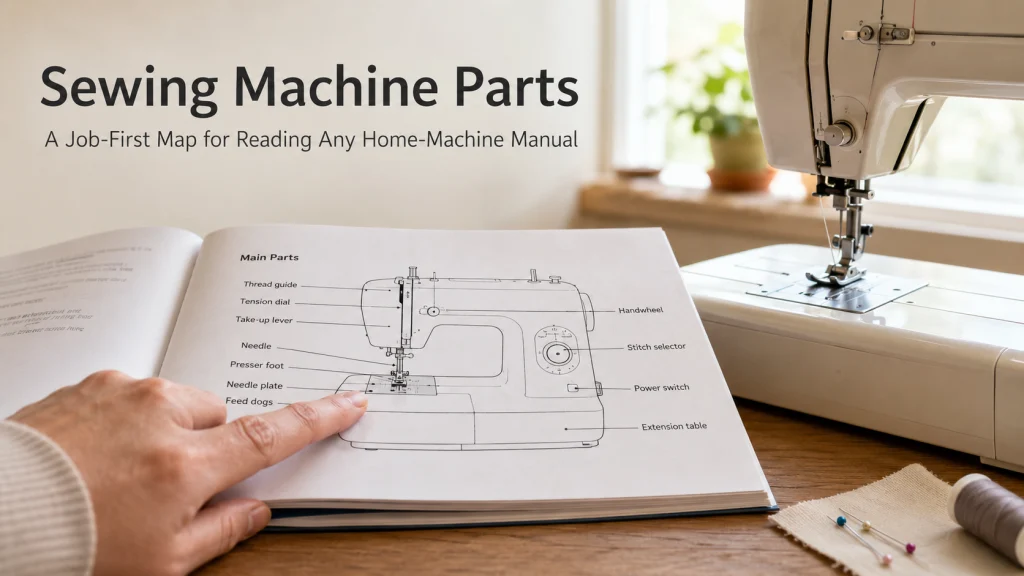
Sewing Machine Parts: A Job-First Map for Reading Any Home-Machine Manual

Sewing Machine Parts

Learning sewing machine parts is easier when each label is tied to a job instead of memorized from one generic diagram. The useful questions are what system the part belongs to, whether it moves or controls something else, and whether the exact model manual treats it as owner-visible, owner-removable or service-only. That approach also prevents