Upper Thread Keeps Breaking: Find the Snag, Needle or Excess Drag Before You Change Parts
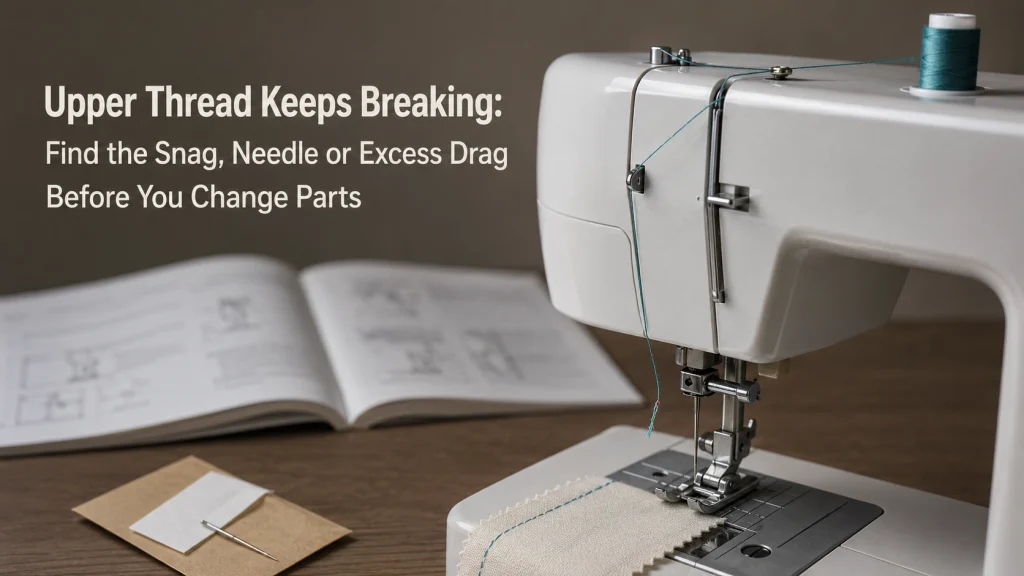
Upper Thread Keeps Breaking

When the upper thread keeps breaking, the useful first question is where the thread is failing, not how far to turn the tension dial. Repeated snapping can come from an obstructed spool path, incorrect threading, excessive upper tension, a damaged or unsuitable needle, a poor needle-and-thread match, or a rough user-visible surface that is abrading
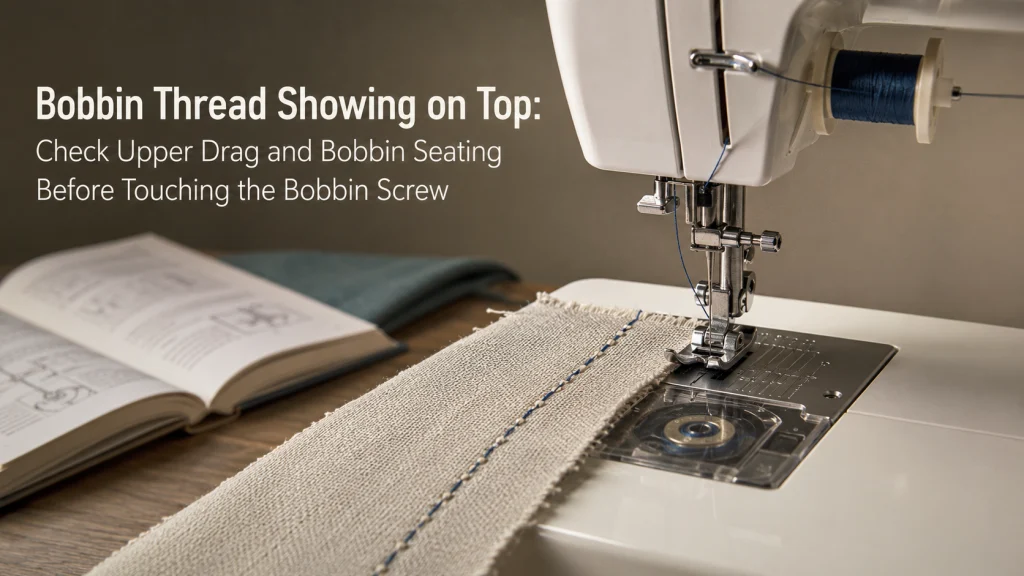
Bobbin Thread Showing on Top: Check Upper Drag and Bobbin Seating Before Touching the Bobbin Screw

Bobbin Thread Showing On Top

Bobbin thread showing on top means the lower thread is being pulled farther toward the top surface than it should be for the seam you are trying to make. Before touching a bobbin-case screw, confirm that the visible thread is really the bobbin thread, then check upper-thread freedom, upper threading, bobbin orientation, and the documented

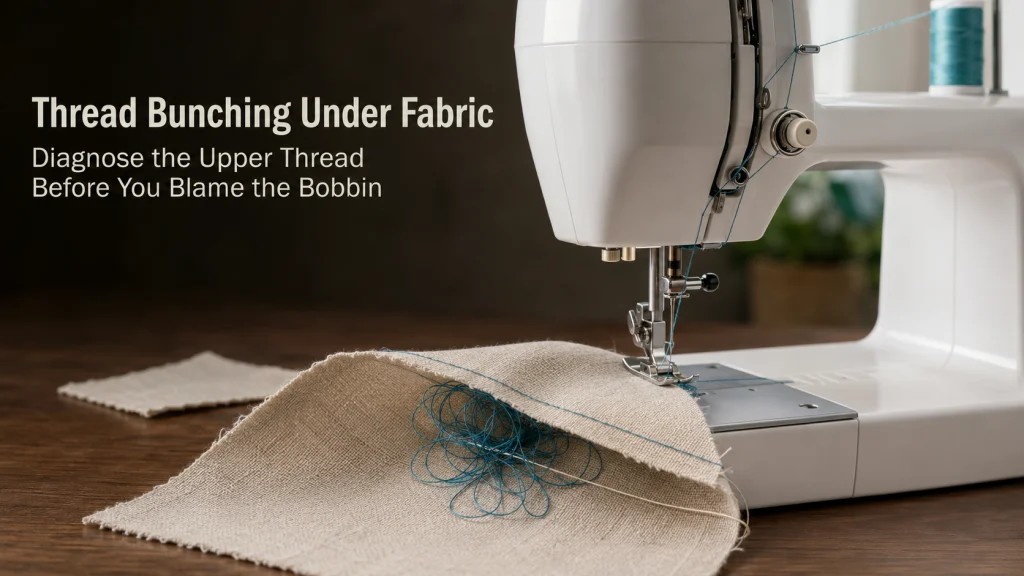
Thread Bunching Under Fabric: Diagnose the Upper Thread Before You Blame the Bobbin

Thread Bunching Under Fabric

Thread bunching under fabric usually needs an upper-thread check before a bobbin adjustment. When the top of the seam looks comparatively clean but loose loops or a bird nest collect underneath, trace which thread color forms the mass, then restore the upper threading path exactly as the machine documentation requires. Verify the bobbin type and

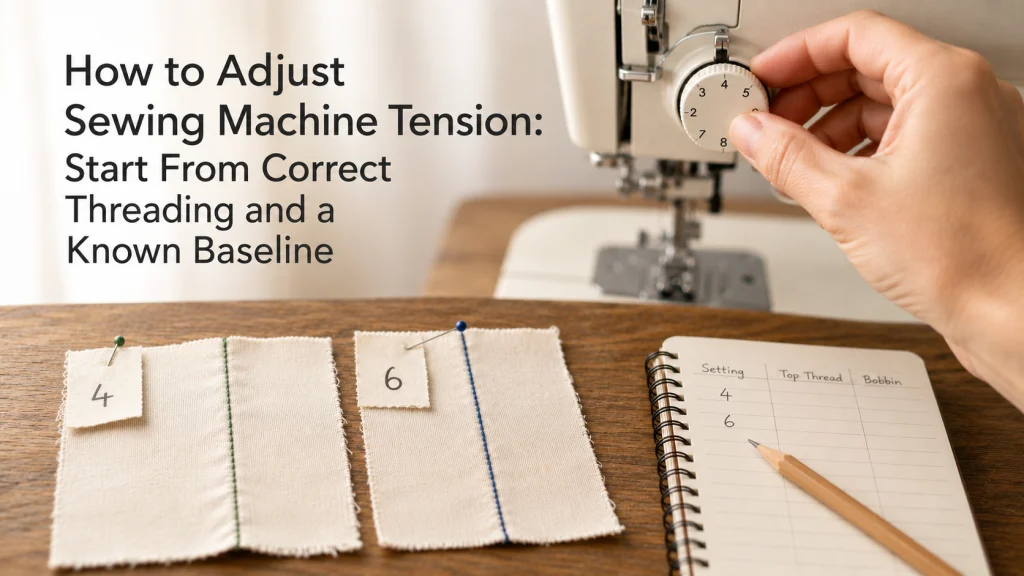
How to Adjust Sewing Machine Tension: Start From Correct Threading and a Known Baseline

Sewing Machine Tension Adjustment

Sewing machine tension should be adjusted from a known, correctly threaded baseline, not from a random dial position or a symptom that has not been checked. The useful control for normal owner adjustment is usually the user-facing upper-thread tension control, and its starting value depends on the exact machine documentation. A representative test sample lets

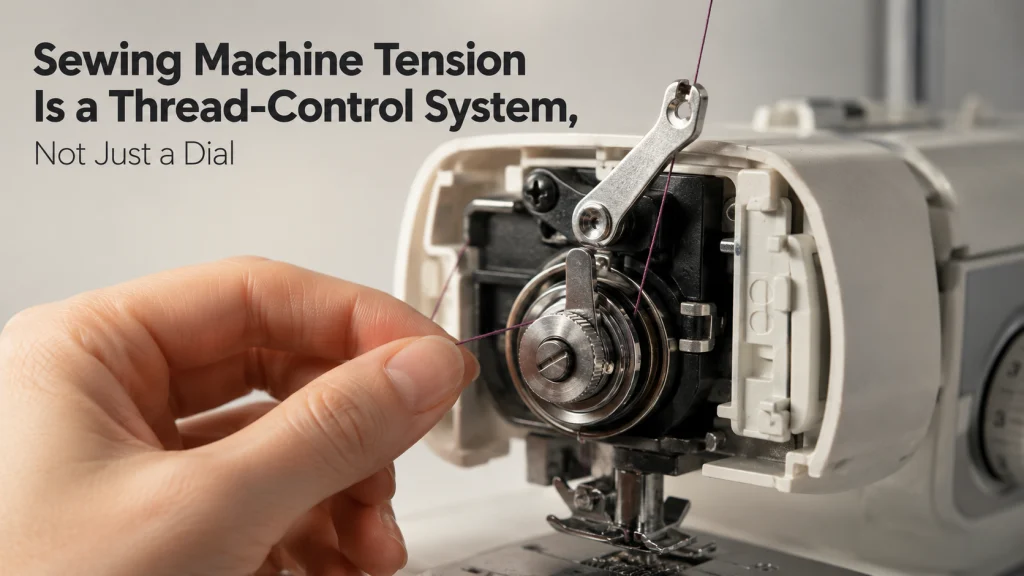
Sewing Machine Tension Is a Thread-Control System, Not Just a Dial

How Does Sewing Machine Tension Work

Sewing machine tension is a system for controlling thread resistance and temporary slack, not simply a number on a dial. On a typical domestic lockstitch machine, the upper thread passes through guides, tension discs and the take-up system, while the lower thread meets its own controlled resistance at the bobbin area. The presser-foot position can