Presser Foot Pressure: Change Fabric Hold Only on Machines That Actually Allow It
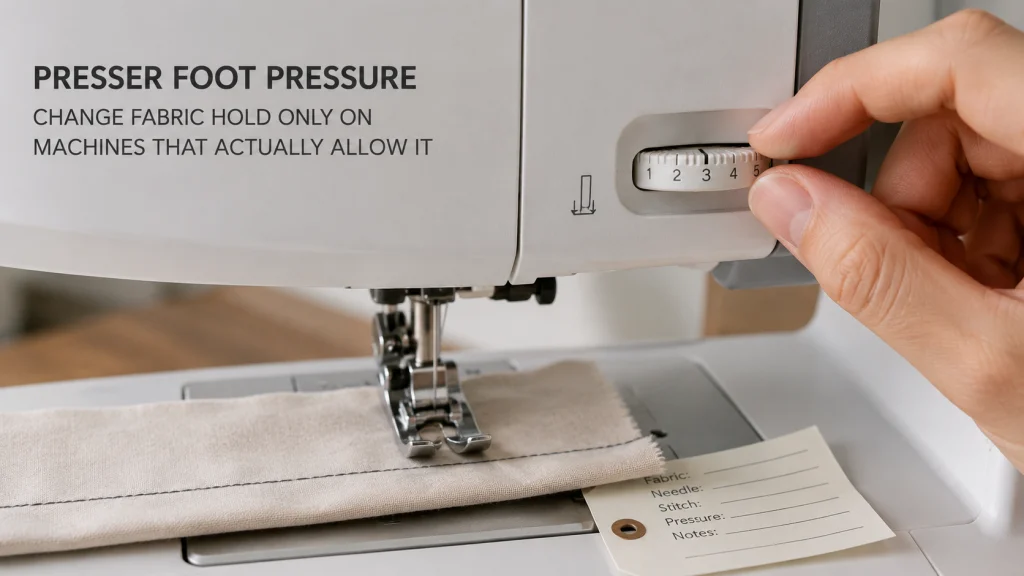
Presser Foot Pressure

Presser foot pressure controls how firmly an eligible sewing machine holds fabric against the feed system while stitching. Before changing it, confirm that the exact model actually provides an owner-adjustable pressure control, record the documented normal setting, and test on the same fabric stack you plan to sew. Pressure changes should be small, deliberate, and
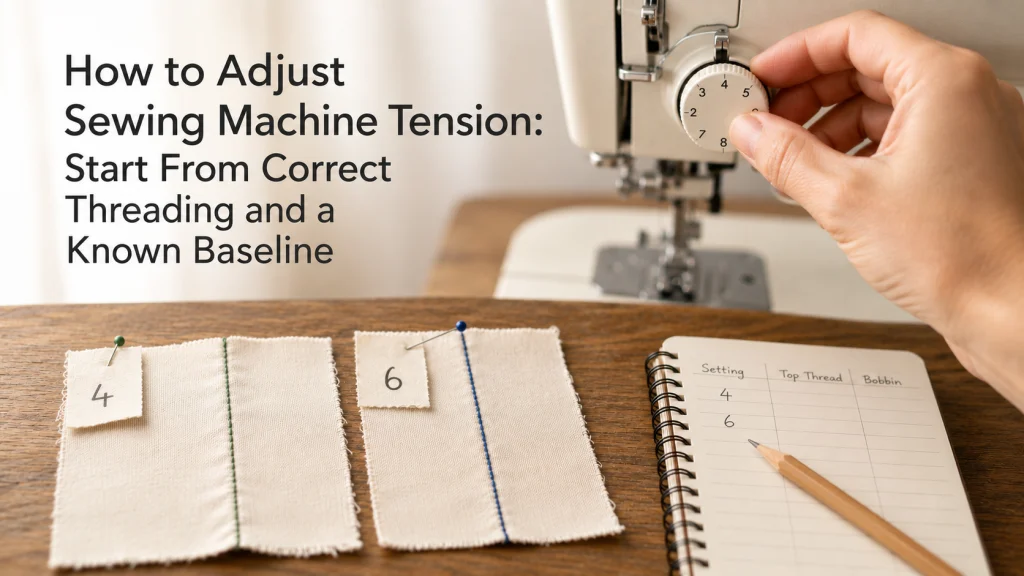
How to Adjust Sewing Machine Tension: Start From Correct Threading and a Known Baseline

Sewing Machine Tension Adjustment

Sewing machine tension should be adjusted from a known, correctly threaded baseline, not from a random dial position or a symptom that has not been checked. The useful control for normal owner adjustment is usually the user-facing upper-thread tension control, and its starting value depends on the exact machine documentation. A representative test sample lets

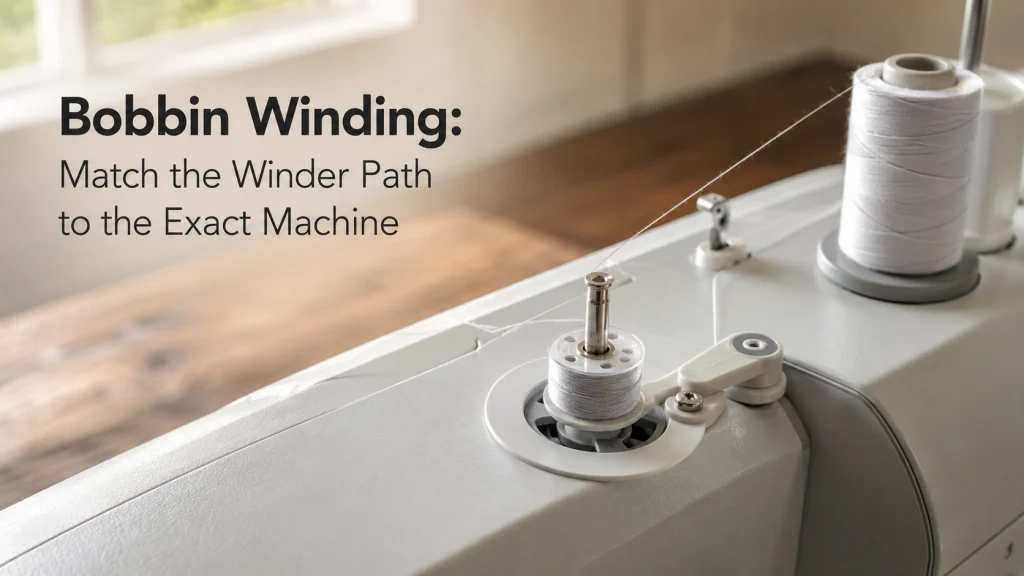
Bobbin Winding: Match the Winder Path to the Exact Machine

Bobbin Winding

Winding a bobbin is a normal setup task, but the correct path is not universal across domestic sewing machines. The reliable method is to confirm that the empty bobbin already fits the machine, then follow the exact spool position, winder guide or pretension path, spindle engagement, starting-tail instruction, and stop point shown for that model.

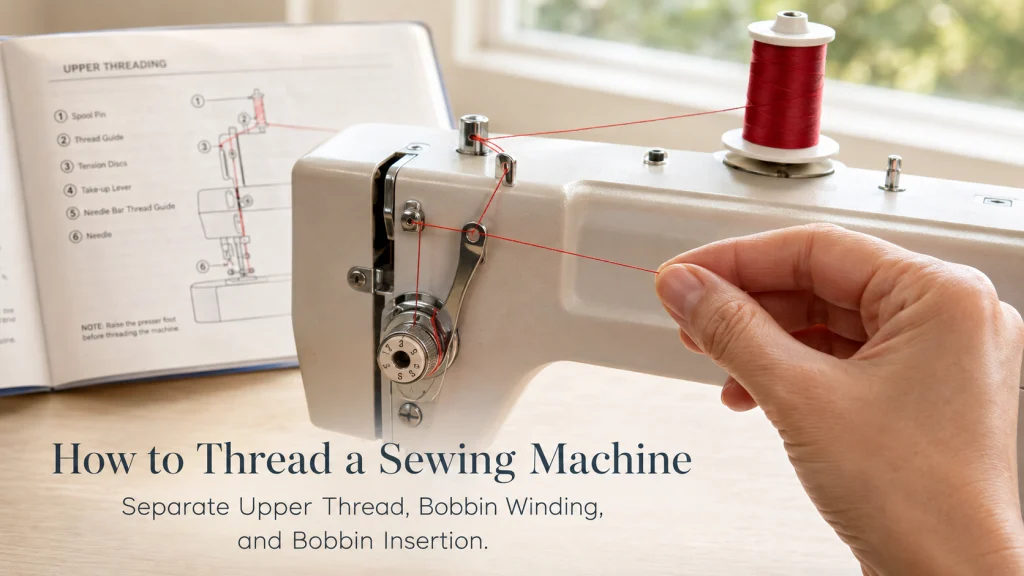
How to Thread a Sewing Machine: Separate Upper Thread, Bobbin Winding, and Bobbin Insertion

How To Thread A Sewing Machine

Threading a domestic sewing machine is not one continuous universal path. It is a set of separate jobs: preparing the upper thread path, winding a bobbin, inserting that bobbin correctly, and, on machines or techniques that call for it, bringing the lower thread to the top. The exact model manual controls spool orientation, bobbin direction,