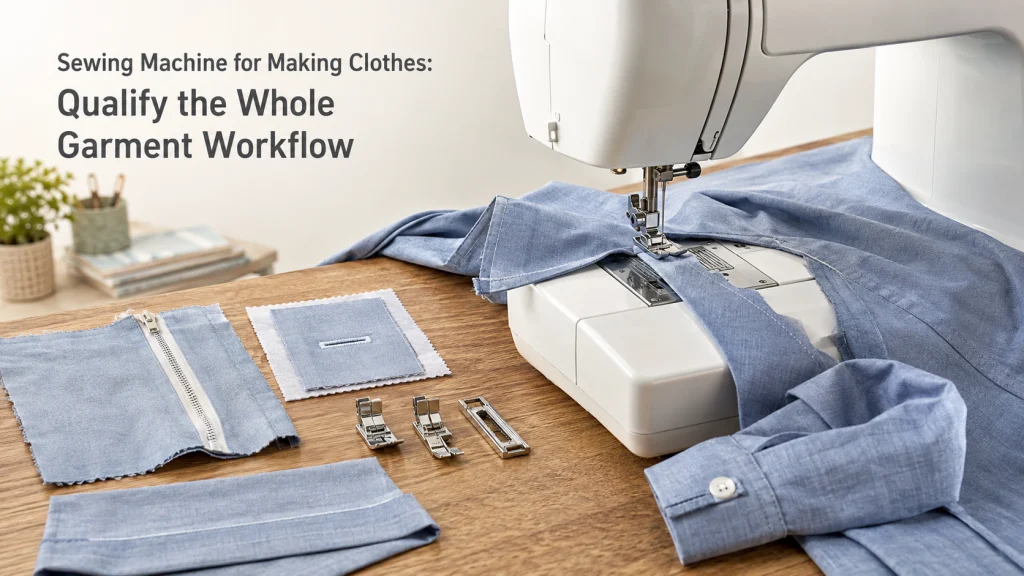
Sewing Machine for Making Clothes: Qualify the Whole Garment Workflow
Sewing Machine For Making Clothes

A sewing machine for making clothes should be qualified against the complete garment workflow, not stitch count or a broad beginner label. Start with the clothes you plan to sew, then check utility stitches, closures, hems, narrow areas, compatible feet, controls, and the fabrics that will pass under the presser foot. A feature list can
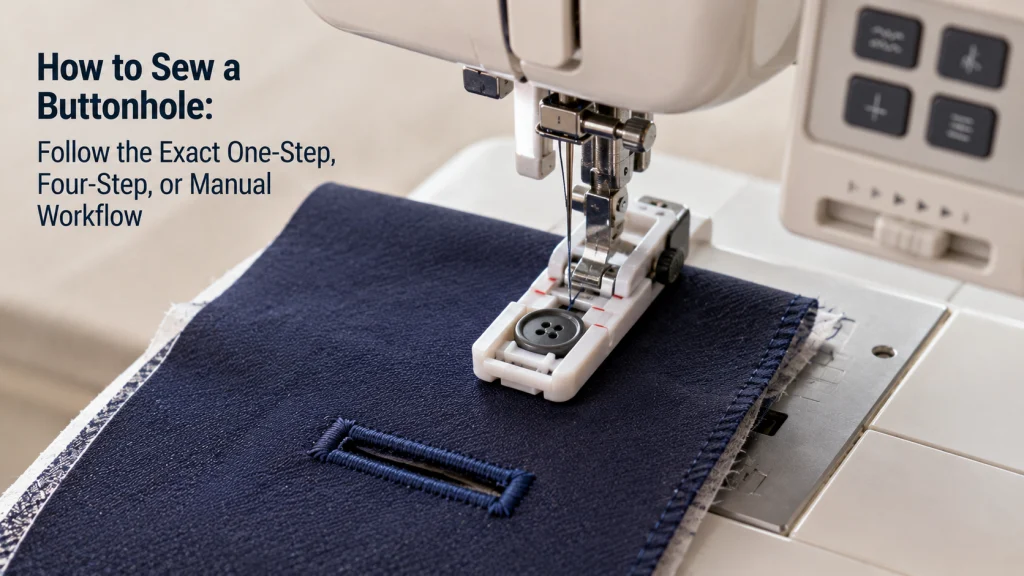
How to Sew a Buttonhole: Follow the Exact One-Step, Four-Step, or Manual Workflow

How To Sew A Buttonhole

How to sew a buttonhole depends first on the buttonhole system built into the exact sewing machine. A one-step system may use a button-guided foot and lever, a four-step system requires deliberate stage changes, and some machines document a more manual zigzag sequence. The safest workflow is to identify that system in the manual, prepare

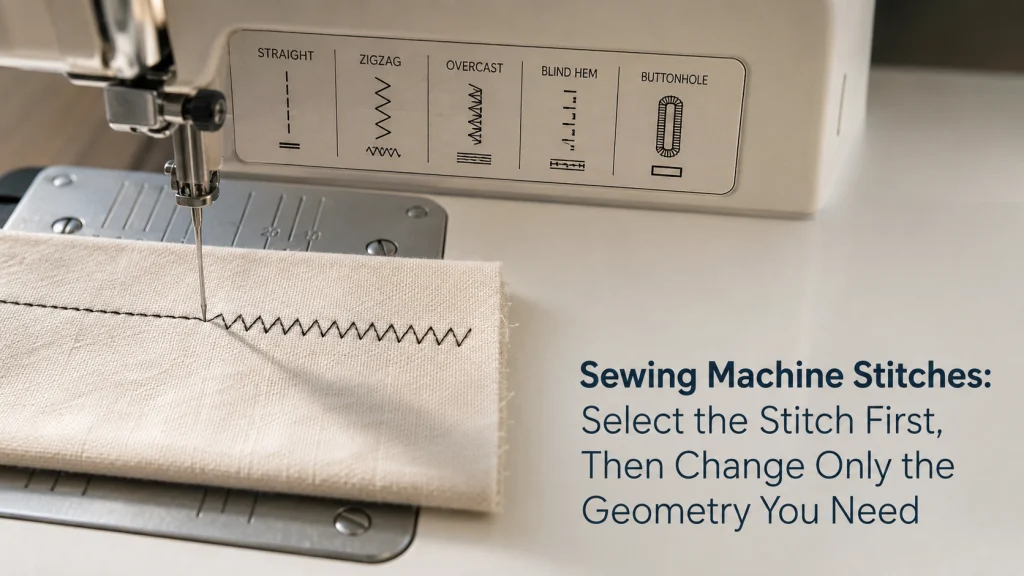
Sewing Machine Stitches: Select the Stitch First, Then Change Only the Geometry You Need

Sewing Machine Stitches

Sewing machine stitches make more sense when you start with the sewing job instead of the stitch number. On a functioning domestic machine, the practical sequence is to identify the stitch in the exact chart or on-screen menu, select it with the documented control, check which settings that stitch actually allows, and test the result

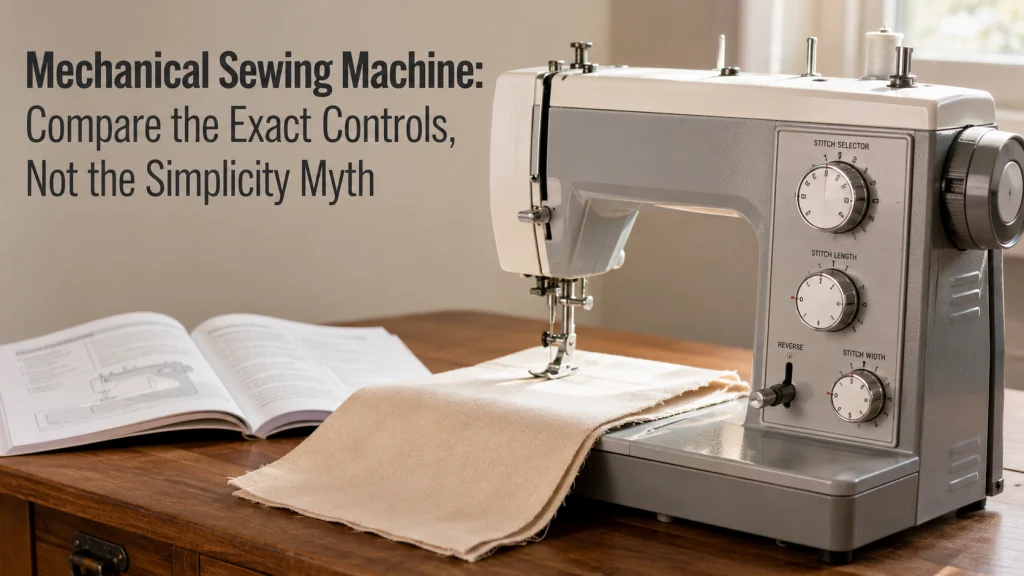
Mechanical Sewing Machine: Compare the Exact Controls, Not the Simplicity Myth

Mechanical Sewing Machine

A mechanical sewing machine gives you direct physical controls, but that label does not tell you how many useful adjustments, feed controls, buttonhole steps, or support options a specific model provides. The practical way to choose is to write down the controls you actually need, verify them against the exact current model page and manual,