The strongest sewing machine choice starts with the work you expect the machine to do, not with a universal ranking. A useful comparison narrows the field by machine class, control style, recurring material stacks, required adjustments, workspace, documentation, service access, and the cost of the complete setup. Current specifications can tell you what a machine includes and how it is controlled, but they do not prove that every buyer will get the same result on every fabric or project. By the end, you should have a written buyer brief that makes broad sewing machine comparisons much easier to judge.
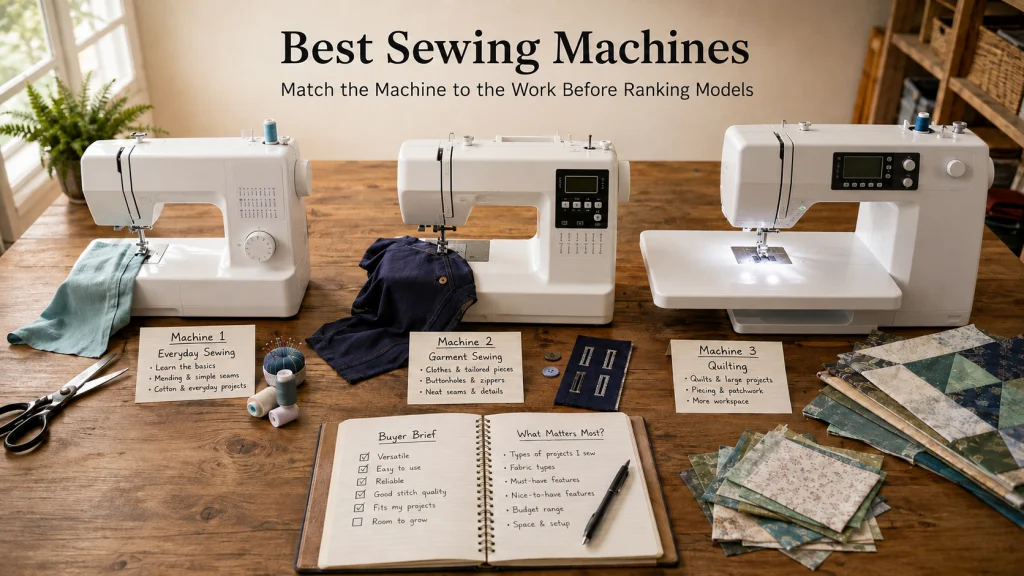
Two highly rated machines can solve different jobs
The phrase best sewing machines becomes useful only after the job is defined. One well-reviewed domestic machine may emphasize simple controls, a small footprint, and a short learning curve, while another may offer electronic speed control, more stitch adjustments, a larger work area, or a broader included accessory set. Both can earn strong reviews without being equally suitable for the same person.
Consider two home sewists. The first mainly hems pants, repairs seams, and makes simple cotton bags at a kitchen table that must be cleared after every session. The second regularly handles garments, layered seams, buttonholes, and larger pieces of fabric in a permanent sewing space. A single ranking hides those differences, so the useful question is not which machine sits at number one, but which machine satisfies the written brief with the fewest important compromises.

The SINGER M1150 is a compact, lightweight sewing machine designed for straightforward everyday sewing and mending. Its simple stitch selection and preset settings keep setup manageable for beginners without adding unnecessary complexity. The portable design also makes it a practical fit for smaller sewing spaces or users who need a machine that is easy to store.
Check On AmazonIf you click this link and buy, we earn a commission at no additional cost to you.
Define the general-purpose domestic machine scope
This comparison is limited to general-purpose domestic sewing machines for US home sewists and small makers. The machine should be capable of ordinary construction, repairs, hems, buttonholes, and other common home sewing tasks when the exact model, needle, thread, presser foot, settings, and material stack are appropriate. The goal is to compare normal household sewing systems, not every machine that can put thread through material.
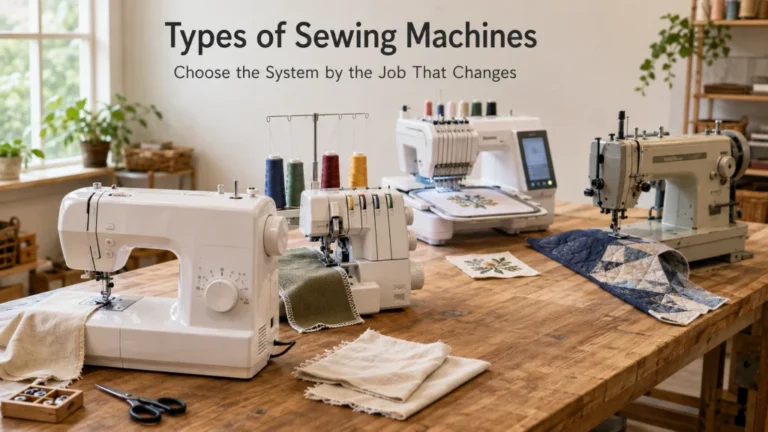
A serger, coverstitch machine, embroidery-focused system, longarm, or specialist industrial machine answers a different equipment question. The same boundary applies when a buyer needs unusually heavy materials, production-level throughput, a specialized stitch system, or a task that clearly exceeds normal domestic use. Eliminating the wrong machine class before comparing features prevents a broad buying page from pretending that one domestic machine can replace every specialized system.
Write the buyer brief before reading a ranking
A buyer brief records the conditions the machine must satisfy. It turns vague preferences such as “easy to use” into checks against a manual, specification page, dealer information, or disclosed independent test. Write it before opening more sewing machine reviews so a long feature list does not redefine what you actually need.
A list of top rated sewing machines can identify candidates, but it cannot decide which controls you prefer, how much space you have, whether local service matters, or what material transitions appear in your projects. Those conditions belong in the brief first.
Current skill and learning support
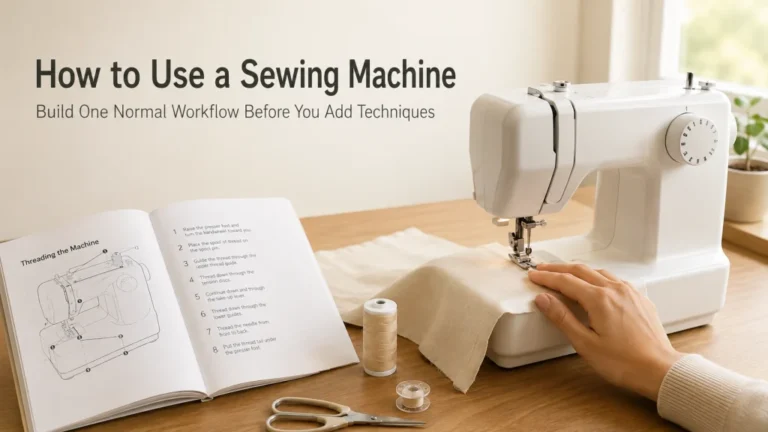
Record what you can already do and what still slows you down. A first-time owner may value a clear threading path, readable controls, a useful manual, accessible bobbin area, and manageable speed more than a large stitch library. A returning sewist may know basic construction but still want strong setup documentation.
Recurring projects and material stacks
Name the projects you repeat, then describe their difficult points. “I sew denim” is less useful than noting that ordinary seams are easy but a jeans hem creates a bulky intersection. A stable cotton seam and a thick transition create different feed conditions, so the material stack matters more than a broad fabric label.
Required stitches and adjustments
List functions tied to real work. Straight stitch, zigzag, reverse, buttonholes, stitch length, stitch width, and needle position may matter more than decorative patterns you never use. Confirm any required function in exact model documentation rather than treating a larger stitch count as proof of better capability.
Control method and low-speed needs
Decide whether you prefer dials, buttons, a display, start and stop controls, or a speed slider. A new owner sewing curves may care about predictable low-speed control, while another sewist may prefer a simple foot control and direct adjustment. Neither preference makes one control family universally better.
Workspace, storage and transport
Measure where the machine will live and how often it must move. Record table depth, available width, storage clearance, and whether the machine travels to a closet or class. Weight alone does not describe portability when the cover, cord, foot control, table, and accessories move with it.
Dealer, warranty and service access
Check who handles warranty work, whether proof of purchase is required, where authorized service is available, and whether manuals remain easy to obtain. A lower purchase price can lose its advantage if support requires difficult shipping. Treat service access as an ownership condition, not a brand shortcut.
| Buyer brief field | Write down | Evidence to check |
|---|---|---|
| Skill and controls | Experience, preferred interface, low-speed needs | Manual, control layout, disclosed test |
| Projects | Recurring jobs and difficult steps | Required stitches, feet, work area |
| Materials | Typical fabric and thickest normal seam stack | Manual limits, test conditions, setup |
| Workspace | Table size, storage, transport frequency | Dimensions, weight, included cover |
| Support | Service access and acceptable warranty route | Warranty terms, support page, dealer policy |
For example, a first-time buyer might write: mostly stable cotton, occasional bulky seam crossings, predictable low-speed control, storage after each session, and a practical local service route. That brief immediately makes oversized feature lists less important and puts control behavior, documented setup, storage fit, and support evidence ahead of decorative extras.
Once those fields are filled in, every candidate must answer the same questions. That makes it easier to discard a machine that looks impressive but does not fit the way you sew.
Eliminate the wrong machine class first
Start by removing machines that cannot answer the basic brief, even if they are popular. A buyer who needs a normal domestic machine for garment construction should not let an embroidery feature set dominate the comparison. A sewist whose recurring work genuinely requires a specialist stitch system should not force that job back into a general domestic shortlist simply because the domestic machine costs less.
The same filter applies to marketing labels. Words such as “heavy duty” are not enough to establish what material stack a machine can feed reliably, which needle and thread combinations are appropriate, or how the machine behaves at a bulky transition. Capability needs exact documentation or testing under disclosed conditions. If that evidence is missing, mark the capability as unknown rather than upgrading the claim.
Set the evidence threshold for every recommendation
Every candidate needs a small claim ledger: exact model, current US documentation, manual, included items, warranty, support route, and any independent test used for performance. Official pages can verify listed specifications, but manufacturer language about ease or capability remains a manufacturer claim unless stronger evidence supports it.
Community discussions help identify repeated buyer confusion, not prove that a function exists or a part fits. Keep the evidence types separate so each claim can be marked verified, claimed, independently observed under stated conditions, or unknown.
A useful independent test names the exact machine, material or seam condition, setup, and observation well enough for the reader to see what was actually tested. A roundup that only repeats specifications, ratings, or an unexplained winner label may still help discovery, but it should not be treated as independent performance evidence.
| Evidence status | What it can support | What it cannot prove alone |
|---|---|---|
| Official specification | Dimensions, functions, included items, controls | Universal stitch quality or durability |
| Manufacturer claim | The maker’s stated design or capability | Independent performance |
| Independent observation | Performance under disclosed test conditions | Untested conditions |
| Unknown | A boundary for missing evidence | Nothing until verified |
Carry that status with the claim. If documentation, availability, or testing changes later, the comparison can be updated without turning an old assumption into a fact.
Compare only specifications that change the buying decision
A comparison becomes noisy when every published specification receives equal weight. Keep the fields connected to the brief: controls, stitch adjustment, buttonholes, feed-related controls, workspace, included essentials, documentation, warranty, and service logistics.
This prevents a common first-buyer mistake: assuming the model with the largest number is automatically more capable. Stitch count does not answer whether speed is comfortable, whether the included feet cover your work, or whether service is practical.
Control system and speed control
Separate control family from speed behavior. Computerized machines may add a speed slider or start and stop controls, while mechanical designs may rely more directly on the foot controller. Verify the exact implementation if slow, predictable stitching matters to you.
Stitch adjustment and buttonholes
Count functions only after deciding which ones matter. Garment work may make stitch length, width, needle position, and a repeatable buttonhole process important, while basic repairs may need much less. Compare exact adjustment methods instead of decorative totals.
Feed, presser-foot pressure and workspace
Feed behavior depends on more than one specification. Adjustable presser-foot pressure may help in some conditions, but its presence does not prove that every difficult fabric will feed well. Workspace also matters when project bulk grows even if the seam itself is ordinary.
Included feet, table, cover and documentation
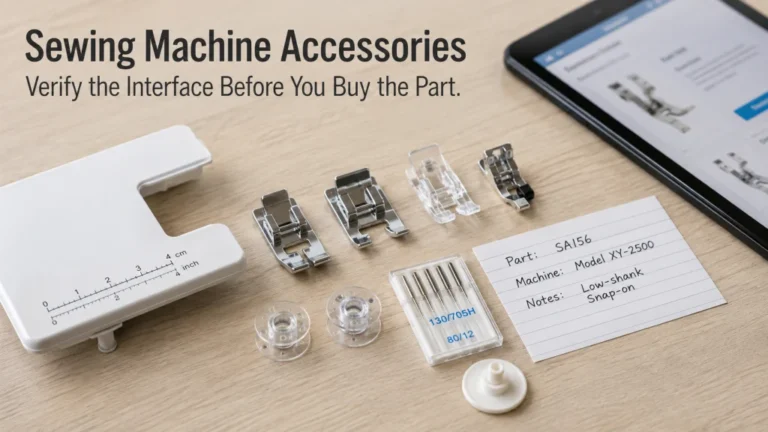
Included items can change the real first purchase. If a required zipper foot is already included, that differs from needing another order after purchase. For any foot, bobbin, adapter, or interface part, verify fit by exact machine documentation rather than appearance or a generic name.
Warranty, support and service logistics
Read the warranty as an ownership document, not as one headline number. Coverage may differ by component and period, while service can depend on proof of purchase, seller, authorized center, or shipping. Check the exact terms and route that apply to the purchase.
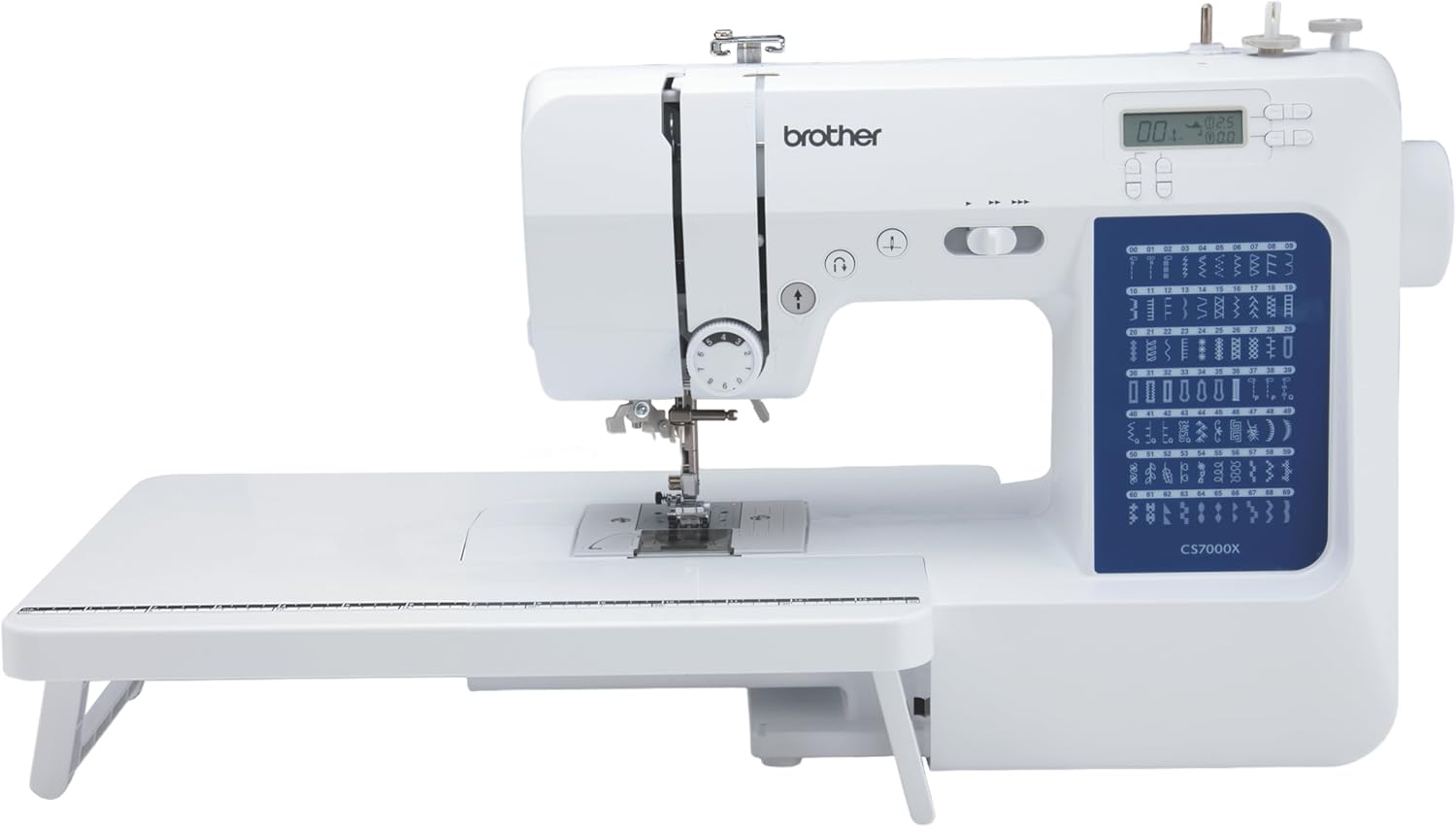
The Brother CS7000X is a computerized sewing and quilting machine with 70 built-in stitches, an LCD screen, variable speed control, and seven one-step buttonholes. It includes 10 sewing feet, a wide table, and a protective hard case. These documented features make it useful for comparing controls, workspace, included accessories, and stitch options.
Check On AmazonIf you click this link and buy, we earn a commission at no additional cost to you.
Build a current shortlist by named buyer brief
A shortlist should be bounded before any model earns a place. Because the right candidate changes with the brief, this page does not turn one current model into a universal winner. Define what must be true, then compare only candidates that pass the same threshold.
The table shows how to shortlist without substituting a product name for the decision. Each row starts with a buyer situation and identifies what must be verified before purchase.
| Named buyer brief | Best fit requires | Not a fit when | Unresolved test |
|---|---|---|---|
| First machine for repairs and simple projects | Clear setup, essential utility stitches, manageable speed, accessible documentation | Controls or support add unnecessary difficulty | How intuitive the controls feel |
| Returning sewist making garments | Useful adjustments, buttonholes, common garment feet, predictable control | Required functions or feet are missing | Performance on normal fabrics and seam transitions |
| Home sewist with limited storage | Measured storage fit, reasonable transport, contained essentials | Machine and accessories are awkward to move | Repeated setup convenience |
| Mixed-project sewist with larger pieces | Adequate work area, required controls, usable support | Workspace or required functions are too limited | Handling of the largest normal project |
A candidate can pass one row and fail another. “Best” is therefore a match between requirements and evidence, not a title that has to fit everyone.

The Brother HC1850 is a computerized sewing and quilting machine with 185 built-in stitches, including eight one-step buttonhole styles and 55 alphanumeric stitches. It uses an LCD screen for stitch selection and includes eight sewing feet. A wide extension table is also included for projects that benefit from additional working space.
Check On AmazonIf you click this link and buy, we earn a commission at no additional cost to you.
Explain why each candidate fits and where it stops fitting
For every machine that survives the first filter, write one sentence explaining the fit and one sentence explaining the limit. A useful fit statement names the buyer condition: the controls match the buyer’s preferred interface, the documented work area fits the planned projects, or the included essentials cover the first set of tasks. A useful limit statement names what the evidence does not establish.
This keeps the final comparison from becoming sales copy. If independent testing used ordinary cotton and a slippery liner, do not extend that observation to leather, upholstery stacks, or repeated heavy seams. If an official page lists a speed control slider, that proves the control exists, not that every beginner will find it comfortable. The best sewing machine for one brief can remain a poor match for another without either judgment being contradictory.
Record exclusions, unavailable models and unsupported claims
An exclusion ledger shows why an attractive candidate was removed. Exclude a machine when it falls outside the domestic scope, lacks a required control, cannot be verified as currently supported, creates an unacceptable service problem, or relies on an unproven capability claim.
Availability matters too. A discontinued or materially revised model should not remain in a current comparison because old reviews still rank it highly, and a changed bundle can alter the complete purchase.
| Exclusion reason | What to record | What would change the decision |
|---|---|---|
| Wrong machine class | The job belongs to a specialist system | A different buyer brief |
| Missing required function | Control or adjustment not documented | Verified documentation |
| Unsupported capability | Claim relies on marketing or an undisclosed test | Manual evidence or disclosed testing |
| Availability problem | Model is discontinued, replaced, or unavailable | A current supported replacement |
| Service mismatch | Warranty or service route does not fit | A workable authorized route |
Keeping the reason makes updates cleaner. When a condition changes, you can revisit the recorded decision instead of preserving a stale recommendation.
Price the complete first-year setup, not the machine alone
Purchase price is only part of the first-year decision. Compare what the exact package includes, then account for needles, thread, model-correct bobbins, genuinely needed feet, maintenance expectations, and realistic service access.
Do not add accessories simply because they exist. Start with the projects in the buyer brief and identify only the items required for those tasks.
- Confirm the exact current package contents.
- List needles, thread, and compatible bobbins for the first projects.
- Add only feet or workspace accessories tied to planned work.
- Check whether a cover or case matters for storage and transport.
- Record warranty, maintenance, and service logistics.
- Keep room in the budget for normal consumables.
This is not an argument for buying more. It puts competing purchases on the same basis and leaves room for the possibility that a simpler setup is already sufficient.

The Brother XM2701 includes 27 built-in stitches, a one-step buttonhole, and six sewing feet. Its package also includes a needle set, twin needle, bobbins, and a manual, while the machine uses a drop-in top bobbin and automatic needle threader. The included accessories make it a useful example when comparing the cost of a complete first sewing setup.
Check On AmazonIf you click this link and buy, we earn a commission at no additional cost to you.
Separate user and skill questions from the broad ranking
If the unresolved question is whether the machine suits a first-time owner, a returning sewist, an experienced user, or another specific user situation, the comparison needs a more detailed buyer profile rather than another broad ranking. The sewing machine selection process focuses on turning skill, learning needs, and user conditions into a usable brief.
Use that narrower decision when two machines both meet the general domestic scope but differ in learning curve or control demands. It keeps this page from pretending that “beginner” is a complete specification.
Separate control-family questions from the broad ranking
If the real decision is mechanical controls versus electronic or computerized controls, solve that question directly. The comparison of mechanical and computerized sewing machines should be used when interface, speed control, adjustment method, or electronic convenience is driving the purchase.
Once the preferred control family is clear, return to the buyer brief and compare candidates inside that boundary. This avoids giving one control style an automatic quality advantage when the better choice depends on how the owner wants to operate the machine.
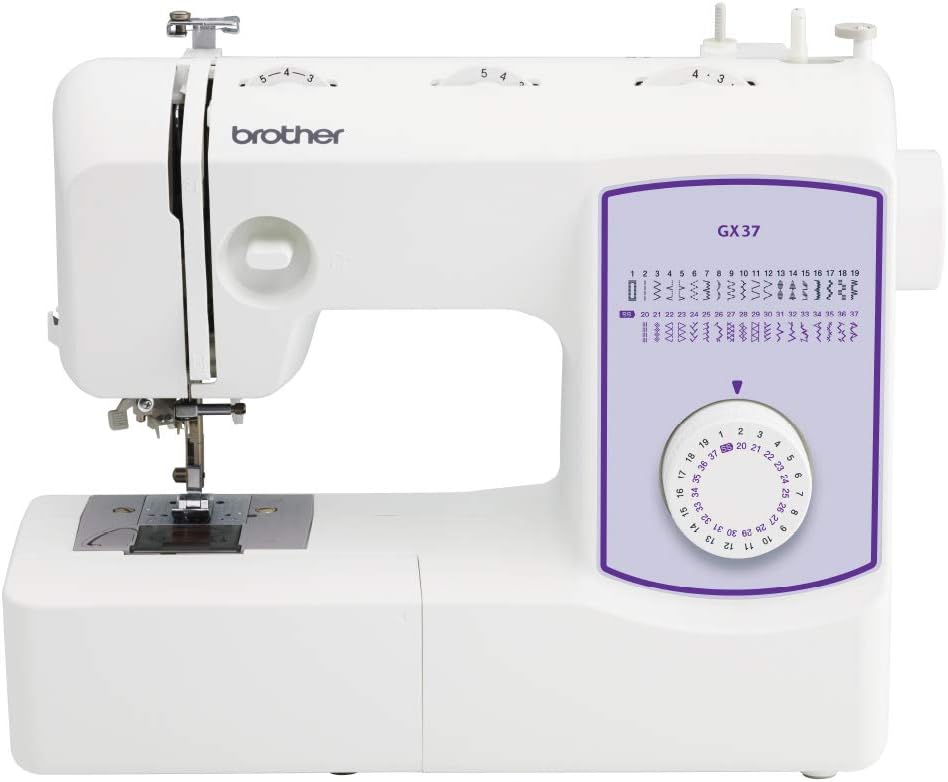
The Brother GX37 is a mechanical sewing machine with 37 built-in stitches and dial-based stitch selection. It includes six sewing feet, a needle set, bobbins, a foot controller, and setup documentation. Its direct dial controls make it a concrete option for buyers comparing a mechanical interface with computerized button-and-screen controls.
Check On AmazonIf you click this link and buy, we earn a commission at no additional cost to you.
Separate material questions from the broad ranking
If the purchase starts with a named material requirement, that material should control the comparison. The machine and fabric matching framework looks more closely at material changes, seam stacks, feed conditions, needle and thread relationships, and the limits of broad “all fabrics” claims.
Use that route when ordinary woven cotton is not the difficult part of the job. A machine that looks well suited to general domestic work still needs specific evidence before it is treated as capable of a recurring thick, slippery, stretchy, or layered condition.
Separate project questions from the broad ranking
Sometimes the recurring project matters more than the general feature set. If the buyer keeps asking what machine fits repairs, garments, quilting, home decor, or another repeated home-sewing use, start with the sewing machine and home project match rather than forcing every use case into one universal list.
A project-led comparison can rank the importance of workspace, buttonholes, feed, portability, or accessory needs differently. That more specific starting point is useful when the buyer brief already has a clear recurring job.
Separate budget and ownership-cost questions from the broad ranking
If the difficult question is how much to spend, the machine price should not be isolated from the rest of ownership. The breakdown of sewing machine cost and ownership expenses is the better place to compare purchase budget, required extras, consumables, maintenance, and service implications.
Use that calculation before stretching the budget for features that are not in the buyer brief. A less expensive machine that fully covers the planned work can be the more rational purchase, while a higher initial price may make sense only when the added capability or support solves a requirement that actually exists.

The Brother XR3774 is a mechanical sewing and quilting machine with 37 built-in stitches, a one-step buttonhole, and a wide table. It includes eight sewing feet and a free arm for different sewing tasks. The included quilting-oriented workspace and accessories make it relevant when the recurring project plays a major role in choosing the machine.
Check On AmazonIf you click this link and buy, we earn a commission at no additional cost to you.
Separate brand, model-family and used-machine questions from the broad ranking
Brand preference, model-family differences, and used or refurbished condition create another layer of evidence. The overview of sewing machine brands and model families is the appropriate next step when support network, parts path, dealer access, historical model changes, or machine condition is more important than the broad feature comparison.
Do not use brand reputation as a substitute for checking the exact machine. Two machines under the same nameplate can have different controls, included accessories, documentation, service status, or intended use, and a used machine adds condition and service history to the decision.
Final Thoughts: The best machine is the best-supported match to a written brief
A broad ranking becomes useful when every candidate is forced through the same buyer brief and evidence threshold. Define the domestic scope, remove the wrong machine class, compare only decision-changing specifications, record unknowns, and price the setup you will actually need. That process is less exciting than declaring one universal winner, but it produces a decision you can explain and revisit.
Before buying, confirm the exact current manual, included items, warranty, support route, and any compatibility requirement that affects your planned work. If a claim about material capability or performance is not supported by documented conditions, leave it unresolved rather than turning it into a promise. Stop using a machine and seek appropriate service if there is a damaged cord, overheating, smoke, a burning odor, sparks, uncontrolled motion, a hard mechanical lock, or repeated hard needle strikes.
FAQs
🧵 What is the best sewing machine for a beginner?
The best sewing machine for a beginner is one whose controls, documentation, speed behavior, essential stitches, workspace, and support match that person’s first projects. Beginner status alone is not enough to choose a specific control family or model.
⚙️ Is a mechanical or computerized sewing machine better?
Neither control family is automatically better. Compare how the exact machine handles stitch selection, speed control, adjustments, setup, and the functions you expect to use.
🪡 How many stitches do I actually need on a sewing machine?
Start with the stitches required by your recurring projects, then check the adjustment controls that go with them. A larger stitch count does not by itself prove better feed, durability, material handling, or stitch quality.
👖 Can a regular sewing machine sew thick fabric?
It depends on the exact machine, material, number of layers, seam transitions, needle, thread, presser foot, and settings. Do not treat a marketing label or one successful test on another material stack as proof of universal thick-material capability.
💵 Should I spend my full budget on the machine itself?
Usually the more useful comparison includes the complete first setup. Keep room for the correct needles, thread, compatible bobbins, genuinely needed feet, and any service or maintenance cost that affects ownership.
📖 How important is the sewing machine manual before I buy?
It is one of the strongest checks for controls, setup, user-serviceable maintenance, and model-specific instructions. A clear current manual also lets you verify claims that a short retail listing may leave ambiguous.
References and Sources
- Better Homes & Gardens sewing machine testing: Shows a current tested roundup using different buyer labels, setup criteria, fabric tests, controls, features, and value rather than one specification alone.
- The Spruce sewing machine testing: Provides another current tested comparison with its own shortlist and evaluation method, illustrating why broad winner labels need disclosed conditions.
- Sewing.org machine buying checklist: Supports checking intended work, portability, controls, manual quality, guarantee, and service when evaluating a sewing machine.
- r/sewing machine selection guide: Used for community-level buyer questions around intended use, budget, new versus used machines, service routes, and the personal nature of machine choice.
- Janome US warranty information: Verifies that warranty service can depend on registration, proof of purchase, authorized dealers, and the purchase route.
- SINGER warranty and service support: Supports checking model-specific warranty terms, claim procedures, service channels, and support logistics instead of relying on a headline warranty number.
- Brother US model documentation example: Used as an official documentation example showing separate disclosure of controls, dimensions, included feet, manuals, warranty, and support details.
- Janome US model documentation example: Used as an official documentation example showing separate disclosure of controls, stitch adjustments, workspace, included items, manual access, and dealer information.