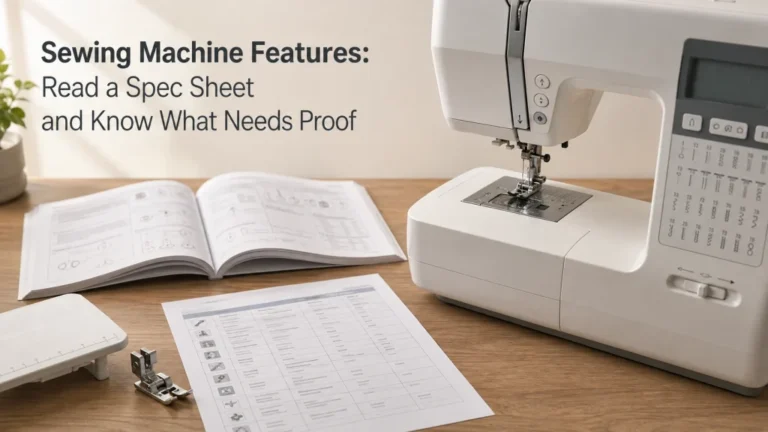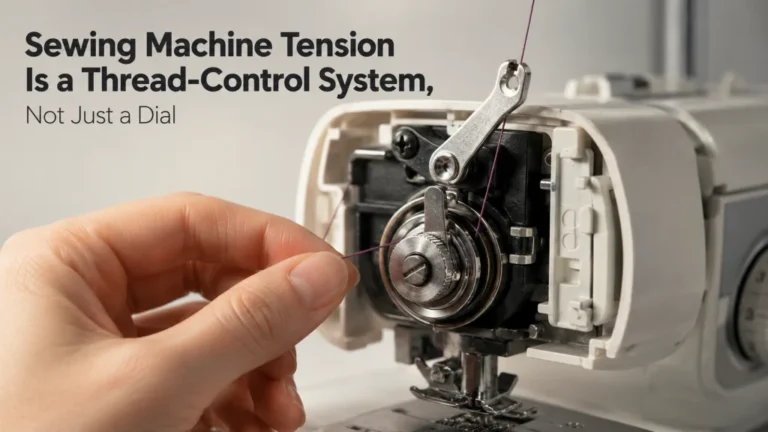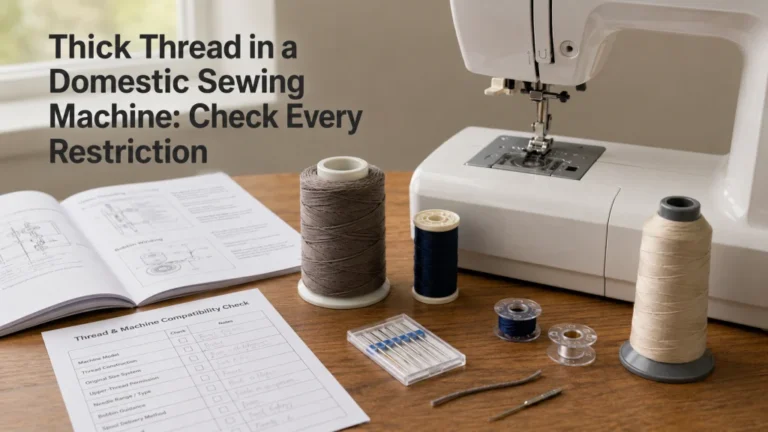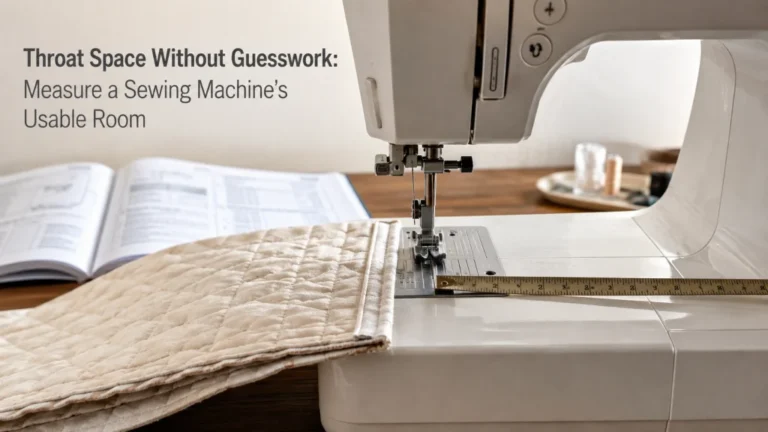
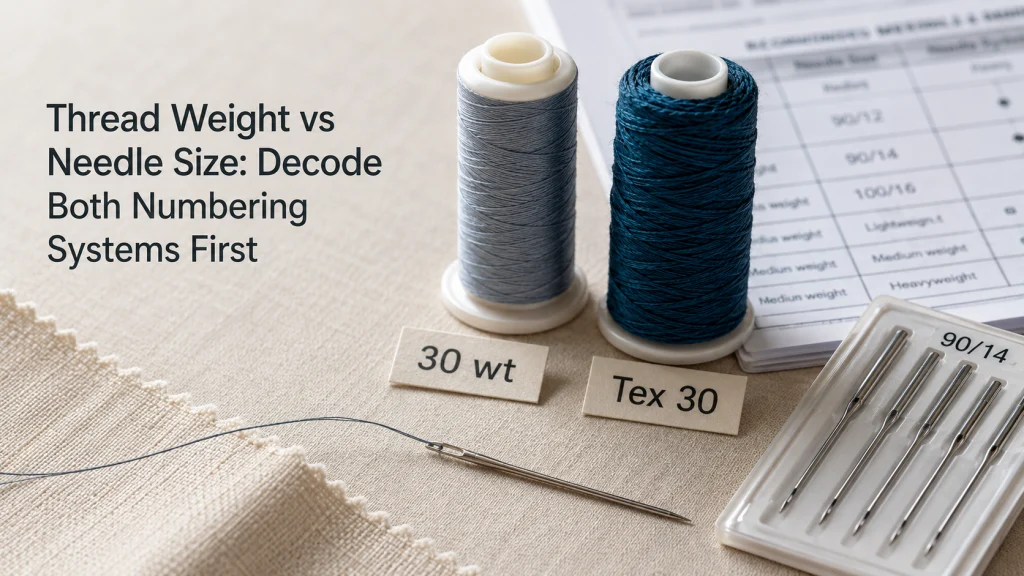
Thread weight vs needle size is not a direct number match because thread systems can count in opposite directions. Identify the thread system first, keep its original unit, then read the needle size separately. A usable pairing must also fit the exact machine, needle system, fabric, and documented operating range. The goal is to judge whether a chart applies, not to memorize one universal conversion.
Why Thread Weight vs Needle Size Starts With the Unit
Place a 30 wt thread, a Tex 30 thread, and a size 30 ticket label together. The repeated number does not prove equal thickness because each label can use a different sizing system with its own counting direction and assumptions. Weight numbers can run toward finer thread as the number rises, while Tex runs toward heavier thread. Ticket labels add another variable because their meaning can depend on the standard and source. That makes the unit part of the value, not a footnote that can be dropped.
A needle and thread size chart becomes useful only after every number has a named system. Identify the thread unit, read the needle designation, then check whether the thread has suitable eye and groove clearance on the needle type you actually intend to use. The broader fabric, thread, and needle relationship also matters because the material can change the usable combination. This article stays with size decoding and clearance rather than thread buying, tension adjustment, or fault diagnosis.
Compare Physical Thread Size With Needle Clearance
The useful comparison is physical thread bulk versus available needle clearance at the eye and along the groove during normal machine stitch formation. A label such as 40 wt or Tex 25 points toward that question but does not measure every construction detail, finish, or actual thread diameter printed nowhere on the spool. A commercial thread label may not state the thread’s actual diameter. That limit matters when a chart appears more exact than its underlying data.
The upper thread must pass repeatedly through the eye and travel along the needle blade as stitches form at normal machine speed. A numerical pairing is not enough if the thread is crowded or mechanically forced. The supported setup for the machine can also restrict usable needle sizes or thread ranges. Resolve conflicts among the spool, needle package, and model documentation before trying a heavier combination on the intended fabric and layer stack.
Read Household Needle Metric and American Numbers Separately
A household needle marked 90/14 carries two size designations for one needle. SCHMETZ explains that NM 90 represents a 0.90 mm blade diameter at the defined measuring point. The second number is the familiar Singer or international designation shown with the metric size on many household needle packages sold in the United States. As household needle size rises, the needle becomes larger, so 100/16 is nominally larger than 90/14 even though neither number describes thread size.
The paired notation helps identify the same nominal size across different household packages without treating the two numbers as separate performance ratings. It does not prove identical eye geometry, point style, groove, or intended use. Two needles marked 90/14 can differ in eye size, groove width, point design, and other features that affect thread handling. The broader explanation of how sewing machines work helps place those size labels in the full machine stitch-forming system.
Decode Thread Weight as an Inverse System
Thread weight is easy to misread because its numerical direction differs from Tex and because commercial product labels do not always clearly explain the sizing system beside the number. In the SCHMETZ sizing guide, higher weight numbers represent finer or lighter thread within that system. A 30 wt label therefore cannot be interpreted like Tex 30 simply because both show 30. The unit must stay attached to the number whenever the thread is compared, recorded, or transferred into a worksheet or chart.
Unlabeled charts are risky for the same reason. A column containing 30, 40, and 50 means little if it does not identify weight, ticket, manufacturer count, or another system used for that thread construction. Treat a missing heading as missing technical evidence, not permission to guess the direction or system. Copy the exact spool wording, including any wt abbreviation or construction notation, before comparing the thread with any needle size.
Decode Tex and Denier as Mass-per-Length Systems
Tex and denier move toward heavier thread as their numbers increase. Tex is the mass in grams of 1,000 meters of thread. Denier is the mass in grams of 9,000 meters. Their direction alone shows why a larger number cannot be called universally finer or thicker.
These definitions still do not justify universal cross-system conversions. Ply, construction, fiber, finish, and labeling rules can affect how a commercial thread should be interpreted when two products carry superficially similar numbers. SCHMETZ gives a rule-of-thumb relationship among selected values, but that example should remain source-labeled. Use Tex and denier as defined units, then verify any claimed equivalence separately against the construction and source that produced it.
| Thread label | Direction as number rises | What to preserve |
|---|---|---|
| Weight | Finer in the cited SCHMETZ guide | Exact wt label and construction |
| Tex | Heavier | Exact Tex value |
| Denier | Heavier | Denier value and ply notation |
| Ticket or brand size | Source-dependent | Standard or manufacturer context |
This direction map is a filter, not a conversion table. It shows whether two labels even move under comparable rules. It cannot establish equal physical size by itself. Use it to decide what evidence must be checked next.
Treat Ticket and Brand Thread Labels as Source-Dependent
Ticket numbers become risky when detached from the source defining them, especially when a chart circulates as an image without its original heading, construction notes, or equipment context. Toledo Industrial Sewing Machines labels ticket sizes as equivalent to Metric M sizes within its industrial chart. That page also states that smaller ticket numbers indicate heavier thread in its stated context. The industrial thread type, needle range, and equipment scope are therefore part of the number’s meaning rather than optional notes below the chart.
Brand-specific or manufacturer-specific sizing needs the same caution. If a spool says only size 30, do not assume weight, ticket, Tex, or denier. Look for a technical sheet, spool legend, manufacturer sizing explanation, or other documentation that explicitly names the system behind the label. If none identifies the system, preserve the original label instead of translating it into a familiar unit that only appears to fit numerically.
Refuse a Conversion When Construction or Standard Is Missing
Reject a conversion when the chart does not identify its thread systems or construction assumptions. Do the same when domestic and industrial needle ranges appear without a named needle system or machine class. A clean table with precise-looking rows is not evidence by itself. Missing scope makes the conversion incomplete and unsuitable for a confident pairing.
This conservative rule protects against pushing a machine beyond documented limits. Never force thread through an eye or install a needle size that the exact manual excludes. A conversion should reconcile two defined labels rather than hide uncertainty. If the standard cannot be identified, keep the original unit and move to a better source.
- Reject charts that omit the thread sizing system.
- Reject charts that omit the needle system or numbering basis.
- Reject pairings that hide domestic or industrial scope.
- Reject conversions that treat weight, Tex, denier, and ticket as interchangeable.
- Reject recommendations that conflict with the supported range for the machine model.
The checklist is intentionally strict because neat formatting can hide weak scope. Passing the checklist does not prove a pairing is correct. The chart still needs to match the actual thread and machine. It also must stay inside the range supported for that model. If those conditions are not visible, stop at the label rather than inventing a match.
Treat the Needle Eye and Groove as Separate Clearance Points
The eye is obvious, but it is not the only place where upper-thread bulk matters. SCHMETZ advises that the needle eye should be larger than the thread diameter. The long groove also helps accommodate and guide the thread during needle travel. A good pairing therefore considers physical geometry, not only printed numbers.
Think of clearance as two checkpoints. The thread must pass through the eye without force, then travel along the needle as intended during stitch formation. Needle type can alter eye proportions and other features even at the same nominal size. Stop if a thread change produces abnormal movement instead of compensating with unsupported needle sizes.
- Eye: enough room for the thread to pass without force.
- Groove: enough working space during needle travel.
- Needle type: confirm features that change thread handling.
- Machine: confirm the size and type are permitted.
These checkpoints form a practical clearance map. They keep the decision tied to the needle’s job instead of a bare number match. They also explain why equal nominal needle sizes can handle thread differently. Use the needle package and model support material to resolve those differences.
Pair Thread and Needle Only Inside a Named Source and Machine Scope
A sewing machine thread sizing guide is useful only when it identifies who published it and which equipment it covers. Brother publishes fabric, thread, and needle tables for named groups of home sewing and embroidery models. Those values are meaningful for the machines covered by the support answer. The model list is part of the recommendation, not optional background.
Industrial charts show the same lesson from another direction. Toledo links bonded nylon or polyester V and Tex sizes to minimum industrial needle sizes in an industrial-machine context. That chart can explain its own system, but it should not be copied into a domestic chart without its scope. When sources disagree, first check whether the thread system, needle system, material, or machine class differs.
| Source-labeled example | What it shows | What it does not prove |
|---|---|---|
| SCHMETZ sizing guide | A stated rule of thumb among selected sizing systems | Universal equivalence for every construction |
| Brother support table | Combinations for listed domestic models | Ranges for unlisted machines |
| Toledo industrial chart | Industrial V, Tex, ticket, and needle relationships | Domestic-machine compatibility |
Keep the source label attached to every example. Removing it can turn a limited pairing into a false universal rule. Preserve the machine class and thread system with the numbers. Then compare only sources that describe genuinely comparable conditions.
Add Fabric Structure Without Turning This Into a Fabric Chart
Thread clearance is only one boundary in a usable machine-sewing setup, even when the spool label is clear. Fabric affects the needle size and type that can pass through the material appropriately without creating holes, deflection, or an unnecessarily large penetration. A larger eye may suit bulky thread while the larger needle remains unsuitable for delicate fabric. A bulky seam intersection or dense layer stack can create the opposite problem even when the thread label stays unchanged throughout the project.
Keep fabric-first questions separate from thread-number decoding. If material is the starting problem, use the process for choosing needle size for fabric before returning to thread clearance. This prevents fabric structure, needle type, nominal needle size, and thread size from collapsing into one conversion chart that hides which variable changed. The usable decision combines fabric, thread system, needle geometry, and machine limits so no single variable silently overrides the others.
Separate Upper-Thread Pairing From Bobbin Guidance
The needle eye and groove directly govern the upper-thread path. Bobbin thread follows a different route through the machine’s bobbin system, tensioning components, case or holder, and lower-thread path rather than through the needle eye. Some manuals recommend matching upper and lower thread sizes for specified uses, but that instruction is model-specific and should stay attached to the machines it covers. Do not infer bobbin suitability because the upper thread passes through the needle.
This matters especially with heavier decorative or specialty thread. The upper path may have enough clearance while the bobbin system or stated thread range imposes another limit. Check the model’s bobbin guidance before copying instructions from another machine, even when both machines accept visually similar bobbins or use the same general stitch type. Thread sizing and bobbin use meet inside the same system, but they remain different compatibility questions with different evidence requirements and failure boundaries.
Start With Fabric When the Material Drives Needle Size
The spool label is not always the first constraint. Lightweight woven fabric, denim seams, stretch material, and multiple layers can change the suitable needle size or type before thread size is even considered. Brother combination tables begin with fabric categories before listing thread and needle combinations, which keeps the material condition visible instead of treating the spool as the only input. That structure shows why material context can lead the decision.
A first-time owner may assume a larger needle simply solves a heavier-looking thread. The missing question is whether that needle suits the fabric, remains compatible with the machine, and still provides reasonable clearance for the chosen thread. Start with material, verify the needle system and size, then check thread clearance and the supported range for that setup. This order avoids solving one constraint by creating another, such as gaining thread clearance while choosing a needle that is unnecessarily large for the actual fabric.
Treat Thick Thread as a Machine-Capacity Question When Needed
Near a machine’s upper thread range, the problem changes from label decoding to capacity verification. A larger needle eye does not enlarge the hook clearance, bobbin path, thread guides, or other machine limits that may constrain a much heavier upper thread. Brother support material for some model groups states explicit needle and thread ranges. That model-specific evidence outweighs a generic heavy-thread pairing chart because the chart cannot redefine what the machine manufacturer permits.
If the real question is whether you can use thick thread in a sewing machine, switch to that capacity check. Do not exceed the needle range specified for the model because an industrial chart pairs a larger needle with a given Tex size. Stop if thread or needle motion becomes abnormal, resistance rises sharply, or the machine no longer feeds and forms stitches normally. Size decoding identifies the label, but it cannot expand machine capability or make an industrial-size pairing safe for domestic equipment.
Keep Thread Selection and Machine Settings as Separate Decisions
A defined thread size does not by itself tell you which fiber, finish, construction, or brand suits the actual project. Those choices depend on seam purpose, material, machine, expected appearance, thread construction, and other project evidence beyond the number printed on the spool. This page therefore does not recommend a specific thread product. A sizing explanation should not become a shopping list, because equal nominal size does not prove equal construction, machine performance, or suitability for a particular seam.
Tension, stitch length, and other settings are separate decisions again. A thread-size change can affect setup, but the correct response depends on the exact machine, material, needle, stitch, and thread combination being tested. Do not adjust tension to compensate for an unidentified thread label or unsupported needle size. Decode first, verify fit second, then change settings only when applicable documentation and a controlled test on the intended material support the change.
Build a Unit-and-Scope Ledger Before Using a Needle Size to Thread Size Chart
Transcribe each physical label before opening a chart. Record the thread number, unit, and any ply or construction details shown. Record both needle size numbers, needle type, and needle system from the package. Then add the exact machine model and its documented needle or thread range for the intended operation.
This turns “Does size 30 use a size 14 needle?” into a checkable comparison. Size 30 may be 30 wt, Tex 30, or a ticket number that still needs a standard. The ledger also exposes charts written for another needle system or machine class. Once every number has a unit and every pairing has a scope, false conversions become easier to reject.
| Item | Transcribe | Purpose |
|---|---|---|
| Thread spool | Exact size, unit, construction or ply | Prevents mixed sizing systems |
| Needle package | Metric/American size, type, system | Separates size from needle geometry |
| Machine | Exact model | Connects to correct documentation |
| Machine documentation | Needle and thread limits | Sets the model boundary |
| External chart | Publisher, systems, equipment scope | Shows whether the chart applies |
| Label scenario | Ledger action | Decision |
|---|---|---|
| Spool marked only 50/3 | Record 50/3 exactly and look for the maker’s definition of the count and construction | Do not translate it into weight, Tex, or ticket until the system is identified |
| Spool marked ticket 30 with no stated standard | Keep ticket 30 as the original label and locate the standard or manufacturer sizing note | Reject a cross-system pairing while the ticket basis is unknown |
| Spool marked Tex 30 beside a 90/14 needle package | Record Tex 30 and 90/14 as separate defined labels, then add needle type, system, and machine scope | Continue only after clearance and the machine’s supported range are established |
These walk-throughs show why transcription comes before conversion. The first two examples stop because a label or standard is still missing, not because the numbers look unusual. The third has more usable information, but it still does not prove that the combination fits a particular machine or needle type. The ledger works by making missing evidence visible before a chart turns it into an unsupported match.
Keep the worksheet beside the spool until the pairing is resolved. Update it when a manufacturer document clarifies a missing unit or limit. Do not replace the original label with a guessed conversion. The record should preserve exactly what was verified.
Final Thoughts: Identify the Unit Before Trusting the Number
A thread number becomes useful only after its sizing system is known. Weight, Tex, denier, ticket, and brand labels can move differently or rely on different assumptions. Read the needle size separately, then verify eye and groove clearance within the range supported for that machine. This method is more reliable than memorizing a universal chart.
Keep the publisher, thread system, needle system, machine class, and material context attached to every pairing. If one piece is missing, narrow the claim or refuse the conversion. Use fabric-first guidance when material drives needle choice, and use a capacity check when thread approaches machine limits. Trust the chart only when it explains what its numbers mean and where they apply.
Frequently Asked Questions
These questions cover the most common points of confusion when thread and needle labels are compared directly. Each answer keeps the thread unit, needle designation, and machine scope separate. If a spool or chart omits its sizing system, resolve that missing information first. Model-specific documentation remains the final boundary for supported ranges.
🧵 Does a lower thread number always mean thicker thread?
No. Lower numbers can mean heavier thread in some weight and ticket contexts, while Tex and denier become heavier as the number increases. Name the sizing system first.
🪡 What do 90/14 and 100/16 mean on sewing machine needles?
They are paired size designations for household needles. The first is the metric NM size, while the second is the commonly used Singer or international designation.
📏 Can I convert thread weight directly to Tex?
Only when a reliable source states the relationship and its assumptions are clear. Do not create a universal conversion from an unlabeled chart.
👁️ How do I know if a thread is too thick for the needle eye?
Use manufacturer guidance and do not force the thread through the eye. Needle type, eye geometry, thread diameter, and machine limits all matter.
🧶 Is 30 wt thread the same size as Tex 30?
No. Weight and Tex are different systems and their numbers move in opposite directions. A shared number does not establish equal physical size.
⚙️ Can I use an industrial thread chart for a domestic machine?
Not as a universal compatibility chart. Your domestic machine still needs a permitted needle system, size range, and thread range from its own documentation.
Use the ledger above before searching for a pairing. Copy the spool label and needle package exactly instead of relying on memory. If the thread unit cannot be identified, do not guess from the number alone. If a pairing falls outside machine documentation, choose a supported combination instead of forcing the setup.
References and Sources
These sources are necessary because the article depends on definitions and equipment scope that generic charts often omit. SCHMETZ supplies the thread-system direction, Tex and denier definitions, needle designation, and eye guidance used here. Brother supplies a domestic example where thread, needle, fabric, and covered models appear together. Toledo is included only to show an industrial chart whose context must remain attached.
The sources are not interchangeable parts of one universal table. Each supports a different technical boundary and keeps its original unit and equipment scope. That distinction matters most for ticket sizes, industrial V sizes, and model-specific domestic ranges. When exact machine documentation differs, the machine’s own supported range takes priority.
- SCHMETZ thread sizing guide: Defines weight, denier, Tex, their numerical direction, and needle-eye guidance.
- SCHMETZ needle size designations: Explains the NM metric designation and blade-diameter relationship.
- Brother fabric, thread, and needle combinations: Provides model-scoped domestic combinations and stated limits.
- Toledo industrial needle and thread chart: Shows V, Tex, ticket, and needle relationships in an industrial bonded-thread context.
Keep the source name attached to the rule when using these references. Preserve the original unit when recording any cited pairing. Keep domestic and industrial equipment scope separate. Those habits prevent a limited relationship from becoming a universal claim.