Sewing machine throat space is a measurement that describes the room around the needle area, but the number alone does not always describe the same physical distance across brands. A useful comparison starts by identifying the exact measurement endpoints, separating horizontal clearance from vertical opening and support area, and recording what the manufacturer actually publishes instead of converting unlike figures into a false ranking.
Published workspace figures show why endpoints matter. One domestic machine page may report a sewing space value in inches, while another may publish a workspace measurement in millimeters with a separate height value. For example, SINGER publishes a sewing-space measurement in inches for the Quantum Stylist 9960, while JUKI publishes workspace dimensions using millimeters and separate measurements in its DX-series documentation. These figures should be recorded with their original labels before any conversion or comparison.
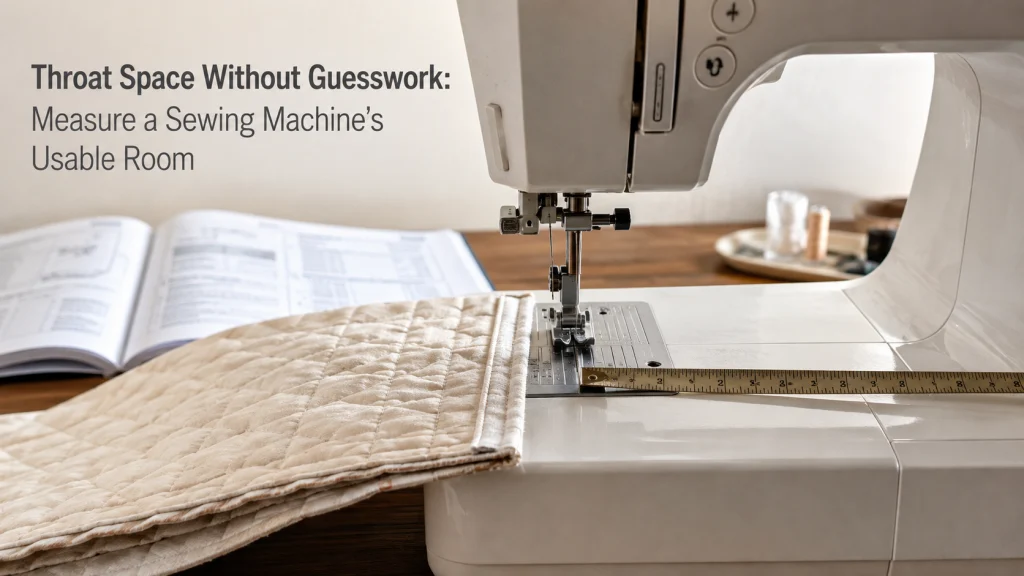
Define throat space for a domestic machine
Throat space describes the open area to the right of the needle where fabric can pass while sewing. On domestic machines, manufacturers may describe this area with terms such as sewing space, workspace, throat space, or distance to the right of the needle. If the surrounding machine structure is still unfamiliar, review how machines work before comparing workspace measurements. Those labels sound similar, but the actual endpoints matter more than the wording.
A larger number can be useful information, but it should not be interpreted as proof of that a machine feeds fabric better, creates better stitches, or is more comfortable to use. The measurement only proves the documented distance or opening that the manufacturer chose to publish.
Locate the horizontal needle-to-tower measurement
The most common throat-space comparison is the horizontal distance from the needle area toward the machine body. This measurement describes the side-to-side room available for fabric, but only when both measurements use comparable endpoints.
For example, one manufacturer may publish sewing space in inches while another publishes a workspace distance in millimeters. Before converting either value, confirm what points were measured. A number without endpoints is incomplete evidence.
Model documentation demonstrates why the label itself matters. SINGER uses the term sewing space for the horizontal area beside the needle, Elna publishes workspace information with its own terminology, and JUKI documentation separates workspace measurements into specific dimensions. These examples are evidence of different reporting styles, not a ranking of which machine has more usable room.

The SINGER Quantum Stylist 9960 is a computerized sewing and quilting machine with 600 built-in stitches and 1,172 stitch applications. The package includes 13 presser feet, a large extension table, a hard dust cover, Class 15 bobbins, and additional sewing accessories. It also provides adjustable sewing speed, a start/stop button, an automatic needle threader, and 13 one-step buttonhole styles.
Check On AmazonIf you click this link and buy, we earn a commission at no additional cost to you.
Separate horizontal distance, vertical clearance and total opening
Throat space is not one universal three-dimensional measurement. Horizontal distance, vertical clearance, and the total visible opening around the needle area answer different questions.
| Measurement | What it describes | What it does not establish |
|---|---|---|
| Horizontal needle-to-tower distance | Side clearance beside the needle | Overall fabric handling ability |
| Vertical clearance | Height of an opening when documented | How easily every project fits |
| Total opening | Combined visible room around the sewing area | A universal project-size limit |
Separate throat space from bed size, extension-table support and free-arm access
A wide flat area around a machine can make fabric easier to position, but that support area is not the same as throat space. An extension table increases support surface; it does not necessarily increase the horizontal distance between the needle and the machine body.
Free-arm access is another separate feature. It changes the shape of the sewing surface around the needle area and should not be counted as additional throat clearance.
Record inches and millimeters without comparing unlike dimensions
Unit conversion is simple only after the measurement itself is confirmed. Converting inches to millimeters does not make two different endpoints equivalent.
| Step | Question |
|---|---|
| 1 | What exact points did the manufacturer measure? |
| 2 | Is the value horizontal, vertical, or a combined opening? |
| 3 | Does the unit match the original published dimension? |
| 4 | Is the comparison between equivalent measurements? |
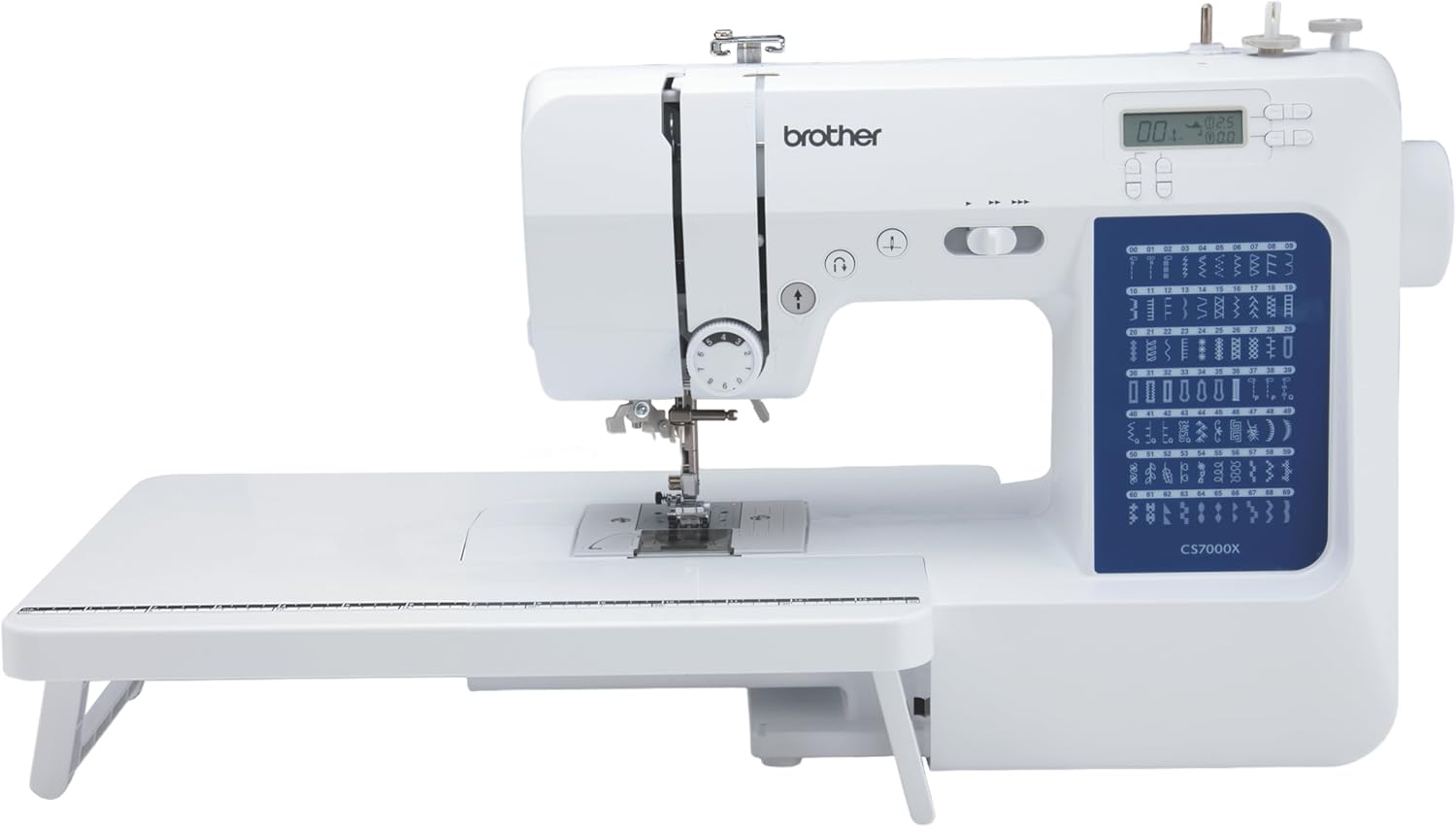
The Brother CS7000X is a computerized sewing and quilting machine with 70 built-in stitches and seven one-step auto-size buttonholes. Its listing specifies a large needle-to-arm workspace, an included detachable wide table, and a smaller free arm for cuffs, sleeves, and other narrow projects. The package also includes 10 sewing feet, a quilt guide, a hard protective case, and a user manual.
Check On AmazonIf you click this link and buy, we earn a commission at no additional cost to you.
Check whether the manufacturer publishes one dimension or a width-by-height pair
Some product pages provide one workspace number, while others publish multiple dimensions. A width-only figure may describe horizontal clearance, while a width-by-height description may provide a fuller picture of the opening.
Keep the original wording with the measurement. A copied number without its label can lose the information needed for a fair comparison.
Distinguish listed clearance from usable room around controls and the presser-foot area
A published throat measurement is a specification, not a complete description of every practical interaction around the machine. Controls, the presser-foot area, needle access, and surrounding surfaces can affect how the workspace feels during normal use.
This does not mean a listed measurement is inaccurate. It means the specification and the usable sewing environment answer different questions.
- Confirm what physical points the manufacturer used as measurement endpoints.
- Check whether the published number describes horizontal needle-to-body clearance, vertical opening, or another dimension.
- Separate extension-table support from the machine’s built-in sewing space.
- Look for nearby controls, presser-foot area, and machine-body restrictions that may affect actual fabric movement.
- Record unknown usable-space details instead of assuming the listed number represents every direction of clearance.
Explain why fabric bulk and support matter without assigning a universal quilt size
More open room can change how fabric is positioned, especially when material occupies the area beside the needle. However, throat space alone cannot confirm from that figure alone a universal project size or guarantee that a specific quilt or bulky item will fit comfortably.
Project handling also depends on factors outside this measurement, including support surfaces, machine setup, and the way the material is managed during sewing.

The Janome JW8100 is a computerized sewing machine with 100 built-in stitches and seven one-step buttonholes. Its package includes an extra-wide extension table, an even feed foot, a quarter-inch quilting foot, and a hard cover. The machine also has a removable free arm, speed control slider, start/stop button, needle up/down control, and a built-in needle threader.
Check On AmazonIf you click this link and buy, we earn a commission at no additional cost to you.
State what a larger opening does not establish about feeding, power, stitch quality or comfort
A larger throat opening proves only that a published dimension is larger under the manufacturer’s definition. It does not establish stronger feeding, better stitch formation, greater motor power, or a more comfortable experience for every user.
Keep those claims separate. Workspace measurement is valuable because it is measurable, not because it can stand in for every other machine characteristic. For the broader specification audit, the sewing machine features guide keeps workspace, controls, and other features in separate evidence categories.
Build an exact-model measurement request for a dealer or owner
When a published page does not answer the workspace question clearly, request the missing measurement instead of guessing.
- Ask for the exact measurement endpoints.
- Ask whether the value is horizontal distance or another opening dimension.
- Ask whether an extension table is included or separate.
- Ask for the original unit used by the manufacturer.
- Record the model name and source of the measurement.
Manufacturer diagrams often show workspace endpoints with arrows or dimension lines, such as a horizontal line from the needle area toward the machine body. When reading a diagram, identify the start point, end point, direction of measurement, and whether the illustration describes an open space measurement or a support area.
Pair workspace evidence with speed-control evidence before later model comparison
Workspace and speed control describe different parts of machine operation. A larger opening does not explain how the machine responds to user input, and speed control does not explain available fabric room.
When comparing specifications later, keep each measurement attached to its own evidence category instead of creating a single score from unrelated numbers. Review sewing machine speed control separately when motion control is the question.

The Brother HC1850 is a computerized sewing and quilting machine with 185 built-in stitches, including eight one-step auto-size buttonholes. It includes a wide extension table and eight sewing feet, while its controls include a variable speed slider, start/stop button, and reverse sewing button. The machine also provides an LCD display, advanced needle threader, and jam-resistant drop-in top bobbin.
Check On AmazonIf you click this link and buy, we earn a commission at no additional cost to you.
Keep longarm and frame decisions inside their own category
Large throat openings on longarm systems use a different design context from domestic sewing machines. Their measurements, frames, and workflow should not be used as a direct domestic-machine comparison.
This article stays focused on interpreting domestic workspace specifications. Longarm selection requires a separate evaluation of system architecture and intended use.
Final Thoughts: compare endpoints before numbers
Sewing machine throat space is useful only when the measurement means the same thing in each comparison. Before trusting a larger number, identify the endpoints, units, and whether the value describes horizontal clearance, vertical opening, or another form of workspace.
A reliable workspace comparison keeps the specification narrow. Measure what is documented, separate support area from throat space, and avoid turning one dimension into a promise about feeding, stitch quality, or project size.
FAQs
What is throat space on a sewing machine?
Throat space describes the room beside the needle where fabric can pass. The exact meaning depends on the manufacturer’s measurement endpoints.
Is a larger throat space always better?
A larger documented opening provides more of that specific measured space, but it does not establish better feeding, stitch quality, or comfort.
Is throat space the same as an extension table?
No. An extension table adds support area. It does not automatically increase the distance between the needle and machine body.
References and Sources
- SINGER Quantum Stylist 9960 specifications: example of published sewing-space terminology.
- Elna Experience 450 specifications: example of workspace terminology.
- JUKI domestic machine documentation: example of manufacturer workspace information.