Sewing With Fleece: Manage Loft, Stretch, and Lint Before They Become Machine Problems
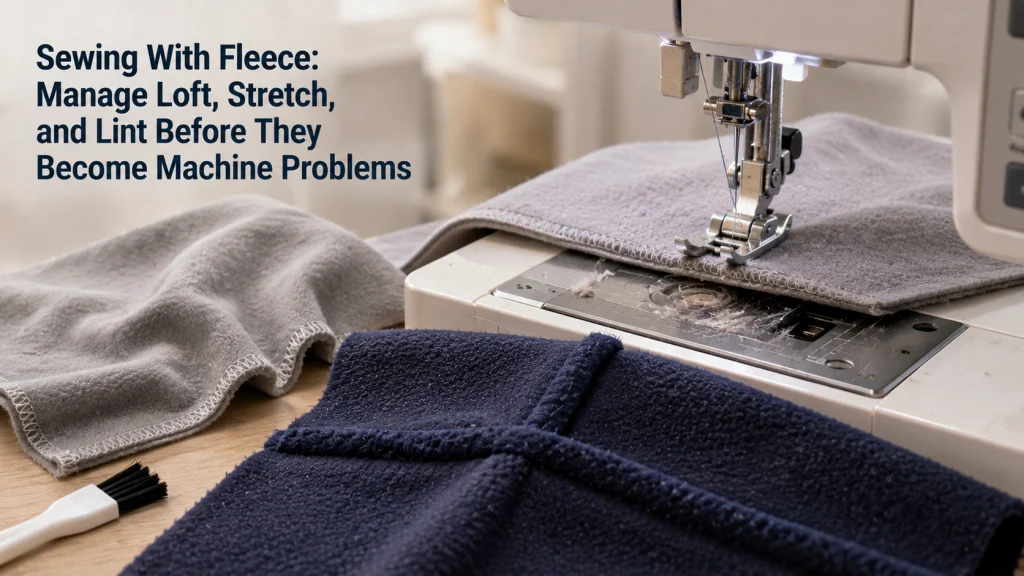
Tips For Sewing Fleece

Fleece can challenge a normally functioning domestic machine in more than one way because stretch, loft, layer count, and lint do not always matter equally. The useful setup starts by identifying which fabric behavior controls the seam instead of reaching for a universal fleece setting. A representative test stack can show whether the issue is
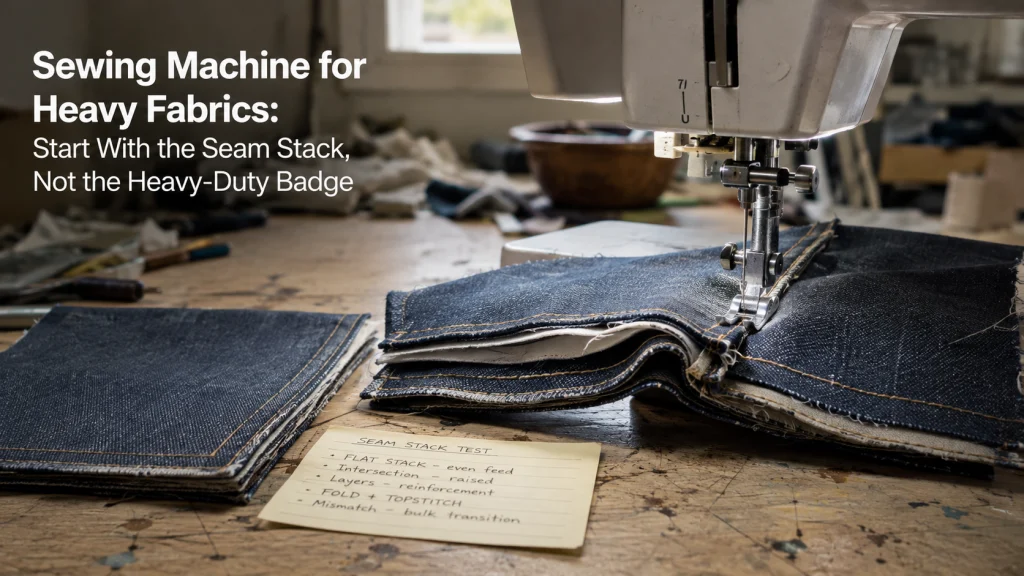
Sewing Machine for Heavy Fabrics: Start With the Seam Stack, Not the Heavy-Duty Badge

Sewing Machine For Heavy Fabrics

A sewing machine for heavy fabrics should be chosen around the hardest material stack you expect to sew repeatedly, not around a heavy-duty label alone. Fabric type matters, but layer count, compressed bulk, seam intersections, reinforcement, feed behavior, and workload can change the demand far more than a single fabric name suggests. Manufacturer specifications can

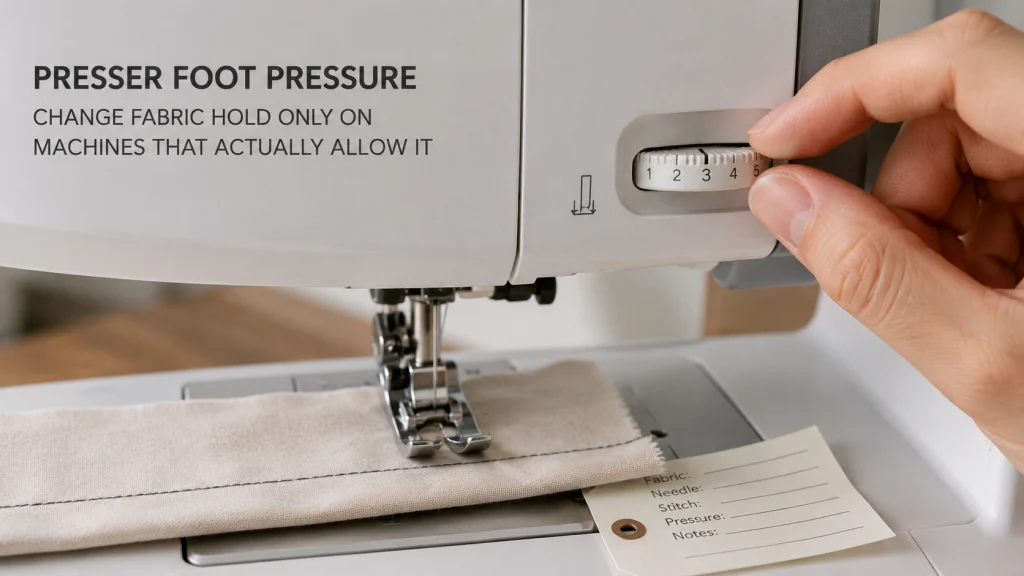
Presser Foot Pressure: Change Fabric Hold Only on Machines That Actually Allow It

Presser Foot Pressure

Presser foot pressure controls how firmly an eligible sewing machine holds fabric against the feed system while stitching. Before changing it, confirm that the exact model actually provides an owner-adjustable pressure control, record the documented normal setting, and test on the same fabric stack you plan to sew. Pressure changes should be small, deliberate, and

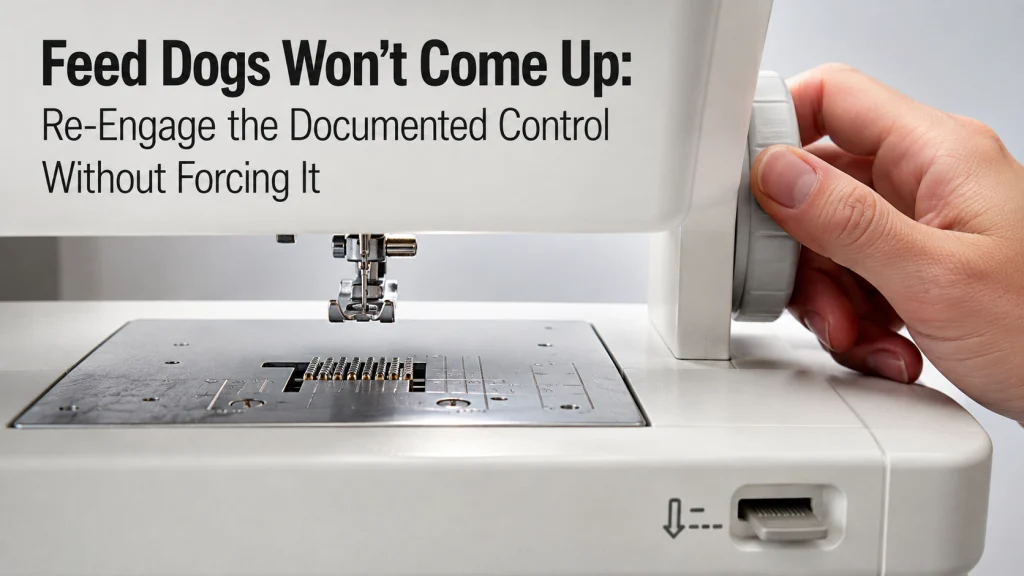
Feed Dogs Won’t Come Up: Re-Engage the Documented Control Without Forcing It

Feed Dogs Won't Come Up

If your feed dogs won’t come up after you return the drop-feed control to regular sewing, the lever may not be the final step. Some machines require a handwheel turn or needle-position cycle before the feed dogs re-engage, while other models do not lower the feed dogs at all and use a darning plate instead.