Sewing Machine Not Feeding Thick Fabric: Find the Capability or Feed Failure Before Forcing the Stack
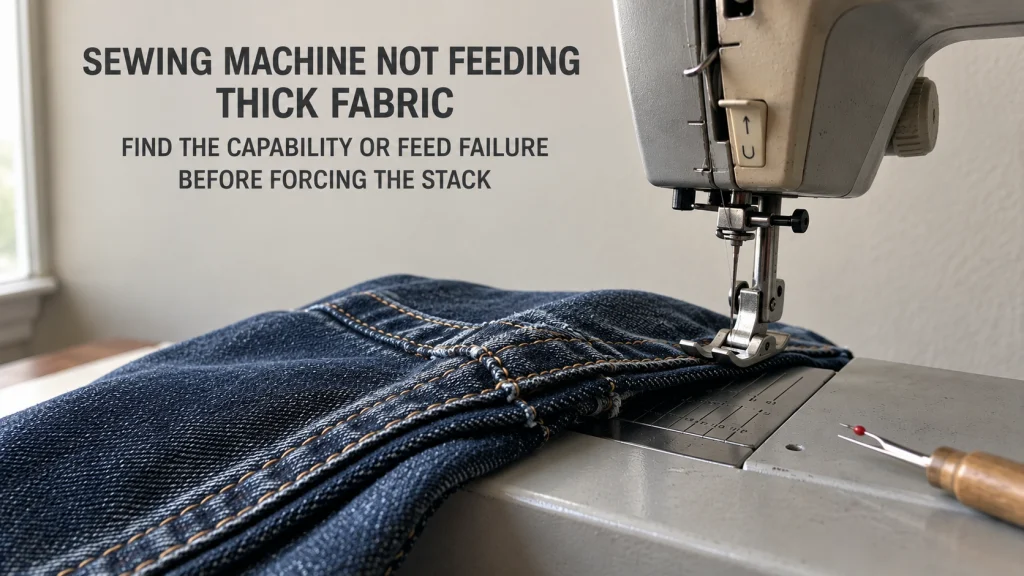
Sewing Machine Not Feeding Thick Fabric

If a sewing machine feeds ordinary woven fabric normally but stalls on a bulky seam or thick stack, the problem is not automatically a bad setting or a weak machine. The first job is to prove the normal-feed baseline, then isolate whether the failure happens only at the start, at a raised seam intersection, or
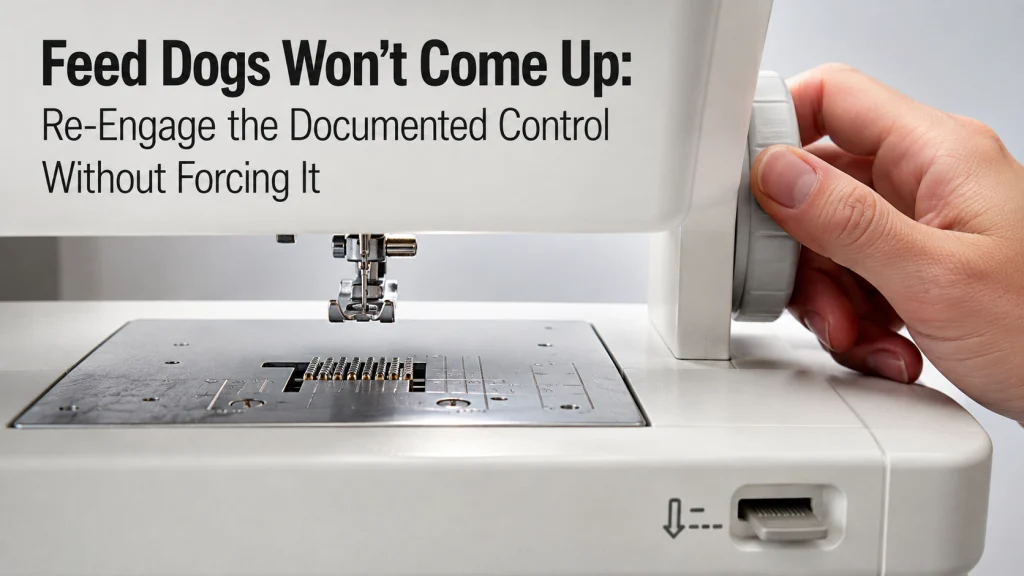
Feed Dogs Won’t Come Up: Re-Engage the Documented Control Without Forcing It

Feed Dogs Won't Come Up

If your feed dogs won’t come up after you return the drop-feed control to regular sewing, the lever may not be the final step. Some machines require a handwheel turn or needle-position cycle before the feed dogs re-engage, while other models do not lower the feed dogs at all and use a darning plate instead.

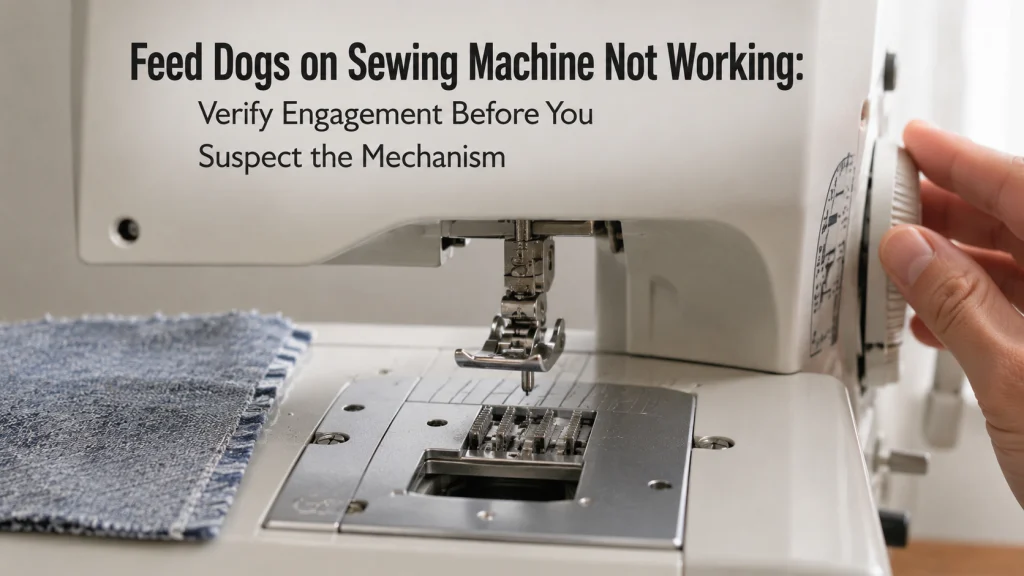
Feed Dogs on Sewing Machine Not Working: Verify Engagement Before You Suspect the Mechanism

Feed Dogs On Sewing Machine Not Working

Feed dogs that appear to be failing can actually be in several different states: disengaged, not fully re-engaged, moving without advancing fabric, obstructed by accessible lint or thread, or genuinely outside normal user-level correction. The safest diagnostic path is to confirm the exact model’s feed control, watch what the teeth do during a permitted manual

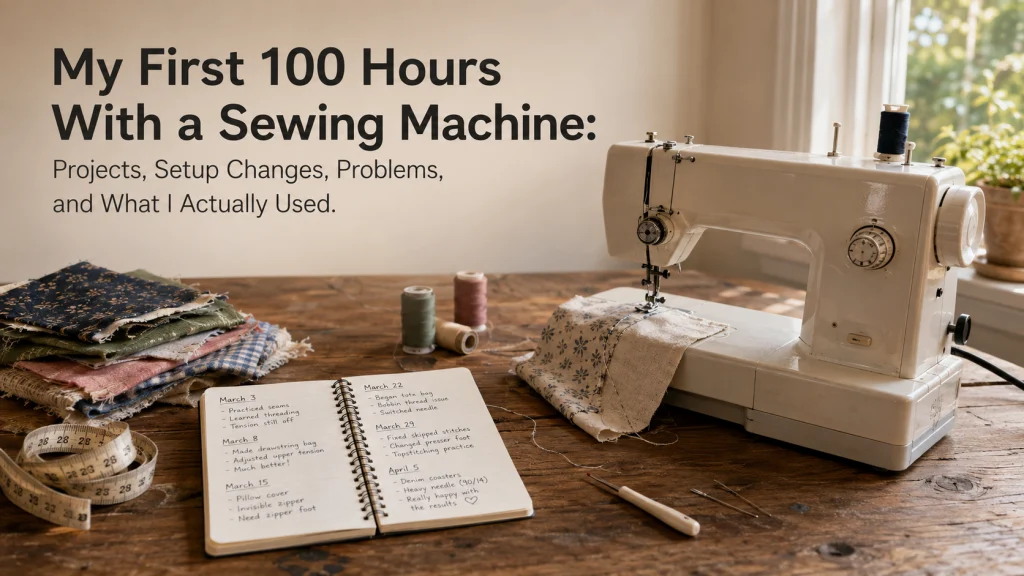
My First 100 Hours With a Sewing Machine: Projects, Setup Changes, Problems, and What I Actually Used

My First 100 Hours With A Sewing Machine

After spending substantial time with a Brother CS7000X, the machine became much easier to judge by what I actually reached for rather than by its feature list. I kept returning to speed control, needle position, the standard zigzag foot, the walking foot, and the quick-set bobbin, while most decorative stitches and several included feet rarely

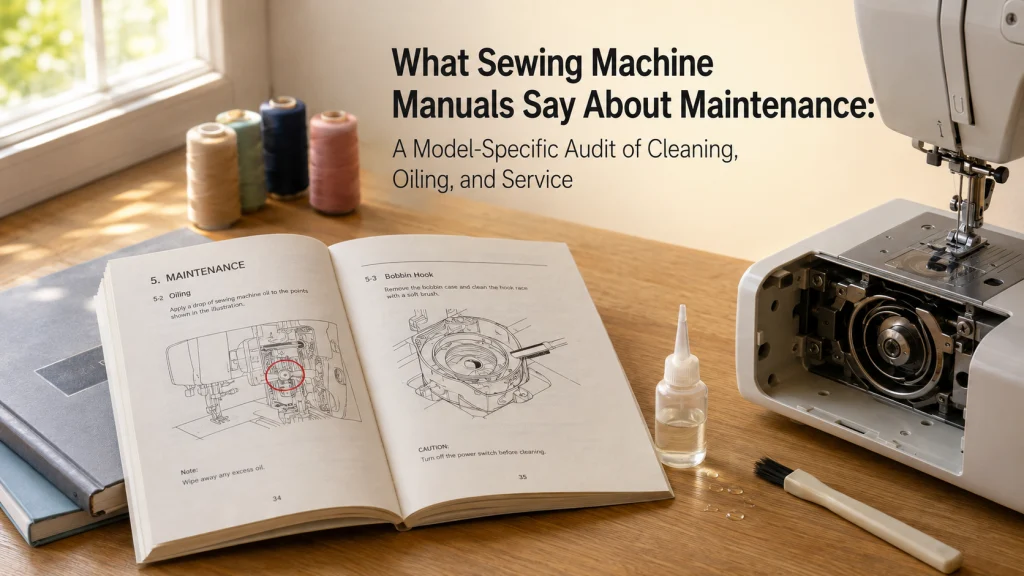
What Sewing Machine Manuals Say About Maintenance: A Model-Specific Audit of Cleaning, Oiling, and Service

What Sewing Machine Manuals Say About Maintenance

The maintenance instruction that matters is the one tied to the exact machine, not a habit carried over from another model. In a fixed audit of five official records from Brother, Janome, and Singer, the permitted owner actions ranged from specific oiling instructions to explicit no-owner-oiling language, while cleaning and service boundaries also differed. The