How to Raise or Lower the Feed Dogs: Change Feed State, Then Restore It
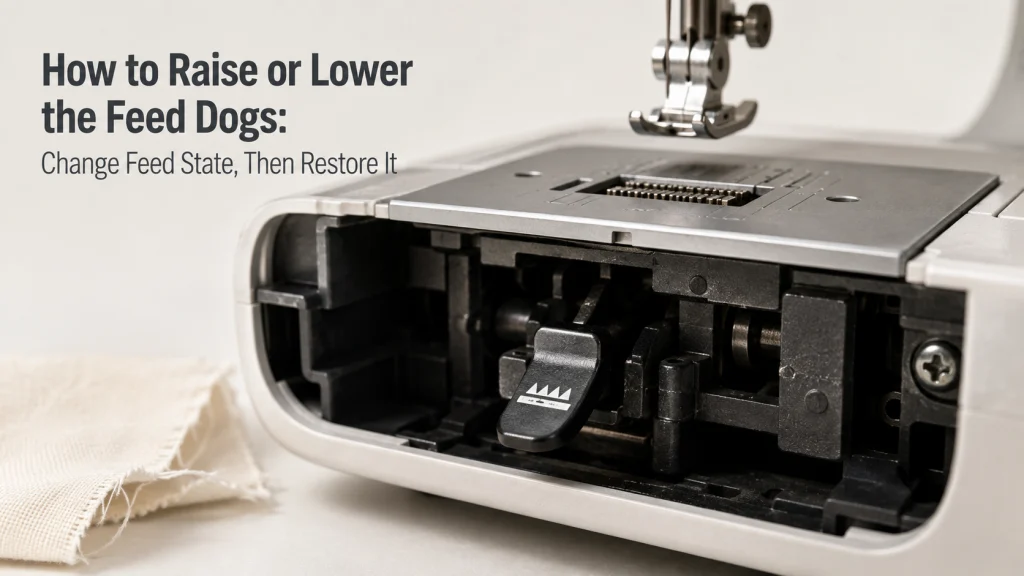
How To Raise Or Lower The Feed Dogs

Lowering the feed dogs is only half of the setting change. The correct workflow is to confirm that the exact machine supports drop feed, use the documented control for the intended technique, then restore normal feed and verify that the feed dogs actually return to working position. Lever direction and re-engagement behavior vary by model,
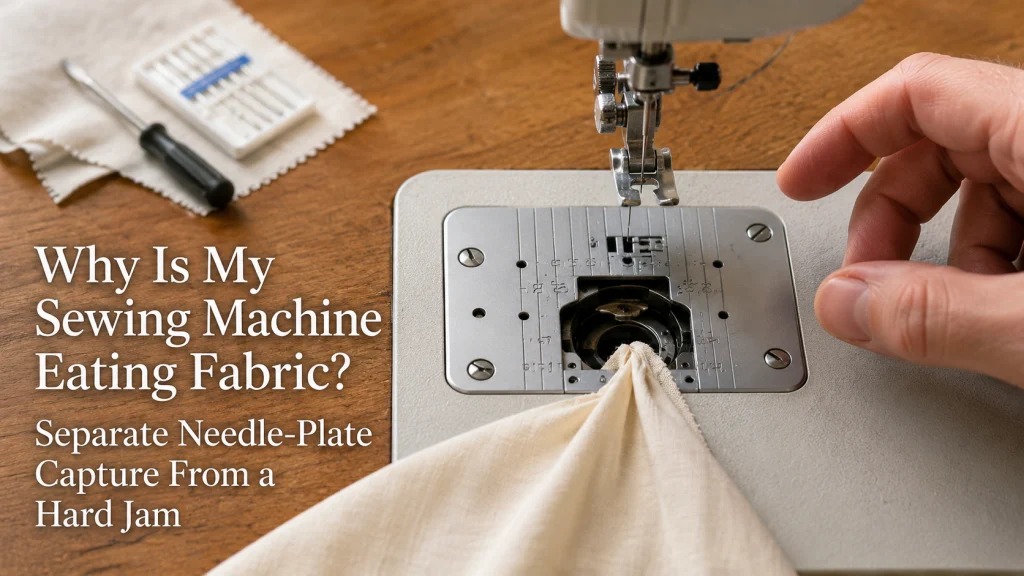
Why Is My Sewing Machine Eating Fabric? Separate Needle-Plate Capture From a Hard Jam

Why Is My Sewing Machine Eating Fabric

When fabric disappears into the needle-plate opening, the immediate question is not tension or stitch quality. First determine whether the material itself has been captured below the plate, whether intact fabric is sitting over a thread nest, or whether the machine has reached a hard mechanical lock. Stop sewing before pulling on anything, then follow

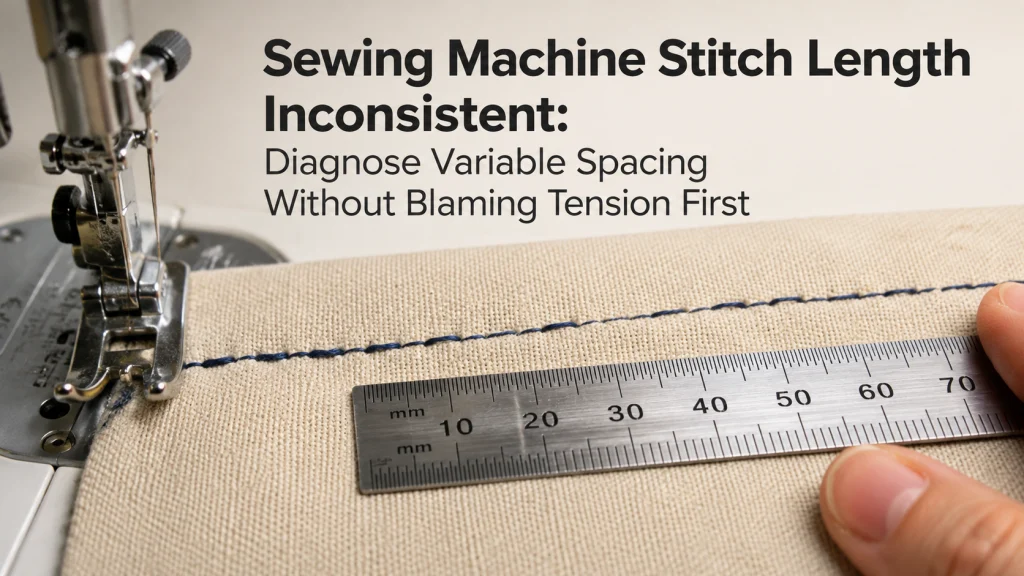
Sewing Machine Stitch Length Inconsistent: Diagnose Variable Spacing Without Blaming Tension First

Sewing Machine Stitch Length Inconsistent

When stitch spacing changes within the same sewing run, prove that the distance between needle penetrations is actually changing before adjusting thread tension. A seam can look uneven because of skipped stitches, loops, puckering, or sideways drift even when the physical stitch spacing is regular. The useful diagnostic path is to measure the seam, retest

Sewing Machine Settings: Change One Control for One Defined Result

Sewing Machine Settings

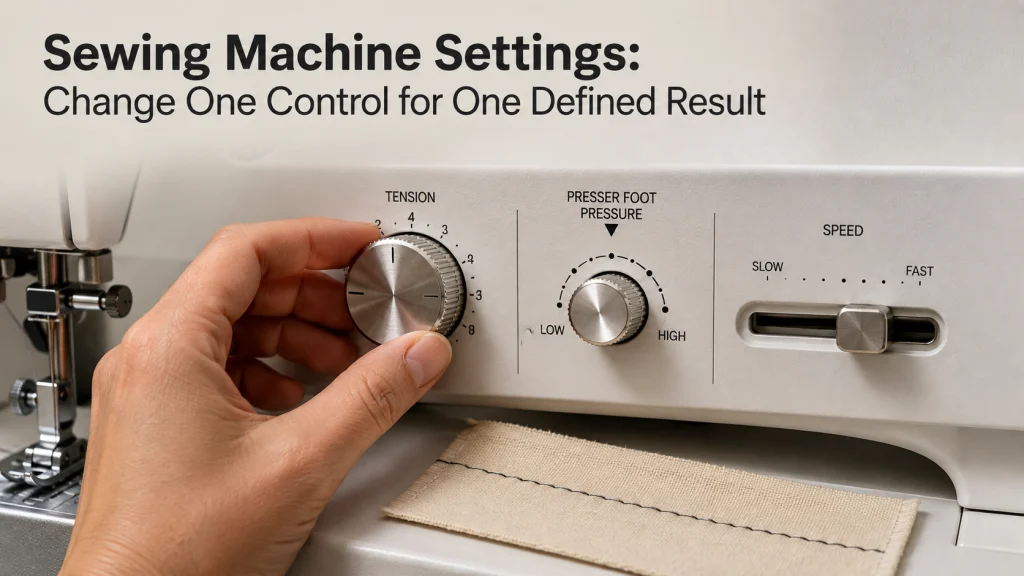
Sewing machine settings are easier to use when each control is tied to one defined result instead of treated as part of a universal chart. On a functioning domestic machine, upper thread tension changes thread balance, presser-foot pressure changes how firmly fabric is held against the feed system, a speed control can limit sewing speed,

What Feed-Dog Specifications Really Tell You About Fabric Movement

Sewing Machine Feed Dogs

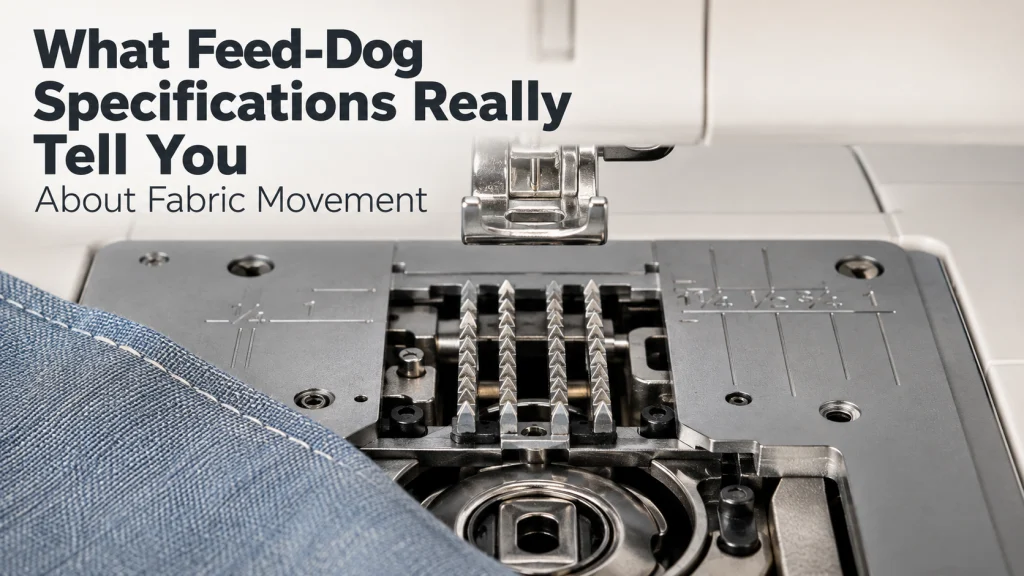
Sewing machine feed dogs are the toothed parts below the presser foot that advance fabric during ordinary machine feeding, but their job makes sense only when they are viewed as part of a timed system. In a common domestic drop-feed arrangement, the feed dogs rise, contact the fabric, travel through the feed stroke, then drop

Feed Dogs Won’t Come Up: Re-Engage the Documented Control Without Forcing It

Feed Dogs Won't Come Up

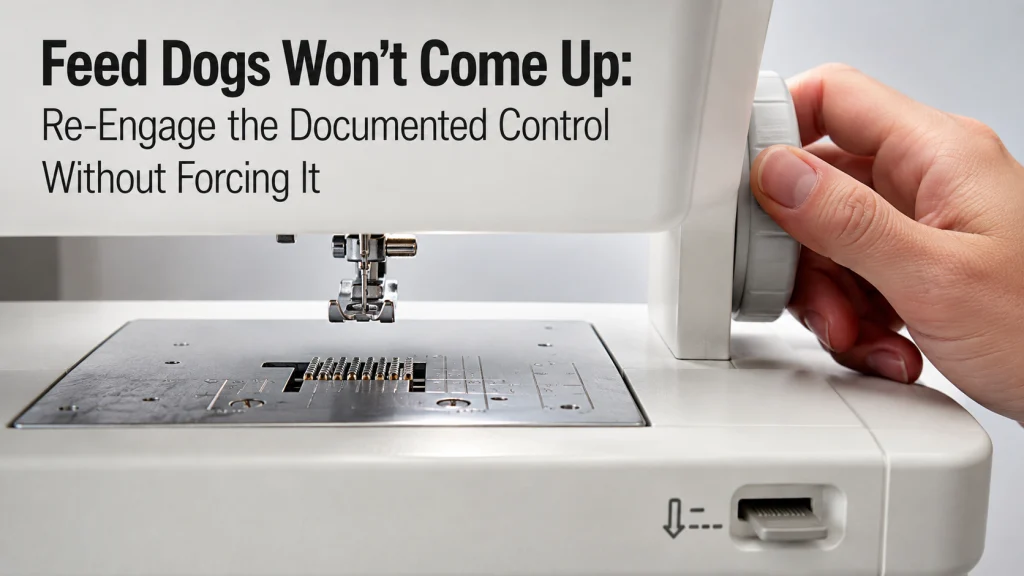
If your feed dogs won’t come up after you return the drop-feed control to regular sewing, the lever may not be the final step. Some machines require a handwheel turn or needle-position cycle before the feed dogs re-engage, while other models do not lower the feed dogs at all and use a darning plate instead.

Sewing Machine Not Feeding Fabric: Separate Feed, Stitch-Length, and Material Faults Before You Repair Anything

Sewing Machine Not Feeding Fabric

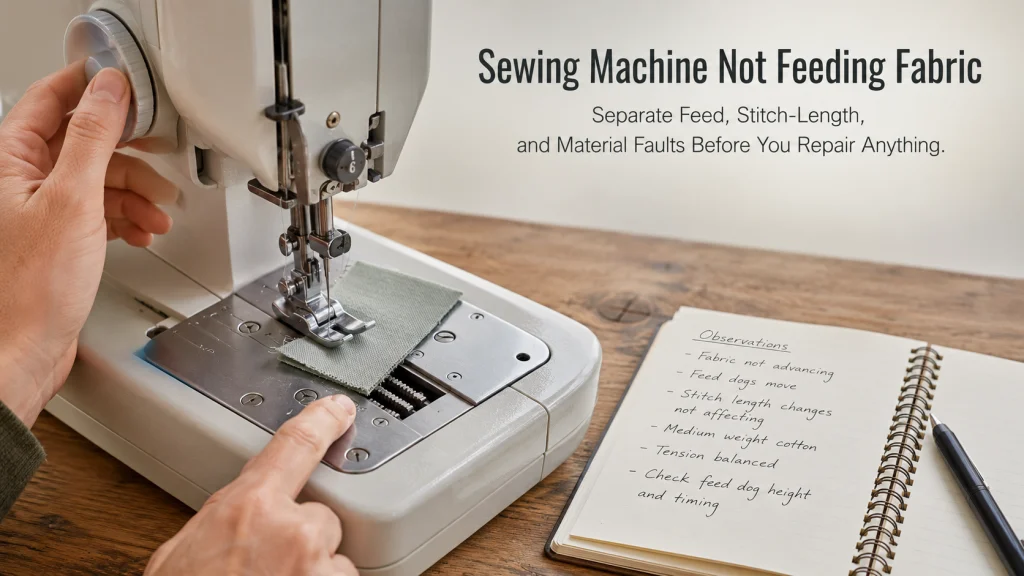
A sewing machine not feeding fabric can come from several different states that look similar at first: the presser foot is not in its normal sewing position, the feed dogs are disengaged, the feed system has not completed its re-engagement cycle, stitch length is set to no-feed, the material stack changes how the machine advances,

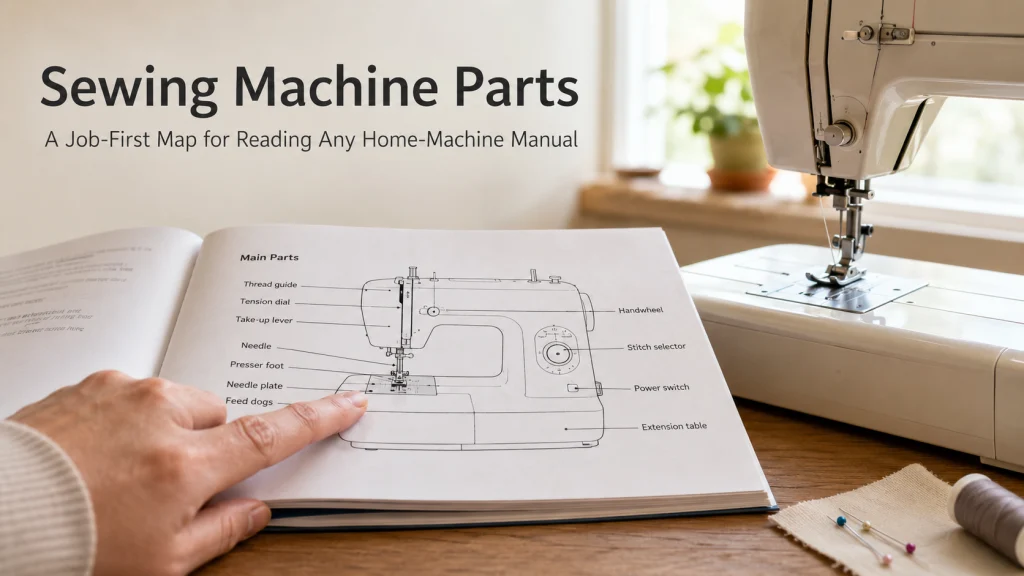
Sewing Machine Parts: A Job-First Map for Reading Any Home-Machine Manual

Sewing Machine Parts

Learning sewing machine parts is easier when each label is tied to a job instead of memorized from one generic diagram. The useful questions are what system the part belongs to, whether it moves or controls something else, and whether the exact model manual treats it as owner-visible, owner-removable or service-only. That approach also prevents