Sewing Machine Not Feeding Thick Fabric: Find the Capability or Feed Failure Before Forcing the Stack
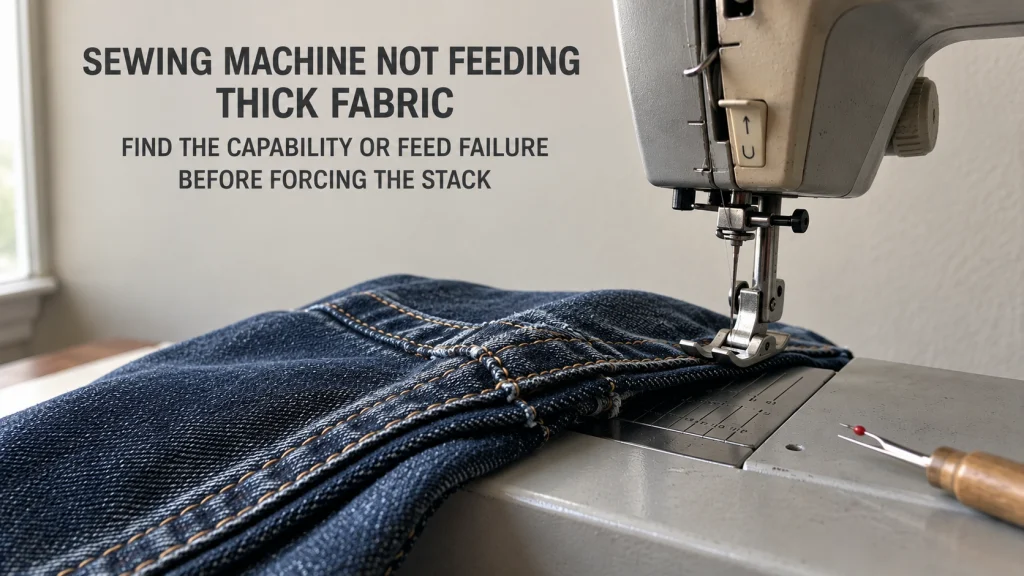
Sewing Machine Not Feeding Thick Fabric

If a sewing machine feeds ordinary woven fabric normally but stalls on a bulky seam or thick stack, the problem is not automatically a bad setting or a weak machine. The first job is to prove the normal-feed baseline, then isolate whether the failure happens only at the start, at a raised seam intersection, or
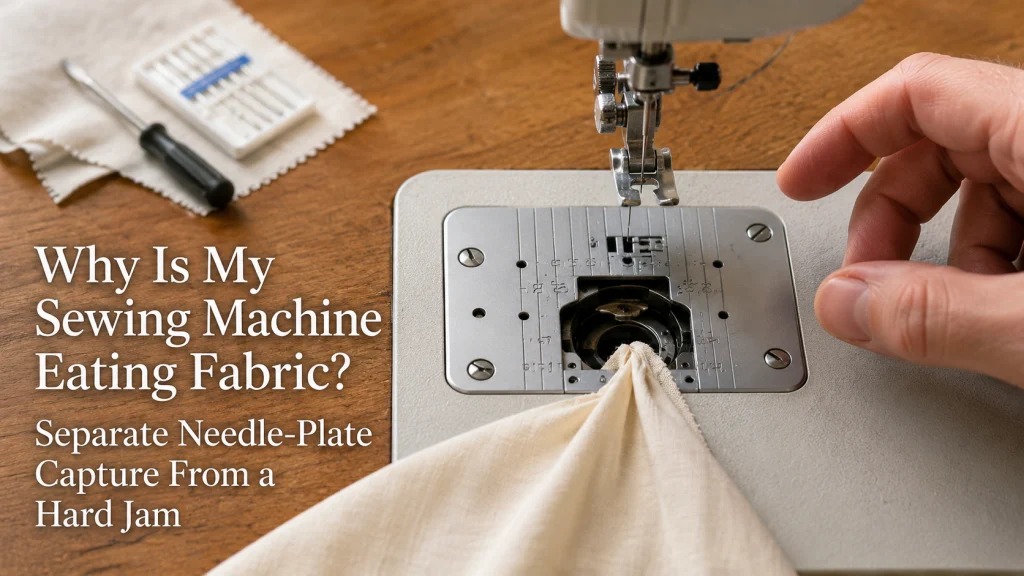
Why Is My Sewing Machine Eating Fabric? Separate Needle-Plate Capture From a Hard Jam

Why Is My Sewing Machine Eating Fabric

When fabric disappears into the needle-plate opening, the immediate question is not tension or stitch quality. First determine whether the material itself has been captured below the plate, whether intact fabric is sitting over a thread nest, or whether the machine has reached a hard mechanical lock. Stop sewing before pulling on anything, then follow

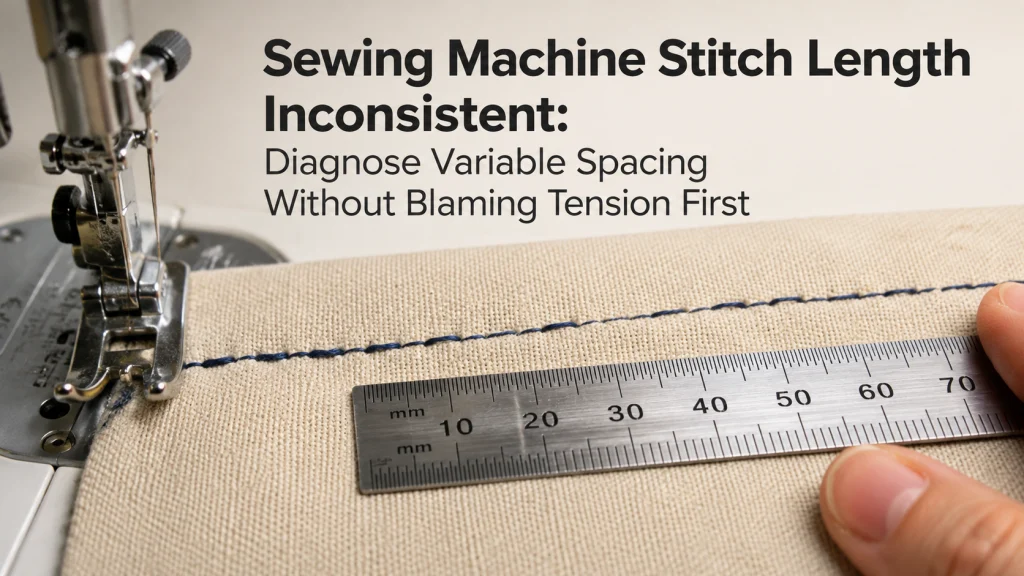
Sewing Machine Stitch Length Inconsistent: Diagnose Variable Spacing Without Blaming Tension First

Sewing Machine Stitch Length Inconsistent

When stitch spacing changes within the same sewing run, prove that the distance between needle penetrations is actually changing before adjusting thread tension. A seam can look uneven because of skipped stitches, loops, puckering, or sideways drift even when the physical stitch spacing is regular. The useful diagnostic path is to measure the seam, retest

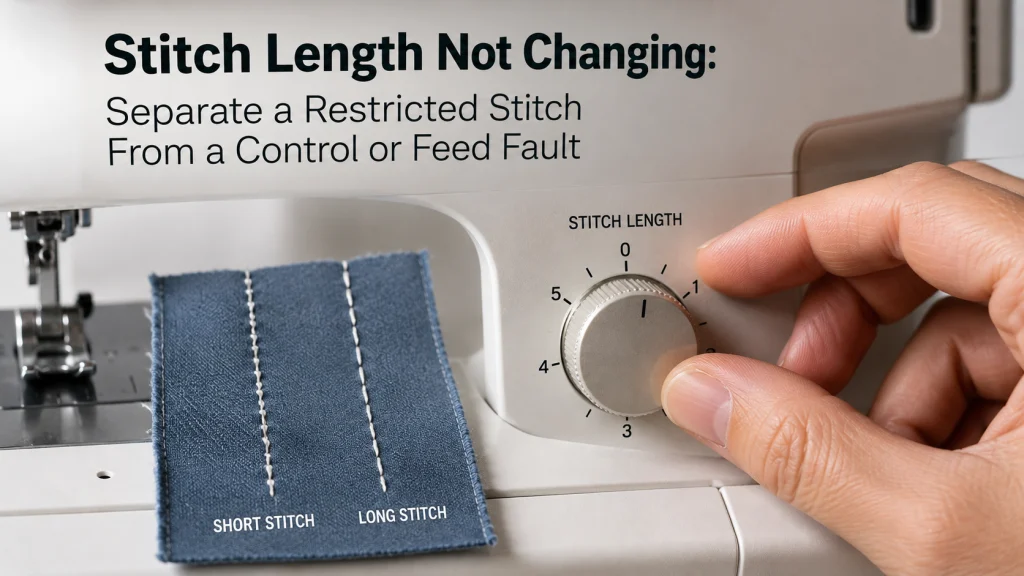
Stitch Length Not Changing: Separate a Restricted Stitch From a Control or Feed Fault

Stitch Length Not Changing

An unresponsive stitch-length control can mean two different failures: the selected stitch or control will not accept a new length, or the displayed setting changes but the sewn spacing does not respond as expected. Start by recording the exact stitch and current setting, then confirm whether that stitch is editable on the exact machine before

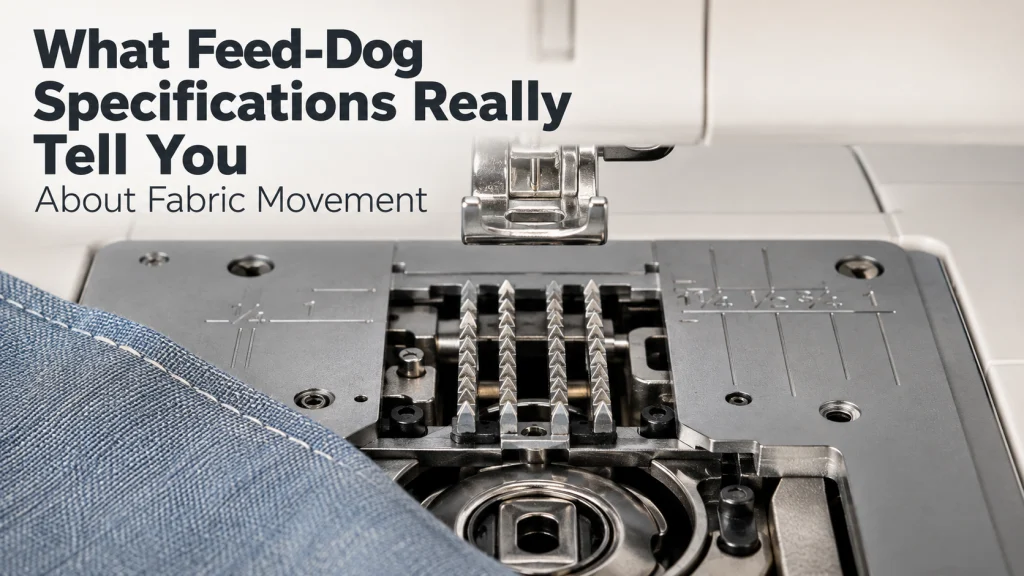
What Feed-Dog Specifications Really Tell You About Fabric Movement

Sewing Machine Feed Dogs

Sewing machine feed dogs are the toothed parts below the presser foot that advance fabric during ordinary machine feeding, but their job makes sense only when they are viewed as part of a timed system. In a common domestic drop-feed arrangement, the feed dogs rise, contact the fabric, travel through the feed stroke, then drop