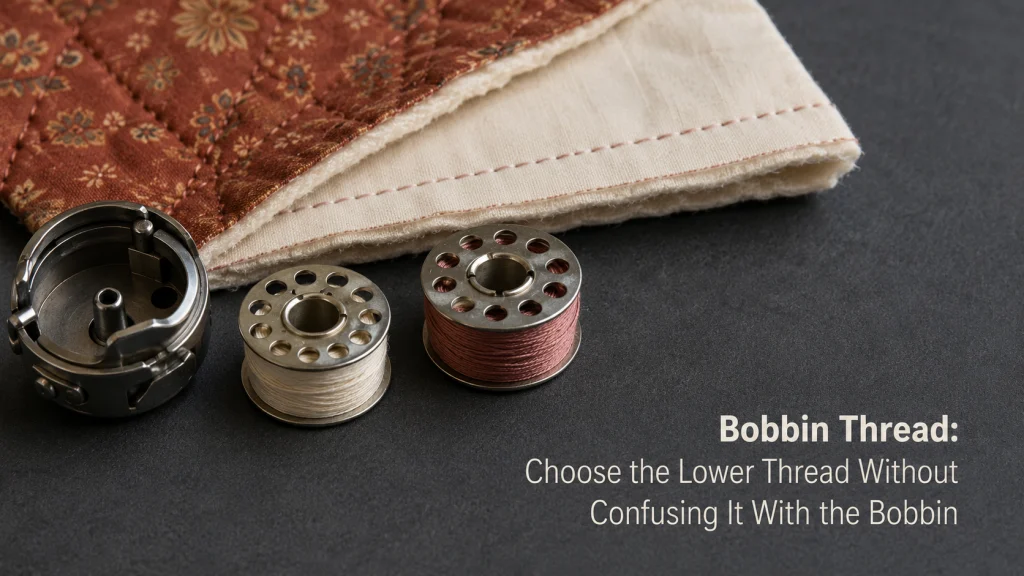
Bobbin Thread: Choose the Lower Thread Without Confusing It With the Bobbin
Bobbin Thread

Bobbin thread is the lower thread carried on a bobbin that already fits the machine. The best choice depends on what the lower side of the stitch should look like, the thread fiber and size the machine can handle, and whether the project benefits from matching or deliberately different top and lower threads. A finer
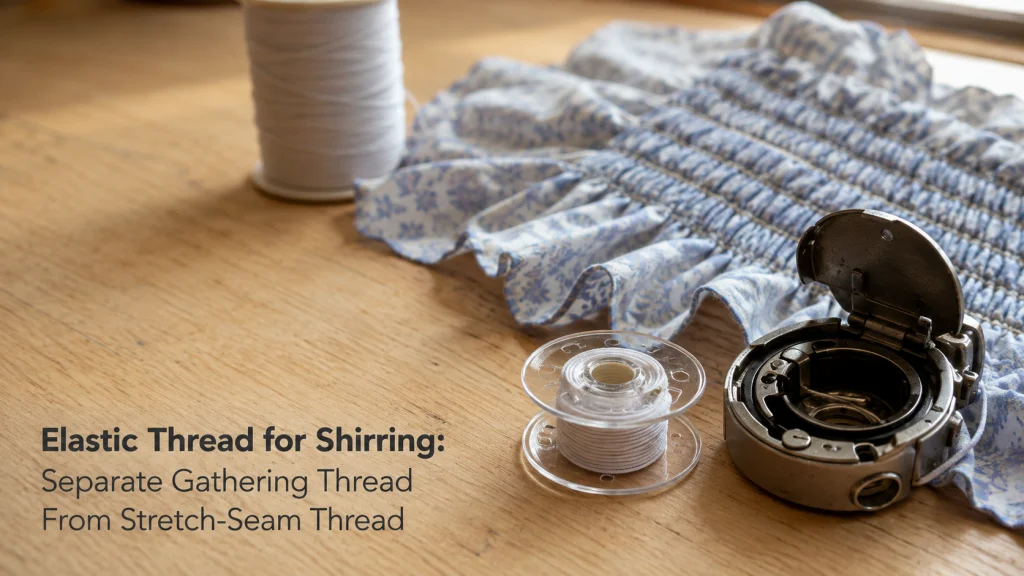
Elastic Thread for Shirring: Separate Gathering Thread From Stretch-Seam Thread

Elastic Thread For Shirring

Elastic thread for shirring is chosen to create gathered elastic rows, not as a generic answer for every seam that needs to stretch. Products that share the word “elastic” can differ in function, fiber, thickness marking, and machine-use instructions. Start with the result you need, then read the exact package or manufacturer directions, including whether

Metallic Sewing Thread: Choose the Construction Before the Sparkle

Metallic Sewing Thread

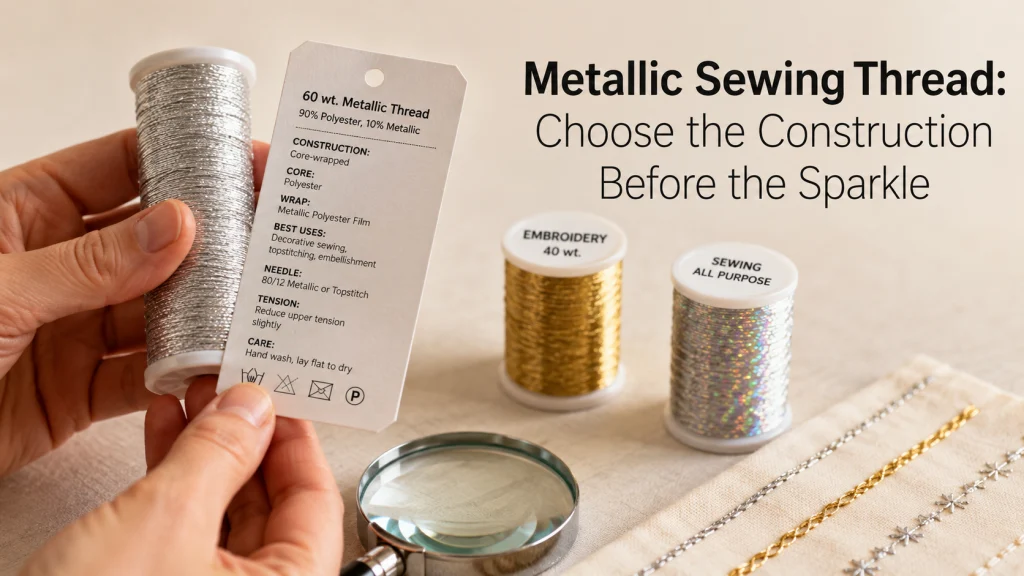
Metallic sewing thread can add reflective decorative stitching, but shine alone does not prove that a spool belongs in an ordinary domestic sewing machine. Start with the manufacturer’s intended use, then read the thread construction, size label, and application scope before comparing color or finish. A product made for machine embroidery may sit beside a

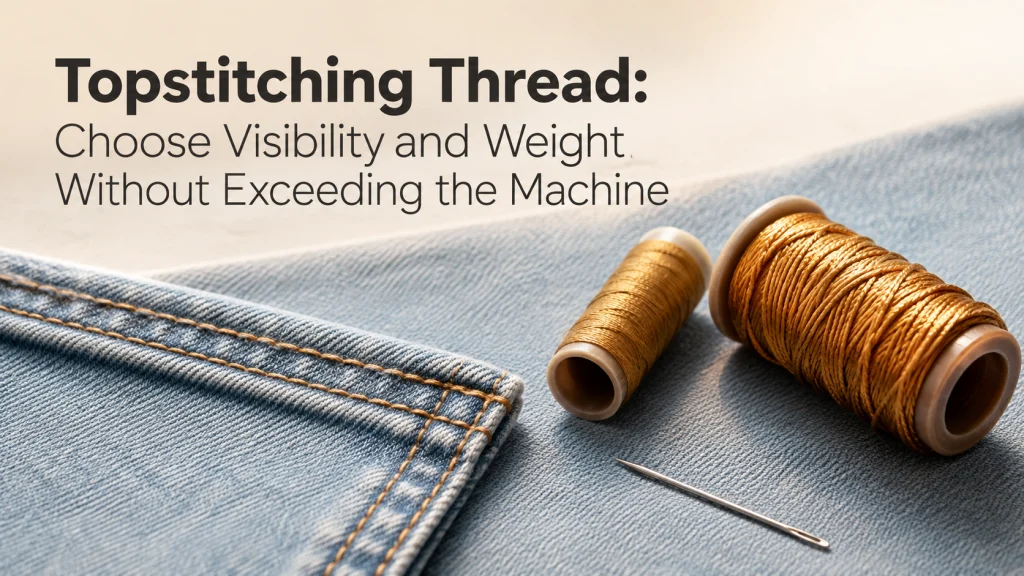
Topstitching Thread: Choose Visibility and Weight Without Exceeding the Machine

Topstitching Thread

Topstitching thread is chosen first for how visible the finished stitch should look, then for fiber, size, finish, and whether the sewing machine supports that thread class. A thicker spool is not automatically a better topstitching choice, and a heavy-duty or bonded thread may cross into a different machine requirement entirely. Product labels and model

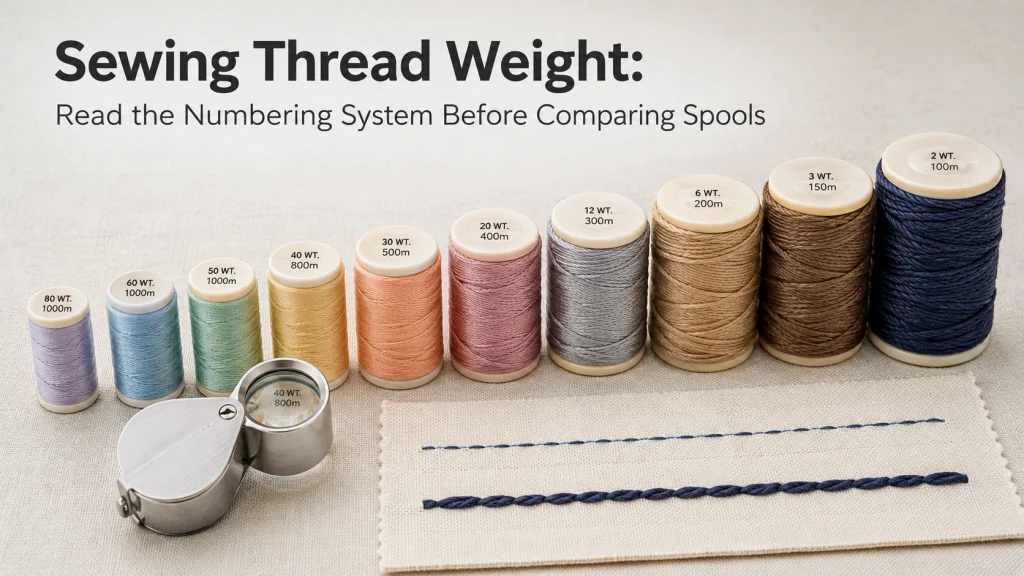
Sewing Thread Weight: Read the Numbering System Before Comparing Spools

Sewing Thread Weight

Thread-size labels are useful only after you know which numbering system they belong to. A 40 wt label, No. 40 label, and Tex 40 label do not describe thread size in the same way, even though the printed number is identical. The practical comparison is to identify the system, note fiber and ply construction, then

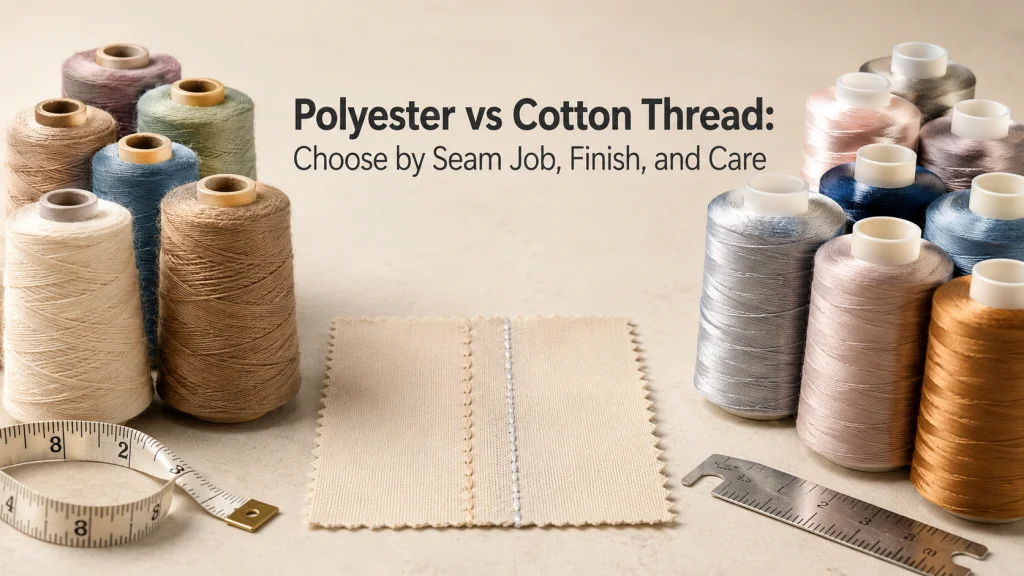
Polyester vs Cotton Thread: Choose by Seam Job, Finish, and Care

Polyester Vs Cotton Thread

Choosing between cotton and polyester thread starts with the seam job, not a rule that thread fiber must always match fabric fiber. Fiber affects useful properties, but construction, size, finish, movement, appearance, care, and the way the finished item will be used can change the better choice. The practical comparison is therefore cotton thread versus

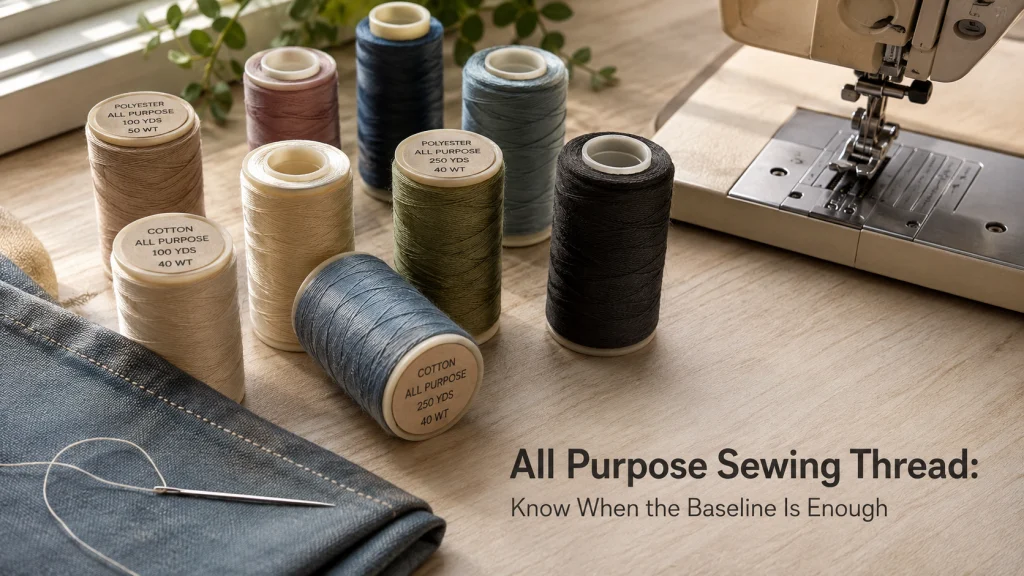
All Purpose Sewing Thread: Know When the Baseline Is Enough

All Purpose Sewing Thread

All-purpose thread is the sensible starting point for ordinary domestic machine sewing, but the label is not a promise that one spool fits every fabric, stitch, or machine. The useful check is simple: read the fiber and size on the spool, compare them with the seam you are making, then ask whether care, appearance, movement,

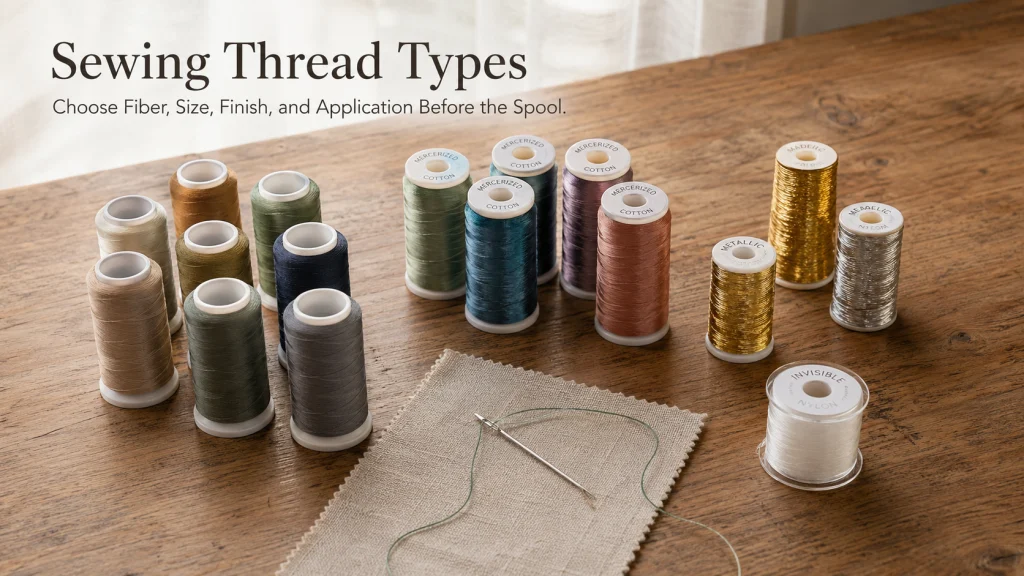
Sewing Thread Types: Choose Fiber, Size, Finish, and Application Before the Spool

Sewing Thread Types

Sewing thread types make more sense when you separate four questions that spool labels often compress together: what the thread is made from, how it is constructed, how its size is expressed, and what job it is intended to do. A polyester core-spun thread, a mercerized cotton thread, a metallic composite thread, and a water-soluble