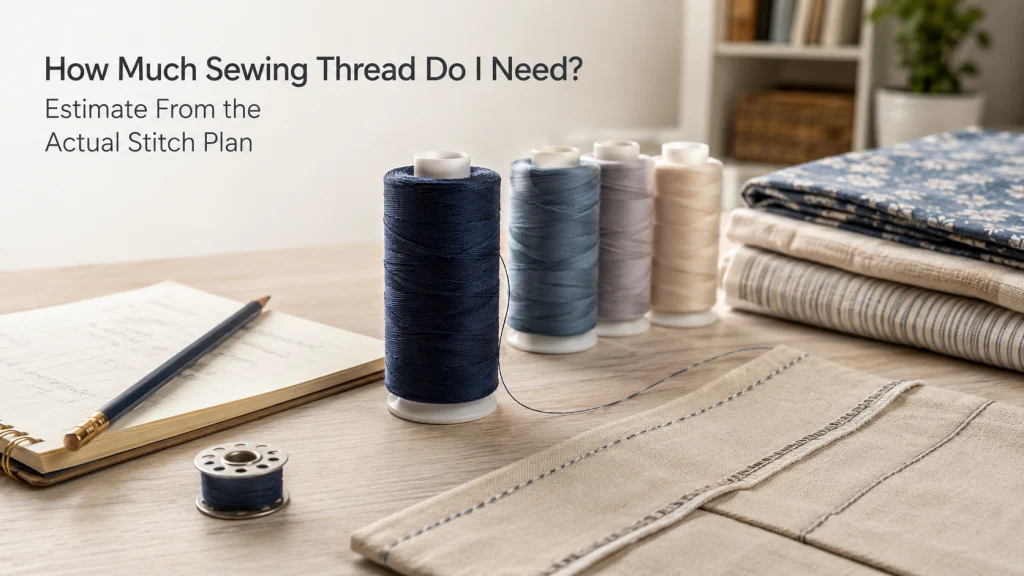
Two projects can start with the same amount of fabric and still need very different amounts of sewing thread. Imagine two garments cut from the same yardage: one uses short construction seams with minimal visible stitching, while the other adds multiple panels, long topstitching lines, and repeated visible passes. The fabric amount stays similar, but the stitched path changes the thread estimate. Calculate from the actual stitches instead of the project name.
Confirm the thread type and color first
Thread quantity only becomes meaningful after the thread itself is chosen. A spool length estimate is not useful if the project may switch fiber type, size, or color later. Decide the intended thread category and the visible color needs before calculating how much to buy.
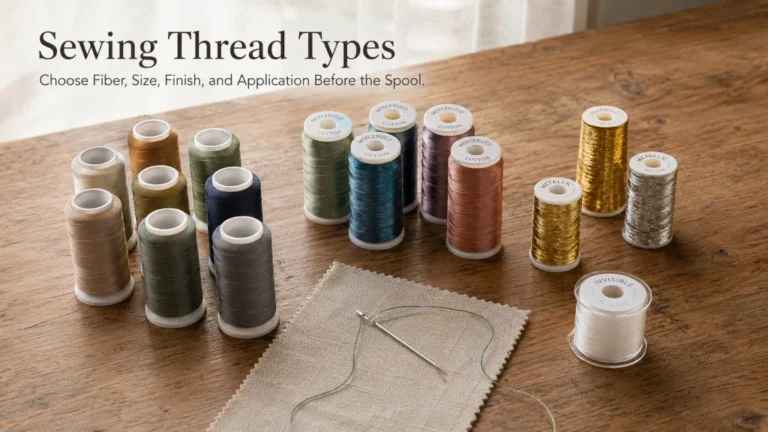
This page focuses on quantity after the thread decision is mostly settled. At the broader materials level, the sewing supplies guide separates thread from the other consumables a project may require. If you need a general-purpose baseline before estimating quantity, review all-purpose thread. If the remaining question is what thread belongs on the project, start with choosing the right sewing thread type before estimating consumption.
List seams, hems, and visible topstitching
Begin with the actual construction plan. Count the seams, hems, decorative lines, reinforcement areas, and other stitched paths that will use the same thread color. Fabric yardage alone cannot describe thread demand because two projects cut from the same amount of material may contain very different stitch lengths.
| Project element | Record | Why it matters |
|---|---|---|
| Construction seams | Approximate stitched length and number of passes | Longer seams create more thread consumption. |
| Hems and finishing | Visible edge length and stitch type | Repeated edge stitching can add significant length. |
| Topstitching | Every visible line and its placement | Decorative stitching can consume more than hidden seams. |
| Matching bobbin needs | Whether the bobbin uses the same or different thread | Top and bobbin requirements may not be identical. |
Estimate the total stitched length
Add the lengths of all planned stitch paths instead of guessing from the item category. A bag, shirt, quilt section, or home item is only a description of the object. The actual thread requirement comes from how many stitches will be placed, how dense those stitches are, and how many construction lines share the same thread.
A simple worksheet can start with:
- Total planned seam length.
- Extra visible stitching length.
- Repeated passes over the same area.
- Separate colors that require separate thread quantities.
This method avoids a common mistake: buying thread because the item category seems large or small without checking the actual stitching involved.
Use a representative sample or sourced stitch-consumption ratio
The most reliable home estimate comes from measuring a known sample or using a documented consumption method with clearly stated assumptions. A short test seam can show how much thread a particular setup uses, while published consumption methods can provide a calculation framework.
Coats explains thread consumption as a relationship between stitch length, stitch type, seam length, and related variables. Use that type of method as a way to estimate, not as a promise that every domestic project will consume the same amount.
For example, if a test sample shows that a particular stitching setup uses a certain amount of thread for a measured seam length, that observed ratio can be used as a planning reference for similar seams in the same project. It should not automatically be applied to decorative stitches, denser seams, or different construction methods.
Separate top and bobbin consumption when needed
Thread calculations become less predictable when the top thread and bobbin thread are different colors, sizes, or quantities. A project that requires a matching bobbin may need more total thread than one where the bobbin is a different thread choice.
Record top-thread and bobbin requirements separately when the distinction affects purchasing. This prevents the common situation where the top spool appears sufficient but the lower thread requirement was ignored.
Stitch type can also change the balance. A straight stitch may use a different amount of thread than a wider zigzag or decorative stitch because the path and coverage are different. Keep those differences in the estimate instead of treating every stitched line as identical.
Add a transparent contingency instead of a universal percentage
Some extra thread is practical because real projects include setup, trimming, tension adjustments, and mistakes. However, there is no single percentage that fits every garment, quilt, or bag. The useful allowance depends on how uncertain the estimate is and how difficult it would be to replace the exact thread.
State the reason for the extra amount instead of presenting a fixed rule. A project with many long visible lines may need a different allowance from a small item with short hidden seams.
Record spool length before buying
Once the estimated thread requirement is known, compare it with the actual length on the spool label. Thread is sold by different lengths, so the number of spools needed depends on the relationship between required thread and available length.
| Checklist item | Record before purchase |
|---|---|
| Thread color | The exact color needed for the planned stitching. |
| Thread length | The stated amount on each spool. |
| Estimated use | Total stitched requirement plus the chosen allowance. |
| Replacement difficulty | Whether matching the same color later may be difficult. |

Gütermann Sew-All Thread Set contains 20 spools of polyester sewing thread in assorted basic colors, with 100 meters on each spool. The thread is intended for machine and hand sewing and can be used for closing seams, quilting, and decorative stitching. Gütermann uses Micro Core Technology construction and recommends universal needles in sizes NM 70 to 90.
Check On AmazonIf you click this link and buy, we earn a commission at no additional cost to you.
Final Thoughts: estimate from stitches, not project names
The amount of sewing thread needed depends on the stitched path, construction details, and planned visible stitching. Start with the seams, hems, visible lines, and thread choices that make up the real project. Then use a sample or documented method with clear assumptions rather than a universal spool count.
A careful estimate does not need false precision. It only needs enough information to avoid running out unexpectedly while avoiding unnecessary excess from guesses.
Frequently Asked Questions
🧵 Can I estimate thread needed from fabric yardage?
No. Fabric amount does not show seam length, stitch type, or visible stitching. Two projects using similar fabric quantities can consume very different amounts of thread.
📏 Is there one spool count for a dress, quilt, or bag?
No. The stitched construction, number of seams, decorative lines, and thread choices change the calculation. The item category alone is not enough information.
🪡 Should I calculate bobbin thread separately?
If the bobbin uses a different thread choice or needs to be purchased separately, yes. Separating the two estimates prevents unexpected shortages.
📦 Why should I check spool length?
Different spools contain different amounts of thread. Comparing the required estimate with the actual spool length tells you how much thread is needed more accurately.
References and Sources
These sources support the consumption-method approach and the need to state assumptions when estimating thread use.
- Coats thread consumption guide: Provides a technical methodology for relating thread consumption to stitching variables.
- AllFreeSewing thread quantity guidance: Provides bounded domestic-project discussion rather than a universal spool rule.