Elastic thread for shirring is chosen to create gathered elastic rows, not as a generic answer for every seam that needs to stretch. Products that share the word “elastic” can differ in function, fiber, thickness marking, and machine-use instructions. Start with the result you need, then read the exact package or manufacturer directions, including whether the thread is intended for the needle, bobbin, or both. That keeps the selection specific without turning one product instruction into a universal sewing-machine rule.
Two elastic threads can do different jobs
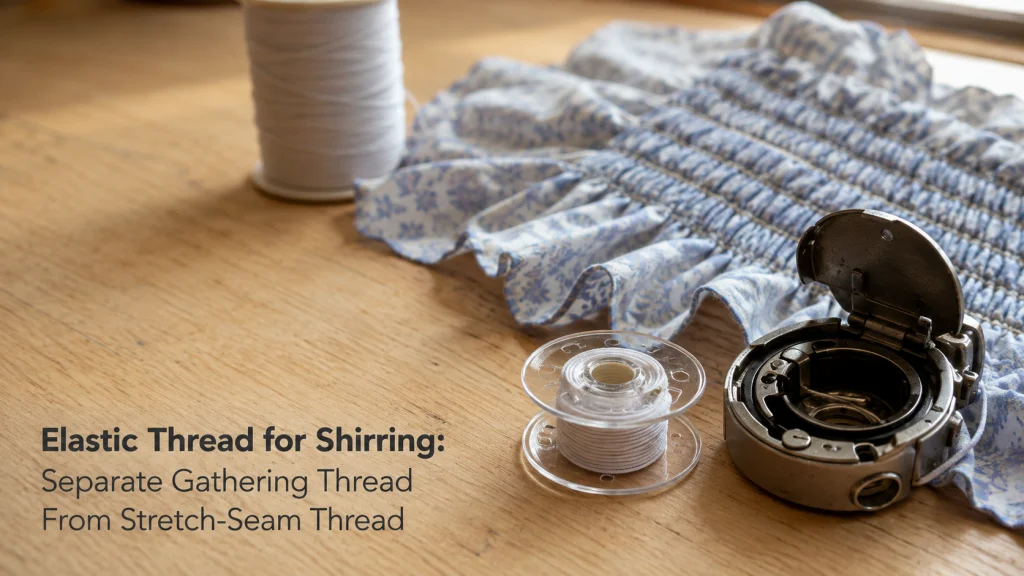
Elastic thread for shirring and elastic thread for stretch seams are easy to confuse because both are sold around the idea of stretch. Gütermann Elastic is documented as a highly elastic gathering thread for shirring and smocking, while Gütermann Maraflex is documented for elastic closing and topstitch seams. The useful distinction is the assigned sewing job, not which spool feels stretchier between your fingers.
The category split is not unique to one manufacturer. Coats describes Eloflex as a stretch sewing thread for high-extension stretch seams, which reinforces the broader point that a stretch-seam thread and an elastic gathering thread solve different problems. These product names are evidence examples, not recommendations.
Key point: “Elastic” describes a property, not one universal sewing-machine job. Identify whether you want gathering or a stretch-capable seam before choosing the thread.
This article stays with product selection and verification. Actual bobbin winding, machine tension, stitch setup, and shirring technique belong to machine-specific setup instructions and should not be inferred from a thread label alone.
Confirm that the goal is shirring or gathering
The strongest signal that you need shirring elastic thread is the result you are trying to create: fabric should deliberately draw into repeated gathered rows while retaining elasticity. That is different from joining two pieces of stretch fabric with a seam that needs to move with the garment. In the first case, gathering is the intended visual and functional effect. In the second, the primary job is still seam construction.
Imagine two knit projects on the same table. One has a bodice area designed to gather into elastic rows, while the other only needs a side seam that can stretch with the fabric. Both involve elasticity, but they are different thread decisions. The gathered area can point toward a shirring product, while the construction seam belongs in the separate question of choosing thread for stretch fabric.
Shirring and smocking are also not exact synonyms. In machine-sewing discussions, shirring commonly describes repeated gathered rows created with elastic thread, while traditional smocking uses stitching worked over gathered or pleated fabric to create structure and decoration. Because retail labels may still use “smocking thread” for elastic gathering products, treat that wording as a clue to investigate, not as proof of the required machine setup.
| What you need the thread to do | Thread category to investigate | What not to assume |
|---|---|---|
| Create deliberate gathered or shirred rows | Elastic gathering or shirring thread | That it should run through the needle |
| Create an elastic construction or topstitch seam | Thread specifically documented for stretch seams | That a gathering thread is suitable because it stretches |
| Serve as ordinary bobbin thread without a gathering purpose | Bobbin thread appropriate to the machine and sewing task | That “elastic bobbin thread” is a substitute for normal bobbin thread |
The third row catches a common naming trap. An elastic bobbin thread used to create gathering is not the same category as ordinary bobbin thread chosen for routine sewing or embroidery. If the project does not need a deliberate elastic gathering effect, start with the ordinary bobbin thread decision instead.

Mandala Crafts Shirring Elastic Thread is a fine 0.6 mm elastic thread made for sewing and gathering applications. The white spool contains approximately 546 yards and is intended for projects such as shirring, smocking, gathering, and hemming. Its thin construction is designed for sewing-machine use as well as knitting and other projects that require elastic thread.
Check On AmazonIf you click this link and buy, we earn a commission at no additional cost to you.
Read the exact fiber and product instructions
A spool label is most useful when you read it as a set of fields rather than one marketing word. Start with the exact product name and intended application, then look for fiber content, thickness or size marking, length, machine-use wording, and any statement about needle or bobbin placement. If the package is abbreviated, match the exact product to the manufacturer’s information before assuming the missing details.
Gütermann Elastic, for example, identifies its fiber blend and lists a specific thickness alongside its shirring and smocking purpose. That does not create a universal size rule for other elastic threads. A thickness number is something to record and verify because sizing systems and product constructions differ, not a shortcut for guessing a needle or tension setting.
- Match the exact product name on the spool or package to the manufacturer’s instructions.
- Confirm whether the stated purpose is shirring, gathering, smocking, stretch seams, topstitching, or another use.
- Record the fiber content and any thickness, size, or weight marking exactly as shown.
- Check whether the product is documented for machine sewing rather than assuming every elastic cord or thread follows the same path.
- Verify whether the manufacturer specifies needle thread, bobbin thread, or both.
- Check the exact sewing-machine manual before applying any setup instruction that affects the bobbin system or thread path.
When shopping online, the same process applies to the product page. A generic marketplace title such as “elastic thread for sewing machine” or “smocking thread” is not enough evidence by itself. The useful listing is the one that lets you identify the exact thread and verify how its manufacturer says it should be used.

Gütermann Elastic Thread is an elastic gathering thread for shirring, smocking, and gathering projects. Each white spool contains 11 yards and is made from 64% polyester and 36% polyurethane. For machine sewing, the product is specified for use as bobbin thread, and it can also be used as an elastic tracer yarn for knitting and crochet.
Check On AmazonIf you click this link and buy, we earn a commission at no additional cost to you.
Verify whether the product is top, bobbin, or both
Thread position is a product instruction, not a rule that should be guessed from the word “elastic.” Gütermann documents Elastic for bobbin-only use when sewing by machine. That placement belongs to that exact product and is part of the reason its documentation matters.
A different elastic sewing thread can carry a different instruction. Gütermann documents Maraflex as both needle and bobbin thread for its intended stretch-seam use. The contrast is enough to show why top-versus-bobbin placement must be checked product by product rather than memorized as one rule for an entire shelf of elastic-looking threads.
If the packaging or manufacturer page does not establish the intended machine position clearly, stop at product selection. Do not fill the gap with a setup copied from another brand, another thread construction, or a tutorial that does not identify the same product.
Do not universalize one brand’s bobbin-only rule
A product-specific instruction is useful precisely because it is narrow. Once the exact thread has been identified, its stated purpose and machine placement can guide the decision. The mistake is expanding that instruction into a claim about every elastic sewing thread, especially when other manufacturers document elastic threads for stretch-seam construction rather than gathering.
Coats, for example, describes Eloflex as a performance stretch sewing thread intended for high-extension stretch seams. That independent category example matters because it keeps the selection question focused on function: gathering thread is chosen to create gathering, while stretch-seam thread is chosen for an elastic seam. Stretch alone does not collapse those jobs into one product type.
Warning: Do not treat shirring elastic as a load-rated construction material or use generic elastic-thread advice to override the sewing-machine manual. If a thread product or machine manual gives a specific restriction, that exact instruction takes priority.
If you are still deciding which family of thread belongs in the project, compare sewing thread types by function before narrowing to a specific product. For the broader supply decision around thread, needles, and other consumables, review sewing supplies by machine task so the thread choice stays connected to the equipment and material it must work with.
Final Thoughts: choose elastic thread by function, not stretch alone
The cleanest decision starts with the job. If you want deliberate elastic gathering or shirring, investigate a product documented for that purpose. If you want a seam that stretches with the fabric, move to thread specifically intended for stretch-seam construction instead of assuming a gathering thread can do both jobs.
Then verify the label or manufacturer instructions before threading the machine. Product name, intended use, fiber, size marking, and thread position each tell you something different. Reading those fields together is more reliable than using the word “elastic” as the whole selection rule.
FAQs
These questions stay focused on identifying the correct thread category. Winding methods, tension changes, and shirring technique still need the exact thread and sewing-machine instructions.
🧵 Is elastic thread for shirring the same as stretch sewing thread?
No. Shirring thread is selected to create deliberate gathering, while stretch-seam thread is selected for seams that need elasticity. Match the thread to the sewing job before comparing other specifications.
🧶 Does elastic thread always go in the bobbin?
No. Thread position is product-specific. Follow the exact manufacturer’s needle and bobbin instructions instead of applying one elastic-thread rule to every product.
🪡 Can I use shirring elastic thread as the top thread?
Only when the exact product documentation allows that placement. If the product is documented as bobbin-only, keep it in the bobbin position specified by the manufacturer.
👗 Is smocking thread the same thing as shirring elastic?
Not necessarily. Traditional smocking and elastic-thread shirring are different techniques, while retail labels may use overlapping wording. Verify what the exact product is designed to do rather than relying on the term “smocking” alone.
⚙️ Does thread thickness matter when choosing shirring elastic?
It is a specification worth recording, but do not turn the number into a generic needle or tension rule. Use the exact thread instructions and sewing-machine guidance for setup decisions.
📖 What should I check on an elastic-thread label?
Check the exact product name, intended use, fiber content, thickness or size marking, machine-use statement, and needle or bobbin placement. If any of those details are unclear, verify the manufacturer’s information before sewing.
If the label and product documentation establish the function and thread position clearly, you have enough information to choose the correct thread category. Machine setup comes after that and should remain specific to the thread and machine in front of you.
References and Sources
These sources are included because each supports a specific distinction used in the article: shirring-thread purpose and placement, a contrasting stretch-seam thread arrangement, an independent stretch-seam category example, and the basic meaning of smocking.
- Gütermann Elastic product information: Documents fiber content, thickness, shirring and smocking use, and bobbin-only machine placement for this exact elastic gathering thread.
- Gütermann Maraflex product information: Documents an elastic stretch-seam thread intended for both needle and bobbin positions.
- Coats Eloflex product information: Provides a second manufacturer’s example of elastic thread designed for high-extension stretch seams rather than shirring.
- Museum of English Rural Life smocking overview: Supports the distinction between smocking as stitched gathered fabric and machine shirring with elastic thread.
Product specifications and instructions can change. Before sewing, verify the exact thread in hand and follow the sewing-machine manual where setup requirements differ.