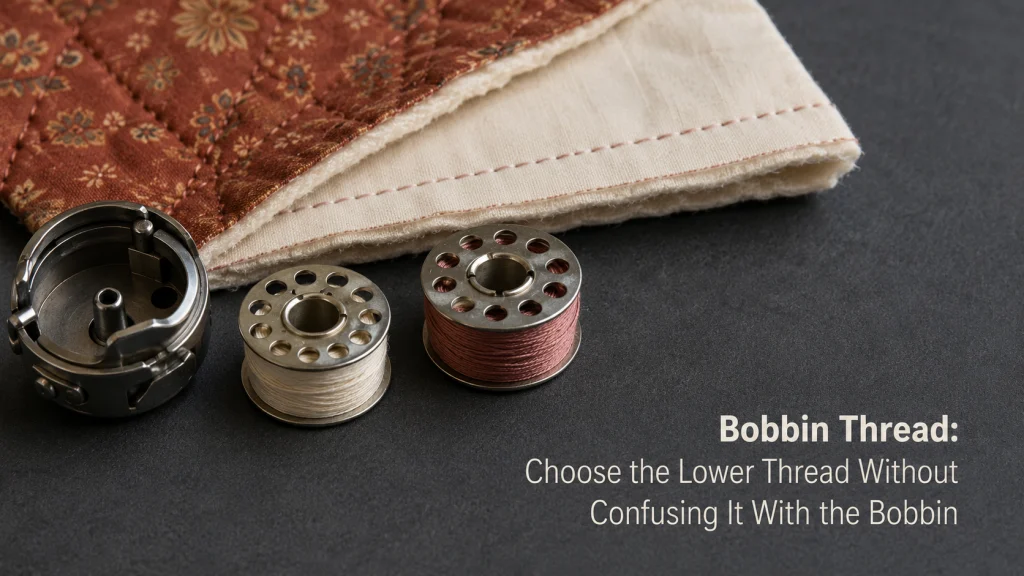
Bobbin thread is the lower thread carried on a bobbin that already fits the machine. The best choice depends on what the lower side of the stitch should look like, the thread fiber and size the machine can handle, and whether the project benefits from matching or deliberately different top and lower threads. A finer lower thread can be useful in some sewing and quilting situations, but it is not automatically better, and the top and bobbin threads do not have to match in every case. Start with physical bobbin compatibility already resolved, then choose the thread as a separate consumable decision.
The bobbin and bobbin thread are different purchases
Bobbin thread describes the thread that supplies the lower side of a lockstitch, not the plastic or metal bobbin that carries it. That distinction matters because a physically correct bobbin can still be wound with a lower thread that is poorly suited to the seam, quilting line, or decorative result. Conversely, choosing a fine thread labeled for bobbin use does not prove that the bobbin itself fits your machine.
This article starts after physical fit has already been resolved. If you are still deciding which bobbin class, core, bobbin case, or other machine-specific component belongs in the machine, settle that compatibility question first. For the broader consumable context, the machine sewing supplies overview separates machine-interface parts from thread, needles, and other replaceable materials.
The practical boundary is simple: the bobbin is a machine-fit question, while the thread on that bobbin is a sewing-material choice. Keeping those decisions separate prevents a thread recommendation from turning into an unsupported compatibility claim.
Confirm physical bobbin compatibility first
Before comparing cotton, polyester, fine bobbin thread, or matching colors, confirm that the empty bobbin itself is correct for the exact machine. Visual similarity is not enough. Two bobbins can look close in diameter or profile while belonging to different systems, and this page does not replace the machine’s parts documentation.
Once the correct bobbin is known, the lower-thread decision becomes much cleaner. You can focus on what the thread is supposed to do instead of mixing hardware fit with thread behavior. The broader sewing thread types for machines page is the better starting point if you are still deciding among thread fibers and general thread families rather than making a lower-thread choice.
- Verify the bobbin itself against the exact machine documentation.
- Keep prewound-bobbin core fit separate from the thread material wound onto that core.
- Do not assume a fine thread is acceptable merely because it can physically be wound onto the bobbin.
- Check any machine-specific thread-size limitation before using an unusually heavy lower thread.
That sequence protects the rest of the decision. Once the carrier is known to be correct, you can judge lower thread by the visible result, the thread label, and the demands of the project without guessing about mechanical fit.
Identify the lower thread’s visual and seam job
The underside of the project should decide more than the label on the spool. On an ordinary construction seam, the lower thread usually needs to contribute to a balanced lockstitch without adding unnecessary bulk or creating an unwanted color contrast. On visible machine quilting, both sides may matter aesthetically, so the color and apparent weight of the bobbin thread can become part of the design decision.
A beginner can easily assume that the lower thread must always be identical to the top thread because both threads form the same stitch. That is a useful default when you want a simple, predictable starting point, but it is not a universal requirement. Technical thread guidance recognizes combinations in which top and bobbin threads differ in fiber or weight, provided the combination suits the stitch and the machine is set up for it.
| Lower-thread job | What to prioritize | What to verify |
|---|---|---|
| Ordinary construction seam | Balanced stitch, suitable strength, low unwanted bulk | Fiber and size are appropriate for the fabric, top thread, and machine |
| Visible quilting on both sides | Color relationship and stitch appearance on the back | The top and lower combination produces an acceptable test result |
| Fine lower thread | Reduced visual prominence or lower thread bulk where appropriate | The exact thread label and machine limits support the intended use |
| Contrasting lower color | Intentional appearance on the underside | Any pull-through at stitch points is acceptable for the project |
Do not choose color in isolation. A strong contrast between top and lower threads can make small amounts of pull-through more noticeable, especially when the stitch is meant to look clean from both sides. Test the actual fabric and layer stack before committing to a long seam or quilting pass.

Superior Threads Bottom Line is a 60-weight, 2-ply polyester thread made for quilting, appliqué, sewing, and bobbin use. This version comes on a 3,000-yard cone in the Statue color. Its fine construction provides a lower-bulk thread option for stitching where a lighter thread is preferred.
Check On AmazonIf you click this link and buy, we earn a commission at no additional cost to you.
Choose fiber and size from exact thread data
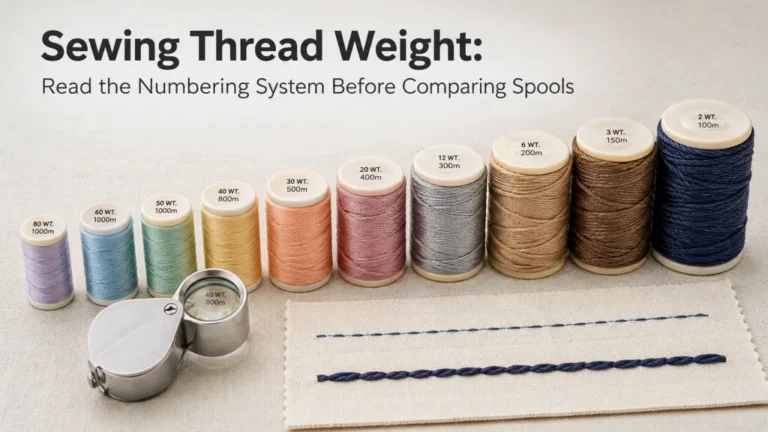
Thread weight labels are not a complete compatibility system, and a smaller or larger printed number does not mean the same thing across every labeling convention. If you are comparing 40 wt, 50 wt, 60 wt, Tex, or another size system, use the manufacturer’s own specification rather than assuming the numbers convert cleanly. The sewing thread weight labels explained page covers those measurement systems in more depth.
Finer bobbin threads exist because a lower thread sometimes benefits from being less visually dominant and from occupying less space on the bobbin. Superior Threads’ technical material, for example, describes fine 50 wt and 60 wt threads as common bobbin-thread choices and separately states that different top and bottom weights can be used. That supports the principle that a dedicated fine bobbin thread is a legitimate option, not a rule that every project needs one.
Key point: “Fine bobbin thread” is a use description, not a universal machine setting. Read the exact fiber and size data, then judge whether that lower thread makes sense for the machine, top thread, fabric, and stitch.
Size changes also matter because a heavy or thick lower thread can interact differently with the bobbin tension system. Technical guidance from Superior Threads notes that preset bobbin tension can be too tight for a heavy thread, placing more pressure on the thread as it leaves the bobbin case. That can interfere with smooth lower-thread delivery and make stitch balance harder to establish, so an unusually heavy bobbin thread should be treated as a real setup change rather than a cosmetic substitution.
If a thicker lower thread does not feed smoothly or the stitch becomes difficult to balance, do not force the setup or assume more tension adjustment is automatically the answer. Recheck the thread size against the machine’s supported range and return to a suitable lower thread when the exact machine documentation does not support the heavier choice.
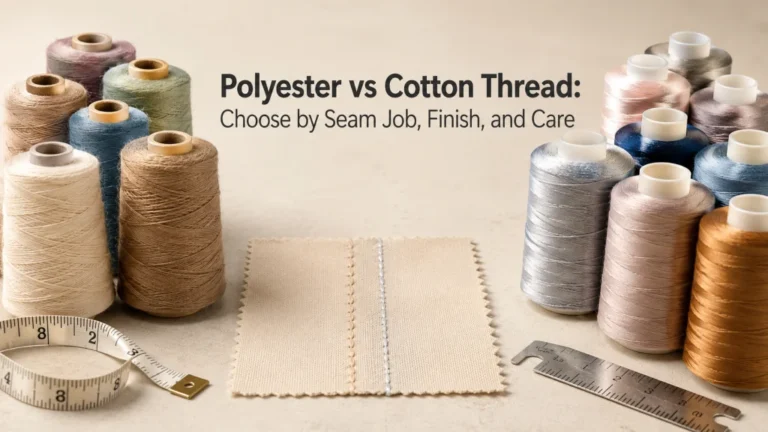
Fiber is a separate decision. Cotton and polyester can differ in surface, lint behavior, elasticity, finish, and visual character, but those properties do not produce one universal rule for the bobbin. Use the exact thread maker’s application guidance where available, stay within the machine’s limits, and judge the combination on the actual project rather than assuming matching fiber is mandatory.

WonderFil DecoBob Neutrals is a six-spool set of 80-weight, 2-ply cottonized polyester thread. Each spool contains 273 yards, with neutral shades including black, white, gray, antique white, nude, and taupe. The ultra-fine thread is intended for low-bulk stitching applications including piecing, appliqué, quilting, and delicate machine work.
Check On AmazonIf you click this link and buy, we earn a commission at no additional cost to you.
Decide whether top and bobbin thread need to match
Matching top and lower threads is the easiest baseline when you want the same fiber, size, and color on both sides. It reduces the number of variables you are changing at once, which is useful when establishing a normal stitch on a familiar fabric. It is also a sensible choice when both sides of the seam will be visible and you want similar color behavior.
Different threads can still be appropriate. A finer lower thread may be paired with a more visible top quilting thread, or the underside may use a color chosen to blend with the backing while the top thread is selected for the quilt top. The key is not whether the two spools match by name, but whether the combination is within the machine’s limits and produces the stitch appearance and balance required by the project.
| Decision | Matching top and bobbin thread | Different top and bobbin thread |
|---|---|---|
| Best starting point | Useful when you want fewer variables during setup | Useful when the lower side has a different visual or bulk requirement |
| Color | Simplifies color matching on two visible sides | Can blend separately with the backing or underside |
| Weight | Keeps top and lower thread size consistent | Can use a finer lower thread when supported by the project and machine |
| What must be checked | Normal stitch result on the actual fabric | Thread-size limits, stitch balance, pull-through, and appearance on both sides |
This is especially relevant to choosing thread for machine quilting, where the top and back of the work may have different visual priorities. A simple test sandwich using the actual top, batting, backing, needle, and planned thread combination gives you more useful evidence than a rule that says the two threads must always match or must always differ.
Do not confuse this decision with elastic shirring. Elastic thread used for shirring has a specific function and should not be treated as a general substitute for ordinary lower thread. If the project calls for stretch created by elastic in the bobbin area, follow that technique’s machine and material requirements separately.

Aurifil Mako Cotton 50wt is a 100% long-staple mercerized Egyptian cotton thread supplied on a 1,422-yard spool. This white 50-weight thread is made in Italy and is documented for machine embroidery, quilting, and serging. The large spool provides a single cotton thread format for machine-sewing and quilting applications.
Check On AmazonIf you click this link and buy, we earn a commission at no additional cost to you.
Final Thoughts: select the thread after the bobbin fits
Start with the hardware question already settled, then choose bobbin thread for the seam you are actually making. Decide what the underside should look like, check the exact fiber and size information, and use matching top and lower thread when a simple baseline is useful. Choose a finer or otherwise different lower thread only when the project gives you a reason to do so.
The important distinction is between permission and proof. Technical guidance shows that top and bobbin threads can differ, but that does not prove every combination will suit every machine or material. Keep thread size within documented limits, test the real fabric and layer stack, and let the stitch result decide whether the lower thread belongs in that project.
FAQs
Most bobbin-thread questions come down to three variables: physical bobbin fit, the lower thread itself, and the appearance of the completed stitch. The answers below assume the bobbin hardware has already been verified for the machine.
🧵 Does bobbin thread have to match the top thread?
No. Matching is a useful baseline, but top and bobbin threads can differ in color, fiber, or size when the combination suits the machine and project. Test the actual fabric to confirm stitch balance and appearance.
⚖️ Can I use a different thread weight in the bobbin?
Yes, in some applications. A size change can affect stitch balance, so verify the machine’s limits and test the chosen combination rather than assuming any two weights are interchangeable.
🎨 Does bobbin thread have to be the same color?
No. Choose the lower color for the underside you want, but remember that a strong contrast can make small amounts of pull-through easier to see.
🪶 What is fine bobbin thread used for?
A fine lower thread can reduce visual prominence and thread bulk in applications where that is useful. It is an option, not a requirement, and the exact fiber and size should still be checked.
🧶 Can I use cotton on top and polyester in the bobbin?
Different fibers can be combined in some sewing applications. Treat the combination as a project choice and verify the exact threads, machine limits, fabric, and resulting stitch instead of relying on a universal fiber-matching rule.
🪡 Should quilting bobbin thread be finer than the top thread?
Not necessarily. A finer lower thread can be useful, but matching weights can also work well. Choose based on the quilting design, backing appearance, machine limits, and the result on a test sandwich.
If the confusing part is the number printed on the thread rather than the lower-thread job itself, resolve the size-label question first. That keeps a bobbin-thread choice from becoming guesswork based on terms such as “fine” or “heavy” without knowing what the manufacturer actually means.
References and Sources
These technical sources support the article’s claims about using different top and lower threads and about the effect of thread-size changes on stitch-system setup.
- Superior Threads matching bobbin thread: supports using different thread fibers and weights on the top and in the bobbin when the application allows it.
- Superior Threads thread applications: documents fine thread as a common lower-thread choice and explains why a finer bobbin thread may be selected.
- Superior Threads bobbin tension guidance: explains why a heavy or thick lower thread can require a different bobbin-tension relationship.
The sources establish general thread-selection principles, not universal approval for every machine or project. Exact machine documentation remains the controlling source for model-specific limits.