Rag quilt scissors are useful when the job is dominated by many short, controlled snips rather than long fabric cuts. The important differences are blade length, tip shape, spring action, and whether the tool can repeatedly enter the seam allowance without encouraging an overlong cut. Ordinary fabric scissors can still work, especially for an occasional project, so a dedicated pair is justified by the task and frequency rather than by the project name alone. The goal is to choose a cutting tool that matches repeated seam-allowance snipping without turning this into a full rag-quilt construction lesson.
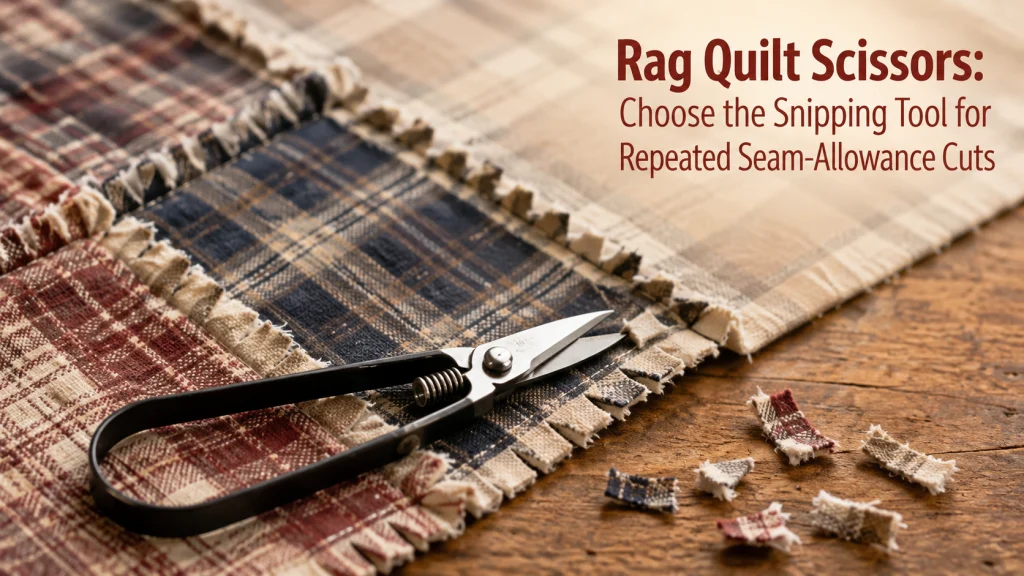
Rag Quilts Create a Repeated-Snipping Job, Not a Normal Pattern Cut
A long pattern cut rewards smooth blade travel across a continuous line. Rag-quilt seam allowances create a different motion: position the blades, make a short cut, stop before the stitching line, reopen, move over, and repeat. That difference is why rag quilt scissors are usually discussed as snipping tools rather than simply smaller versions of dressmaking shears.
The project name does not automatically make a specialized pair necessary. If you already own sharp fabric scissors that let you control short cuts comfortably and accurately, they may be enough for a small amount of snipping. The decision changes when the work contains many repeated cuts and a long blade becomes more tool than the cut itself requires.
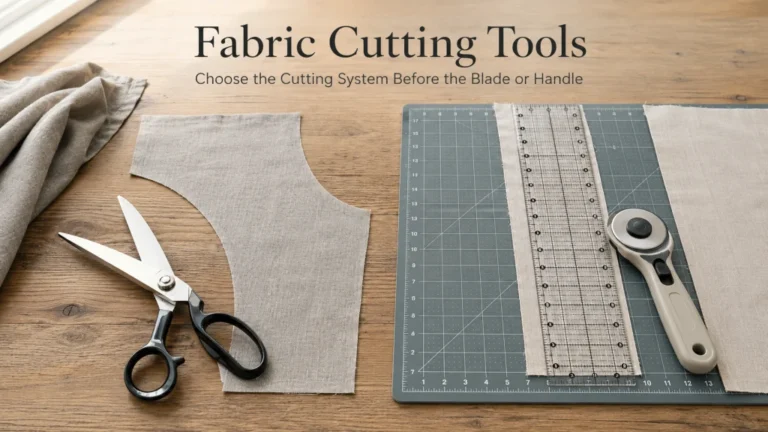
This geometry is the starting point for the tool choice. At the broader reusable-tool level, the sewing tools guide helps separate cutting tools from other sewing equipment. If the real job is broad yardage cutting rather than repeated seam-allowance snips, the wider overview of choosing fabric cutting tools is the better place to compare tool types.
Define the Required Snip Depth and Repetition
Before comparing handles or springs, look at the cut itself. A rag-quilt snip needs enough blade engagement to cut through the exposed seam allowance, but the cut must stop before the seam that holds the layers together. The useful blade is therefore not simply the sharpest or longest one available; it is the one that gives you a clear sense of where a short cut begins and ends.
Repetition matters just as much as depth. A few corrective snips around one edge do not create the same tool demand as working along many exposed seams. Before deciding whether a dedicated pair is worthwhile, look over the project and count how many seam-allowance lines will need repeated snipping rather than judging from the quilt’s overall size alone. That simple count gives you a clearer picture of how often the position-close-stop-reopen cycle will actually repeat. If the project involves a large number of nearly identical short cuts, a tool designed to reopen between cuts can become materially different from ordinary ring-handle scissors even though both tools are capable of cutting fabric.
Key point: Judge the tool by the repeated cut cycle: position, close, stop, reopen, and move. A feature that helps one long cut may add little to a sequence made of short snips.
This also explains why rag quilt snips should not be chosen from overall scissor length alone. Handle size, blade length, pivot position, and tip geometry work together, so two tools with similar total lengths can behave differently at a seam allowance.
Compare Short Blades with General Fabric Shears
General fabric shears are built to do more than one job. Their longer blades can be efficient when cutting straight or gently curved fabric sections because one closing motion covers more distance. That advantage becomes less important when every cut is intentionally short and the stopping point matters more than forward travel.
Shorter blades can make the cut length easier to judge because less blade extends beyond the working area. That does not make a short blade automatically safer or more accurate. A sharp tip can still cross the stitching line if it is inserted too far, and a dull short blade can be a poor match for a layered seam allowance.
If you are comparing the dedicated tool against scissors you already own, start with how fabric scissors differ in blade geometry and intended fabric use. The useful question is not whether ordinary scissors are “wrong.” It is whether their blade length and reopening motion suit dozens of short, depth-limited cuts well enough that a separate tool adds meaningful value.

The SINGER ProSeries scissors use 8.5-inch heavy-duty blades for sewing and craft cutting. The blades are tempered and ground on both sides, and the listing states that they can cut through multiple layers of fabric. The scissors also have a bent design with rubberized handles and are listed for both right- and left-handed use.
Check On AmazonIf you click this link and buy, we earn a commission at no additional cost to you.
Evaluate Spring Action as One Feature, Not the Whole Answer
Spring-loaded rag quilting scissors reopen the blades after a cut instead of relying entirely on the fingers to reopen ring handles. That changes one part of the repeated-snipping cycle, which is why spring action is commonly paired with short fabric snips. A current Fiskars page for its Easy Action scissor family describes the spring mechanism as opening the blades and includes rag-quilt snipping among the intended uses.
That manufacturer description verifies the mechanism and intended task, not a universal comfort outcome. Hand size, handle shape, spring force, blade geometry, material stack, and the number of cuts all affect how a particular person experiences a tool. Avoid treating “spring-loaded” as a guarantee that a pair will suit every user or every rag-quilt seam allowance.
For a wider look at the mechanism itself, compare spring-loaded fabric scissors separately from this project-specific decision. Here, spring action earns its place only if it complements the blade and tip geometry needed for short seam-allowance cuts.

The Fiskars Easy Action Micro-Tip Scissors use precision-ground stainless steel blades with a titanium coating and a pointed Micro-Tip design for detailed cutting. Their spring-assisted handle gently opens the blades after each cut. The scissors also include a blade lock for storage and a symmetrical SoftGrip handle designed for right- or left-handed use.
Check On AmazonIf you click this link and buy, we earn a commission at no additional cost to you.
Check Tip Shape and the Safety Lock
Tip shape matters because the cut finishes close to a stitched boundary. A fine point can enter a narrow area precisely, while a more rounded or blunt profile can reduce how aggressively the tip projects beyond the intended cut. Neither shape is universally better. The useful choice depends on the seam allowance, layer stack, visibility of the stitch line, and how deliberately you can stop each snip.
If a spring-loaded tool includes a blade lock, check how it is operated and whether it secures the blades in the closed storage position. Follow the manufacturer’s instructions for locking, carrying, cleaning, and storing the tool. Do not defeat a lock, modify a blade guard, or leave a spring-open cutting tool loose where the exposed edges can be contacted accidentally.
Sharp-tool boundary: Use cutting tools only as their manufacturer directs. Replace or service a damaged tool according to its documentation rather than improvising around a loose pivot, failed lock, chipped edge, or other fault.
The lock is therefore a storage and handling feature, not a substitute for controlled cutting. During the actual snip, blade length, tip visibility, and a clear stopping point still determine whether the cut stays in the seam allowance.
Decide Whether a Dedicated Pair Is Justified by Project Frequency
Dedicated scissors make the strongest case when repeated seam snipping is a recurring job. If you make one small rag quilt and already have fabric scissors that handle the seam allowance cleanly, buying another tool may add little. If the same short-cut cycle appears across many seams or future projects, blade length and spring action become more relevant because the task repeats often enough for those features to matter.
This is also where community preference should stay in its proper place. Quilters frequently discuss spring-loaded or short-blade options, but one person’s favorite pair does not prove that the same geometry will fit another person’s hand or project. Use those discussions to identify what to compare, then make the choice from the actual tool dimensions, mechanism, tip, lock, and your expected cutting workload.
- Count the job as repeated short snips, not as a general fabric-cutting task.
- Check whether your existing fabric scissors already control the required cut depth well.
- Compare short blade geometry with the seam allowance you need to enter.
- Decide whether spring reopening adds value across the number of cuts you expect to make.
- Check the tip profile and visibility near the stitching line.
- Confirm any lock or storage mechanism works as documented.
- Skip the dedicated purchase if an existing sharp tool already handles the task reliably.
The checklist keeps the purchase proportional to the work. A dedicated pair should solve a repeated cutting problem, not simply add another labeled tool to the sewing drawer.

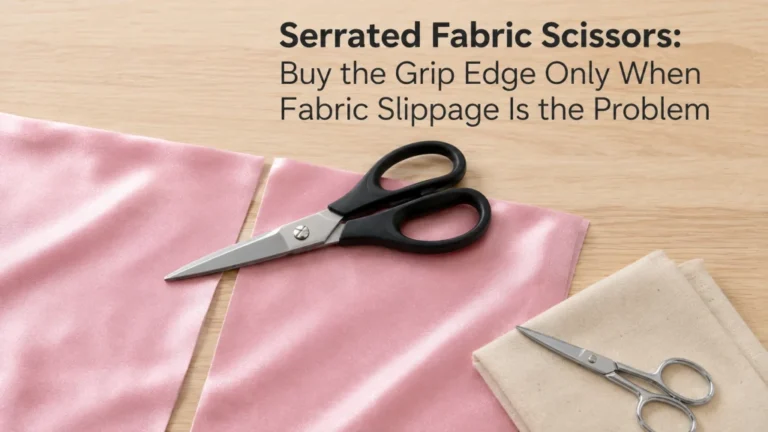
The Westcott Rag Snips are 5.5-inch crafting and quilting scissors made for short cuts through heavy fabric and multiple layers. They use titanium-bonded blades with a serrated edge that helps grip material during cutting. The design also includes a wire-cutting notch for additional crafting tasks.
Check On AmazonIf you click this link and buy, we earn a commission at no additional cost to you.
Separate the Snipping-Tool Decision from Rag-Quilt Construction
This article stops at choosing the cutting tool. It does not set seam-allowance dimensions, tell you how to assemble the quilt, determine fabric combinations, prescribe clipping spacing, or explain how washing changes the exposed edges. Those are construction and material decisions, not scissor-selection criteria.
The boundary matters because a good cutting tool cannot correct a construction error. If the stitched boundary is in the wrong place, if the seam allowance is not what the project calls for, or if the material stack behaves differently than expected, changing scissors does not fix the underlying setup. Choose the tool after the construction method has already defined where the short cuts belong.
Likewise, do not turn this decision into a broad scissors-versus-cutter argument. For long layout cuts or other fabric-preparation work, compare scissors and rotary cutters in the context of those larger cutting tasks. Rag quilt snips occupy a much narrower role: repeated, controlled cuts along exposed seam allowances.
Final Thoughts: Match the Tool to Repeated Snips
Rag quilt scissors are most useful when their geometry matches the actual work: many short cuts with a deliberate stopping point. Short blades can make that motion easier to judge, spring action can change the reopening part of the cycle, and tip shape affects how the tool approaches the stitched boundary. None of those features, by itself, makes a pair universally better.
Start with the scissors you already own, then ask what the repeated snipping task exposes as a limitation. If the existing tool controls the cut well, keep using it. If blade length, reopening motion, or tip geometry consistently makes the job awkward, a dedicated pair has a clear reason to exist.
FAQs
✂️ Do I need special scissors for a rag quilt?
Not necessarily. Ordinary sharp fabric scissors can work if they give you good control over short seam-allowance cuts; a dedicated pair becomes more useful when the repeated snipping workload exposes a real limitation in blade length or reopening motion.
🧵 Why are rag quilt snips often shorter than fabric shears?
The task uses short, depth-limited cuts rather than long cutting strokes. A compact blade can make the stopping point easier to judge, although sharpness, tip shape, and the material stack still matter.
🔁 Are spring-loaded scissors required for rag quilting?
No. Spring action changes how the blades reopen between cuts, but it is one feature among several. Choose it only if the mechanism, blade geometry, and expected number of snips fit the job.
📏 What should I compare before buying scissors for rag quilts?
Compare blade length, tip shape, spring mechanism if present, handle fit, lock or storage method, and whether your existing scissors already control the required short cuts. Do not buy from the project label alone.
🔒 Does a safety lock make rag quilt scissors safer to use?
A lock can secure the blades for storage when the manufacturer designs it for that purpose, but it does not replace controlled cutting. Follow the exact tool instructions for locking, carrying, cleaning, and storage.
References and Sources
- Fiskars Easy Action scissors overview: Confirms the spring-action mechanism and identifies quick rag-quilt snipping as an intended use.
- Missouri Star rag quilt scissors discussion: Shows the recurring owner question about whether short spring-loaded scissors are worth using for repeated rag-quilt snips.