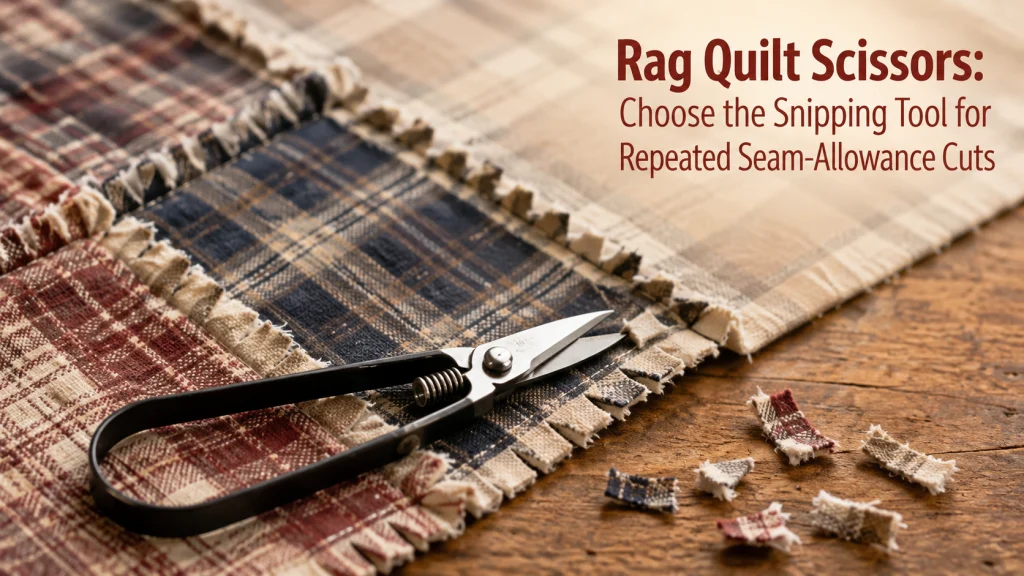
Rag Quilt Scissors: Choose the Snipping Tool for Repeated Seam-Allowance Cuts
Rag Quilt Scissors

Rag quilt scissors are useful when the job is dominated by many short, controlled snips rather than long fabric cuts. The important differences are blade length, tip shape, spring action, and whether the tool can repeatedly enter the seam allowance without encouraging an overlong cut. Ordinary fabric scissors can still work, especially for an occasional
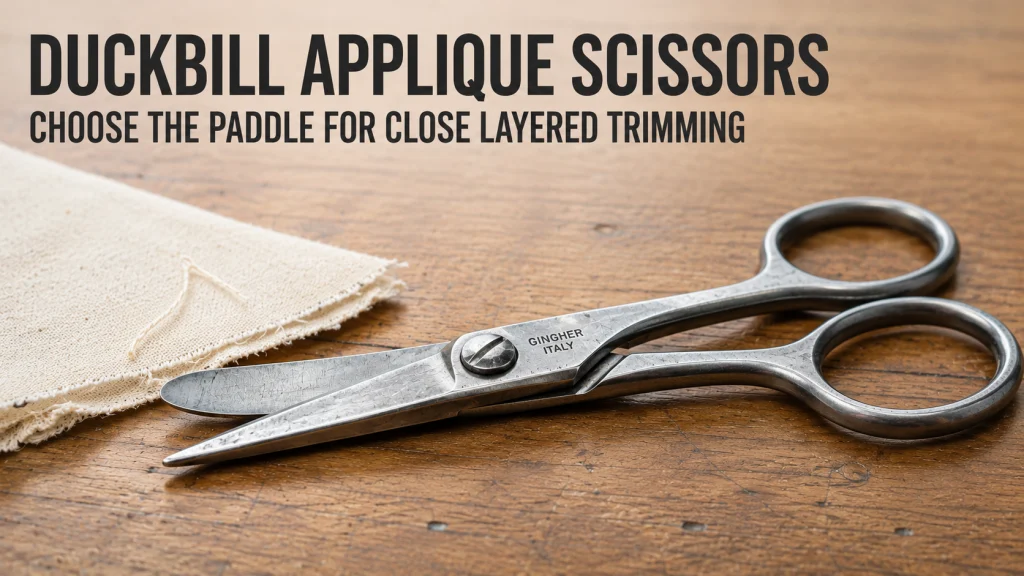
Duckbill Applique Scissors: Choose the Paddle for Close Layered Trimming

Duckbill Applique Scissors

Duckbill applique scissors are specialty cutting tools built around one defining feature: a wide paddle that can separate or guard a lower fabric layer while the cutting blade trims the layer above. That geometry matters most when the job is close layered trimming, not ordinary pattern cutting or general-purpose fabric cutting. Before buying, verify the

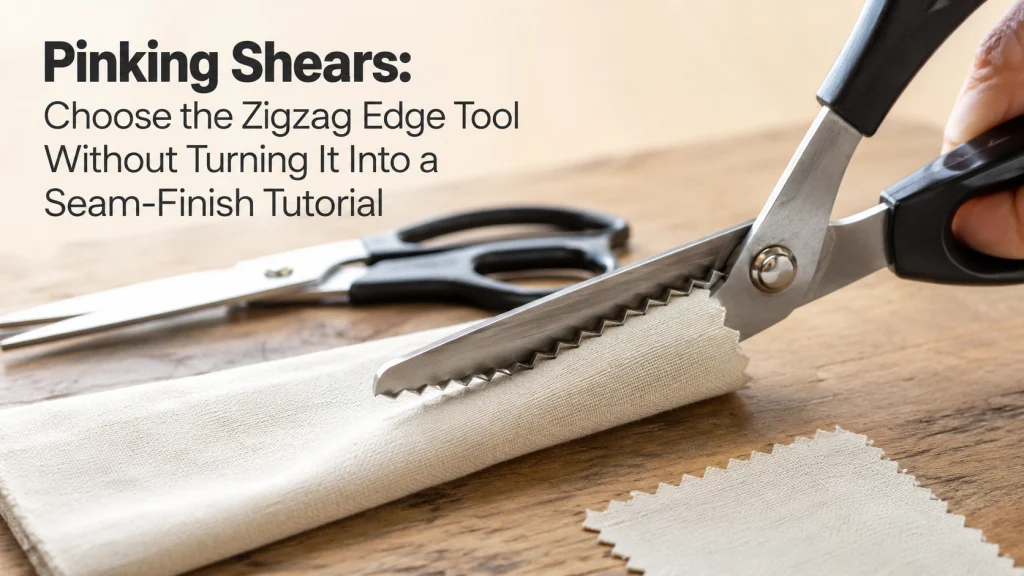
Pinking Shears: Choose the Zigzag Edge Tool Without Turning It Into a Seam-Finish Tutorial

Pinking Shears

These fabric-cutting shears use saw-toothed blades that leave a zigzag edge, but buying the tool is not the same decision as choosing pinking as a seam finish. Start by confirming that you actually want that cut edge, then compare blade length, tooth pattern, fabric guidance, and maintenance requirements. Pinking can reduce fraying on suitable woven

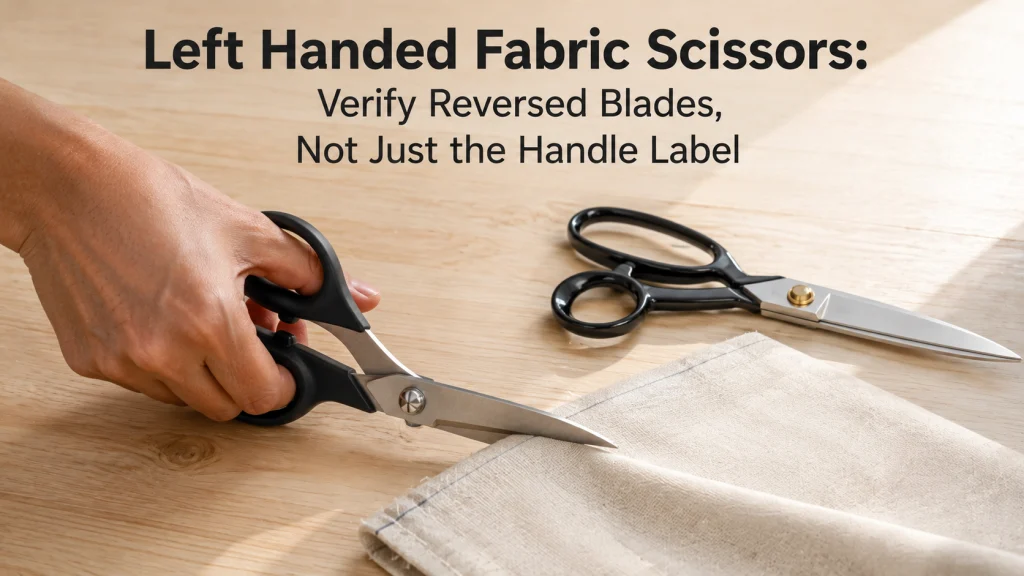
Left Handed Fabric Scissors: Verify Reversed Blades, Not Just the Handle Label

Left Handed Fabric Scissors

Left handed fabric scissors are not all built the same way. A handle that accepts the left hand does not automatically mean the blades are reversed, and that difference changes what the product can legitimately claim about left-handed cutting geometry. Before buying, verify the blade arrangement, handle shape, size, and stated fabric-cutting role on the

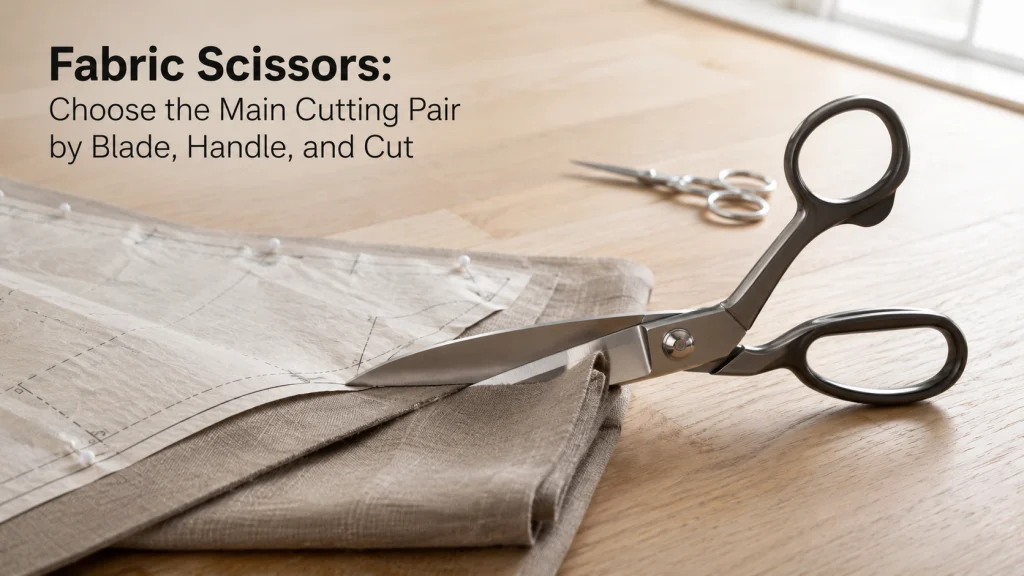
Fabric Scissors: Choose the Main Cutting Pair by Blade, Handle, and Cut

Fabric Scissors

Your main fabric-cutting pair should be chosen around the cuts you make most often, not around the longest feature list on the package. For a main manual cutting pair, blade length, tip shape, handle form, handedness, and edge type matter because they change how the tool meets fabric and how easily you can follow long