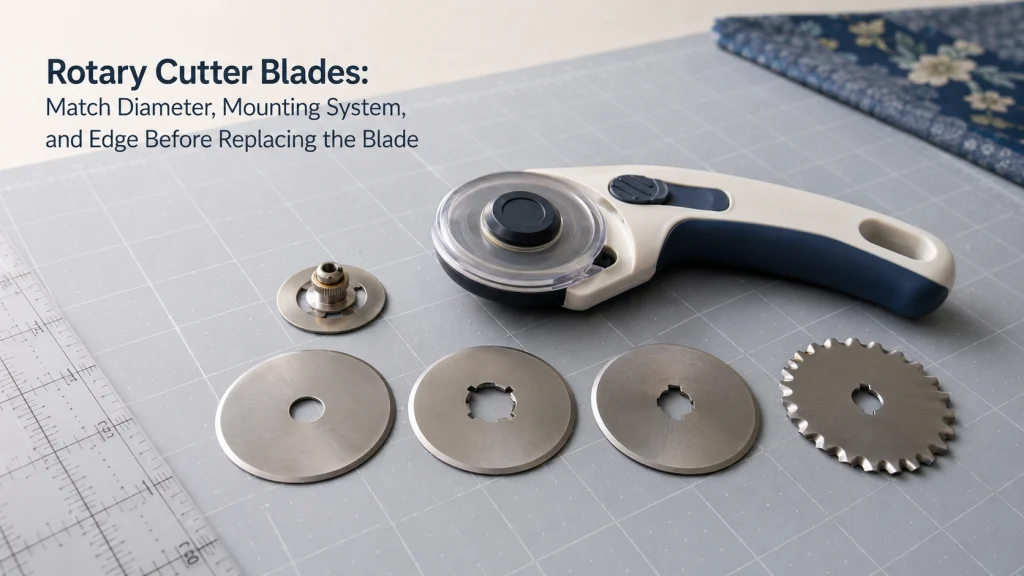
Rotary cutter blades are not interchangeable simply because the diameter printed on the package matches the blade already in your cutter. A reliable replacement decision starts with the exact cutter model, then checks blade diameter, center mounting geometry, and edge type against manufacturer or exact seller documentation. Straight and specialty edges should be treated as separate choices, and deciding what to buy is different from deciding whether the old blade is ready to be replaced or how to install the new one. By the end, you should be able to build a short compatibility record before buying a blade instead of relying on diameter or a broad “fits most” claim alone.
The Same Diameter Does Not Automatically Mean the Same Replacement Fit
A package of rotary cutter blades can look like an easy purchase when its diameter matches the number on the blade already in the tool. That number matters, but it answers only one part of the compatibility question because the center mounting system still has to match the cutter. Manufacturer documentation shows that one cutter ecosystem can use different mounting arrangements even when familiar blade diameters appear across the range. The useful buying question is therefore not “Is this a 45 mm blade?” but “Is this exact blade documented for the mounting system in this exact cutter?”
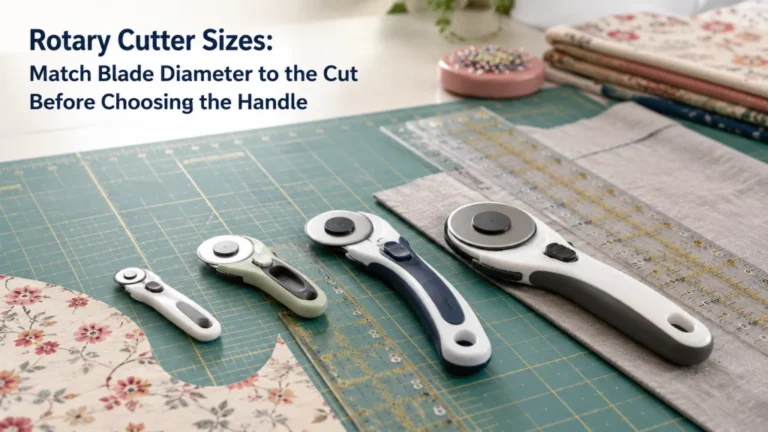
That distinction matters most when replacement rotary cutter blades are sold with broad language such as “universal” or “fits most” and the listing gives little detail about the center opening or retention method. A visual match is weak evidence because two circular blades can share an outside diameter while depending on different hardware or blade carriers. If you are still deciding which tool size belongs in your workspace, compare rotary cutter sizes first so blade selection does not get mixed up with cutter selection. Once the cutter itself is known, replacement becomes a narrower compatibility audit instead of another tool-shopping decision.
Record the Exact Cutter Model Before Looking at Blades
Start with the cutter in your hand, not the blade listings in a search result. Record the brand and exact model name or model number from the handle, packaging, manual, or manufacturer account if that information is available. A family name by itself may not be enough when the manufacturer has revised the retention system, offered quick-change and standard versions, or sold several sizes under similar naming. If the model cannot be identified confidently, pause the purchase rather than treating appearance as proof.
This is also the point where the boundary with buying a cutter matters. Someone who dislikes the current handle, guard, or size may actually be trying to solve a cutter problem rather than a replacement-blade problem, and choosing a rotary cutter for fabric is a different decision. If the cutter is staying, the model record becomes the first line of an evidence ledger that can be reused each time a blade is purchased. That small record is more dependable than trying to remember whether the last package “looked right” several replacements later.
If the cutter is older and the original manual or product page is no longer available, do not jump from missing documentation to assuming a generic blade must fit. Photograph or write down every durable identifier that remains on the handle, guard, fastener area, or original packaging, then use archived manufacturer literature, reputable parts documentation, or an exact specialist listing only when it clearly ties those identifiers to a blade specification. Treat a seller’s visual resemblance or an unsupported compatibility statement as weaker evidence than a model number, part reference, dimension, or mounting description that can be cross-checked. If the evidence never gets beyond a likely visual match, the responsible result is an unresolved fit question, not a confident purchase.
| Record | Best evidence | What it proves | What it does not prove |
|---|---|---|---|
| Exact cutter model | Handle marking, manual, manufacturer page | Which cutter must be matched | That any same-brand blade fits |
| Blade diameter | Manual, existing blade marking, manufacturer specification | Required outside size | Center mounting compatibility |
| Mounting system | Manufacturer instructions or parts documentation | How the blade is retained | That every matching-diameter edge type is approved |
| Edge type | Blade documentation | Straight or specialty cutting profile | That the blade fits the cutter |
The ledger is deliberately short because each line answers a different question. If one line is still uncertain, more shopping results do not repair the missing evidence, they only add more candidates. Keep the model record with the cutter manual or in a simple tool note so future purchases begin from verified information. That same discipline works across a practical sewing tool setup whenever consumable parts depend on an exact tool interface.
Record Blade Diameter Before Comparing 45mm Rotary Blades
Blade diameter is still an essential specification, even though it cannot prove compatibility by itself. Check the existing blade marking or the cutter documentation and record the size exactly before searching for a refill. Retail listings often compress the notation to “45mm rotary blades,” while manuals and technical pages may write the same measurement as “45 mm,” so do not mistake the spacing difference for a different size. The number should match the size the cutter is designed to use unless the manufacturer explicitly documents more than one supported diameter.
Do not infer the needed diameter from the size of a nearby cutter or from a package that happens to fit the storage drawer. Rotary cutters are made in multiple diameters because cutter size changes the geometry of the tool and the kind of blade the mechanism is built to carry. If you need to understand why different cutter diameters exist before replacing anything, the page on matching cutter size to work keeps that question separate from refill compatibility. For this purchase, record the diameter and then move immediately to the center mounting system rather than treating the number as the final check.

The OLFA RB45 pack contains ten 45mm rotary blades made from tungsten steel and honed for a sharp straight cutting edge. OLFA lists the blades for its RTY-2/C, RTY-2/NS, RTY-2/G, and RTY-2/DX 45mm rotary cutters, along with most other 45mm rotary cutters. The blades are intended for materials including fabric, paper, and leather and come in a plastic case for storage or disposal.
Check On AmazonIf you click this link and buy, we earn a commission at no additional cost to you.
Identify the Center Mounting System and Retention Method
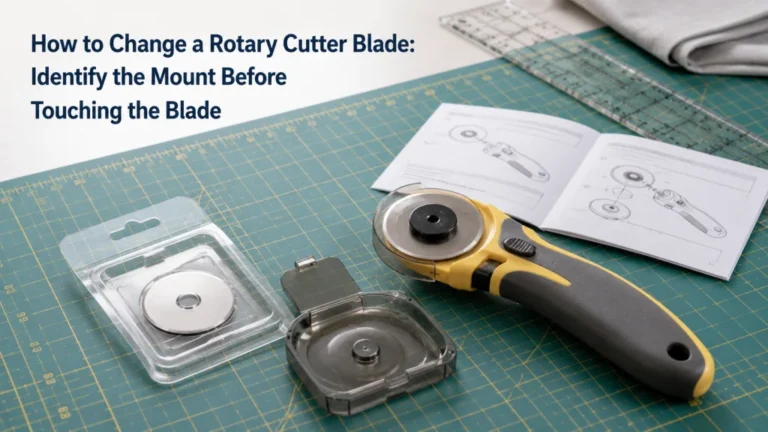
The center of the blade is where a same-diameter replacement can stop being equivalent. Published manufacturer instructions distinguish between standard screw-retained arrangements, quick-change systems, magnetic retention, and other cutter-specific mechanisms, which means the cutter architecture controls more than the outside measurement. Look at the exact instructions for your cutter and record how the blade is retained, what center opening or carrier it uses, and whether the replacement is listed for that system. Do not remove the blade merely to investigate if the model documentation already provides the necessary identification.
Manufacturer evidence is especially useful here because generic seller photos may hide the center detail behind packaging or show one image across several size options. If the listing claims broad compatibility, look for a cutter list, model family, replacement-part reference, or other explicit statement that connects the blade to your tool. A claim that a blade “fits most 45 mm cutters” can narrow the search, but it should not overrule exact cutter documentation when the two conflict. The safest purchasing path is to treat the manufacturer’s cutter-specific information as the primary evidence and seller wording as supporting evidence only when it is equally specific.
Compatibility warning: Matching diameter is necessary, but it is not proof that the center mounting geometry and retention method match. Do not force a blade onto a cutter or alter the center opening to make an uncertain replacement fit. Do not omit retention hardware or substitute unrelated parts simply because the blade can be placed on the cutter. If the documented replacement does not seat and secure normally, stop and recheck the cutter model and blade specification.
That warning is about purchase compatibility, not a substitute for installation instructions. A blade that is documented as compatible can still require a specific orientation or retention sequence when it is installed. Keep those two decisions separate so a correct refill choice is not followed by an improvised change procedure. The exact cutter manual remains the controlling instruction once the replacement is in hand.
Separate Straight Replacement Blades From Specialty Edges
After size and mounting compatibility are established, identify the edge you actually intend to replace. Standard fabric rotary cutter blades usually use a straight circular cutting edge, while some cutter systems also offer specialty profiles such as wave or pinking edges for a visibly different cut. A specialty edge is not simply a sharper or more premium version of a straight blade because it changes the cut profile by design. Treat edge type as a functional choice that comes after fit, not as a reason to ignore the compatibility record.
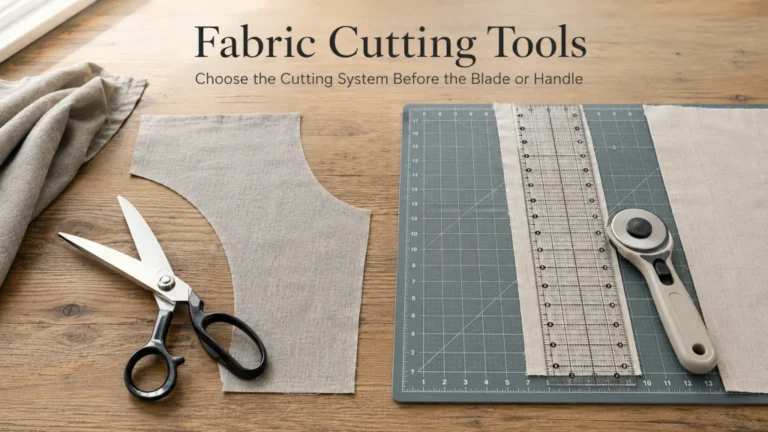
The packaging should state what the edge is designed to produce and which cutter or mounting system it is intended to work with. If a specialty blade is described only by diameter and decorative effect, verify the fit separately instead of assuming the effect name proves compatibility. This article does not judge which edge is better for a particular fabric or project because that moves into cutting technique and material decisions rather than replacement fit. If you are comparing the broader roles of cutters, mats, rulers, and related equipment, compare fabric cutting tools without turning this refill decision into a general tool comparison. The goal here is narrower: buy the same functional edge you intend to use, and make sure its documented interface matches the cutter before it reaches the worktable.

The OLFA WAB45-1 is a 45mm stainless steel specialty rotary blade that creates a decorative wave edge. It is supplied as one blade with a storage case and is intended for materials used in sewing, quilting, scrapbooking, and other crafts. OLFA specifically documents the WAB45-1 for its RTY-2/DX 45mm Ergonomic Rotary Cutter.
Check On AmazonIf you click this link and buy, we earn a commission at no additional cost to you.
Verify Compatibility in Manufacturer or Exact Seller Documentation
Compatibility becomes much easier to defend when the evidence chain can be read in both directions. The cutter documentation should identify its blade size or replacement system, and the blade documentation should identify the cutter family, mounting arrangement, or compatible models it is intended to serve. Fiskars, for example, publishes separate blade-change instructions for different mounting styles rather than treating diameter as the only identifier, while OLFA publishes change instructions tied to specific cutter families. Those are useful evidence anchors because they show how manufacturers themselves separate refill selection from a vague same-size assumption.
When exact manufacturer documentation is unavailable, a specialist seller page can be useful if it names the cutter model and the blade specification clearly enough to create a direct match. Save or note the exact model-to-blade relationship rather than relying on a search-result snippet, because snippets can omit compatibility limits and variant details. Community comments can reveal that sewists repeatedly wonder whether same-size blades interchange across brands, but those comments are not technical proof that a particular center mount is correct. The purchase should rest on documentation that identifies your cutter, the blade size, the mounting system, and the intended edge with as little inference as possible.
Packaging also deserves a separate check when the blade is sold under a store or private-label name rather than the cutter brand. The name on the front does not prove which cutter interface the blade was designed around, so compare the technical evidence instead: exact compatible models, blade diameter, center opening or carrier, and edge type. If the package or seller page provides only a size and a broad compatibility phrase, do not assume that a different brand name represents an OEM-equivalent part. Treat private-label packaging as acceptable only when the compatibility chain is still explicit enough to match the cutter without guessing.
- Match the exact cutter model or documented cutter family.
- Match the required blade diameter.
- Match the center mounting and retention system.
- Match the intended straight or specialty edge.
- Reject listings that require you to guess at any of those four points.
Use the checklist as a stop rule, not as a reason to keep shopping indefinitely. If all four items are supported by the same manufacturer record or by consistent cutter and blade documentation, the replacement decision is well grounded. If one item is missing, look for better documentation before buying rather than assuming the cheapest generic listing will probably work. That approach also prevents compatibility research from drifting into a broad comparison of every blade brand on the market.

The OLFA PIB45-1 is a 45mm stainless steel pinking blade designed to create a toothed decorative edge on fabric and other craft materials. One blade is supplied in a plastic storage case. OLFA identifies the RTY-2/DX as the compatible rotary cutter body for this specialty blade, separating its fit requirements from ordinary straight 45mm replacements.
Check On AmazonIf you click this link and buy, we earn a commission at no additional cost to you.
Decide Replacement Timing Separately From Replacement Compatibility
A compatible blade is not automatically a blade you need to install immediately. Rotary blade replacement timing depends on the condition of the existing edge and the cutting behavior you are seeing, not on a universal calendar or a fixed number of projects. If the real question is whether the current blade is dull, nicked, skipping sections, or demanding more pressure than it used to, decide when to replace the blade before buying extras for a problem that may have another cause. Keeping timing separate prevents a compatibility article from pretending that every cutter needs a refill on the same schedule.
The reverse matters too: once replacement is justified, do not let urgency weaken the fit check. A dull blade can make a same-day purchase feel more important than verifying the exact cutter model, but an incompatible refill still does not solve the problem. Record the compatible replacement specification first, then keep that information available for future rotary blade replacement decisions so the research does not have to start from zero each time. This gives the reader a repeatable ownership record without inventing blade-life numbers that vary with materials, mats, handling, edge damage, and cutting conditions.
Keep the Replacement-Blade Purchase Separate From the Blade-Change Procedure
Choosing the correct refill and installing it are two different jobs. This page stops once the blade specification is verified because the physical change can involve exposed sharp edges, retention hardware, blade guards, magnetic carriers, or model-specific orientation steps. Follow the exact manufacturer procedure for the cutter you own rather than transferring a sequence from a different handle that happens to use the same diameter. If you are ready to install the verified refill, follow the blade-changing procedure as a separate task.
That boundary is more than editorial neatness because it protects the compatibility decision from being confused with mechanical handling. A replacement can be correct on paper and still be installed incorrectly if the cutter has a retention feature the user has not identified, while a familiar change sequence cannot make an incompatible blade correct. Keep the guard engaged whenever the cutter instructions call for it, store unused blades as the manufacturer directs, and do not handle an exposed edge beyond the steps required by the exact instructions. If the cutter is damaged, missing retention parts, or cannot secure the correct blade normally, stop and resolve the tool problem instead of improvising around the mechanism.
Final Thoughts: Match the Blade to the Mounting System, Not Just the Number
A replacement blade purchase becomes straightforward when each piece of evidence has one job. The cutter model identifies the tool, the diameter narrows the blade size, the center mounting system proves the interface, and the edge type confirms the kind of cut the replacement is meant to make. None of those checks needs a product ranking or a long list of alternatives. They need a documented match between the cutter you own and the blade you are about to buy.
If the fit record is incomplete, do not use price, package appearance, or same-diameter labeling to fill the gap. Verify the missing specification first, then decide separately whether the blade needs replacement now and follow the cutter-specific change instructions only after the correct refill is identified. That sequence keeps the purchase, timing, and installation questions from collapsing into one guess. It also gives you a simple compatibility record that can make the next replacement much faster without sacrificing evidence.
FAQs
📏 Are all 45 mm rotary cutter blades interchangeable?
No. Matching 45 mm diameter is only one requirement, and the center mounting geometry and cutter-specific compatibility still need to match. Check the exact cutter documentation and the blade documentation before treating two same-size blades as interchangeable. If either source names a different mounting system, the shared diameter does not override that difference. Treat an exact model match as stronger evidence than appearance.
🧩 What should I check besides blade diameter?
Record the exact cutter model, center mounting and retention system, and the intended edge type. Confirm the diameter from the cutter documentation or existing blade marking as well. A blade is a strong replacement candidate only when those details agree instead of relying on visual similarity. If one detail is missing, keep looking for exact documentation before purchasing.
〰️ Can I replace a straight blade with a wave or pinking blade?
Only if the cutter manufacturer or exact blade documentation supports that specialty edge for your cutter. The decorative profile describes the cut it makes, not whether the mounting system fits your tool. Confirm diameter and center mounting compatibility just as you would for a straight replacement. Do not use the specialty-edge label as a substitute for a cutter-specific fit statement.
🛒 Is a “fits most” compatibility claim enough?
It is useful as a starting point, but it is weaker than documentation that names the exact cutter model or mounting system. Look for a compatibility list, model family, or replacement reference that connects the blade directly to your cutter. If exact cutter information conflicts with a broad seller claim, use the cutter-specific manufacturer information. A broad claim should narrow the search, not end the compatibility check.
🛡️ Should I remove the old blade just to identify the replacement?
Not if the model, manual, or manufacturer page already identifies the blade specification you need. Use that documentation first so you can avoid unnecessary handling of an exposed cutting edge. Removing the old blade belongs to the cutter-specific change procedure, not the initial shopping check. Follow the manufacturer instructions when removal is actually required.
References and Sources
- Fiskars rotary mounting instructions: Shows distinct mounting styles and size-specific blade-change paths within the manufacturer’s rotary cutter system.
- OLFA cutter-family change instructions: Shows that blade-change guidance is tied to identified cutter families rather than diameter alone.