Machine quilting thread should be chosen by the look you want on the quilt, the fiber and size that create that look, and the limits of the domestic machine doing the stitching. Fine thread can blend into the surface, medium thread can make the quilting more visible, and decorative fibers can make the stitch line part of the design. No single fiber or weight is universally best because thread construction, visual goals, and machine limits vary. Choose the visual role first, then verify the thread label and the machine requirements before sewing the quilt layers.
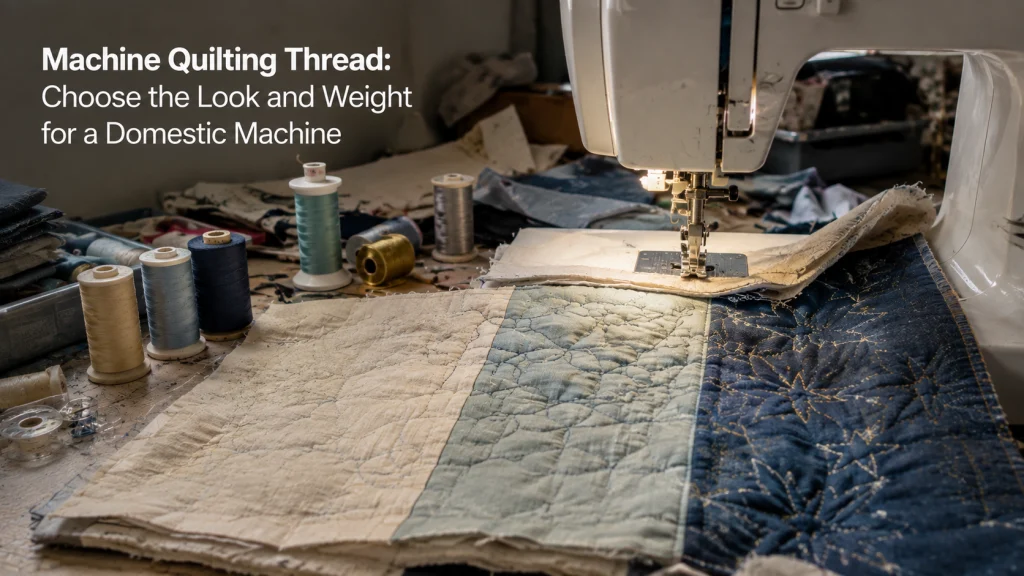
Machine Quilting Thread Can Disappear or Become Part of the Design
Machine quilting thread has two very different visual jobs: it can recede so the fabric and quilting texture lead, or it can become an obvious design line across the quilt. A fine, low-contrast thread can make dense quilting look quieter, while a thicker or more lustrous thread can make every curve and line more prominent. Neither result is automatically better because the correct choice depends on what the quilting is supposed to contribute visually. Decide whether the stitch line should blend, show clearly, or act as a decorative feature before comparing fibers and size labels.
This application-first approach is more useful than asking for one best thread for machine quilting. A domestic machine can quilt with several fiber families and thread sizes when the exact thread and machine setup are compatible, so the visual goal should narrow the field before technical details do. At the broader materials level, the sewing supplies guide separates thread from the other consumable choices around a project. If you are still sorting ordinary sewing thread from specialty applications, the sewing thread type comparison gives the broader framework. Once machine quilting is definitely the task, the rest of the decision becomes a controlled choice about prominence, fiber, size, and the top-to-bobbin relationship.
Decide Whether the Quilting Should Blend or Stay Visible
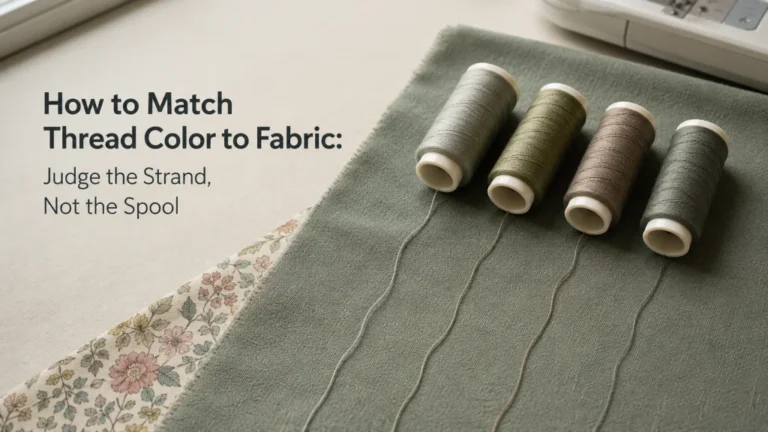
Blending thread keeps attention on fabric color, piecing, appliqué, or the texture created by the quilting pattern rather than on the thread itself. Fine thread and a color close to the quilt surface can make the stitch line less assertive, especially when the quilting is dense or crosses several fabric colors. A reduced-sheen finish can also make the thread visually quieter than a glossy decorative finish of similar apparent thickness. If color is the main challenge, the thread color matching process helps separate color choice from fiber and size.
Visible quilting reverses the priority and treats the stitched line as part of the graphic design. A medium or heavier thread, stronger color contrast, sheen, metallic surface, or intentionally distinctive fiber can make the quilting pattern easier to see from normal viewing distance. The tradeoff is that a more prominent thread exposes changes in stitch direction and spacing more clearly, so visibility should be chosen because the design needs it rather than because heavier thread sounds stronger. Decorative thread also needs to remain within the exact domestic machine and thread-maker instructions instead of being treated as a simple swap for an ordinary quilting thread.
| Desired look | Thread direction | What to verify |
|---|---|---|
| Quilting should recede | Finer thread, lower contrast, quieter finish | Exact size label and domestic-machine suitability |
| Quilting should be visible | Medium or heavier thread, stronger contrast | Thread path, size limits, and stitch appearance |
| Quilting is decorative | Sheen, metallic effect, silk-like finish, or bold color | Exact product handling and machine instructions |
The matrix is a visual router, not a list of mandatory thread types. Two quilters can use different fibers or sizes and still reach the same design goal if both choices fit their machines and quilts. Start with the appearance column, then move to fiber and size rather than searching by marketing label alone. That order keeps the spool subordinate to the finished look.
Before committing the choice to an entire quilt, make a small sample using the same top fabric, batting, and backing whenever those materials are available. Look at the sample from normal viewing distance as well as close up, because a thread that seems subtle beside the spool can become much more visible once several quilting lines cross the fabric. Check whether the sheen, contrast, and apparent thickness support the intended design on both sides of the sandwich. The sample is not a durability test or a substitute for machine documentation; it is a practical way to confirm that the visual decision still works in the real material stack.

This Aurifil set contains three Dove 50wt cotton thread spools with 1,422 yards on each spool. Amazon describes the thread as 100% mercerized long-staple Egyptian cotton. The listing identifies it for machine quilting, machine embroidery, and serging and describes the Mako 50wt construction as smooth and strong.
Check On AmazonIf you click this link and buy, we earn a commission at no additional cost to you.
Choose Fiber From the Project’s Appearance and End Use
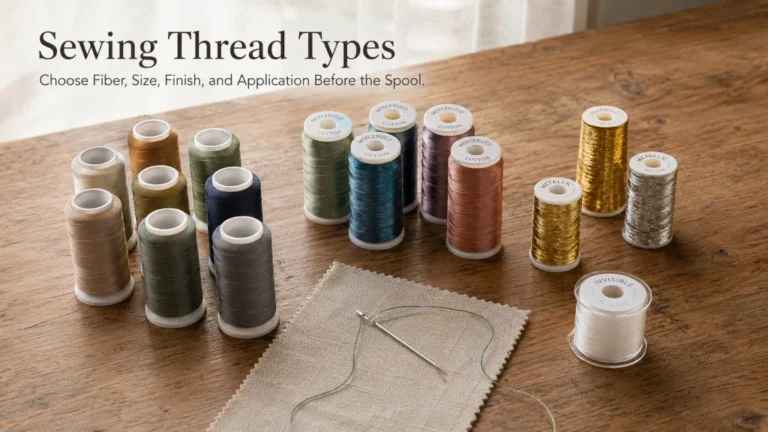
Cotton, polyester, silk, metallic, and monofilament threads can all appear in machine quilting, but they do not create the same surface. Cotton usually reads as matte and traditional, polyester can range from matte to high sheen, silk can provide a fine smooth line with natural luster, and metallic thread is intentionally decorative. Monofilament takes another route by reducing the visual presence of the thread when the fabric or quilting texture should dominate. The right fiber is therefore a design and use decision rather than a rule that quilting fabric must be paired with one matching fiber.
Fiber also changes handling characteristics, lint, smoothness, sheen, and how strongly the thread visually separates from the quilt surface. Those differences are reasons to read the exact thread label and manufacturer application guidance rather than rely on a broad fiber stereotype. For a deeper fiber comparison, use the polyester versus cotton thread differences, while specialty choices have their own boundaries in the invisible sewing thread selection, metallic sewing thread guidance, and the silk thread guide. If the intended thread is temporary rather than part of the finished quilting line, use the water-soluble thread guide instead of treating it as another decorative quilting fiber. This article keeps the decision at the quilting-application level instead of turning fiber choice into a tension or needle tutorial.
| Fiber family | Typical visual direction | Buying question |
|---|---|---|
| Cotton | Matte, soft visual presence | Does the size and finish give the desired amount of stitch visibility? |
| Polyester | Can range from matte to noticeably lustrous | Is the specific finish appropriate for blending or decorative quilting? |
| Silk | Fine line with natural sheen | Does the exact thread fit the desired visual effect and domestic setup? |
| Metallic | Strong decorative highlight | Does the manufacturer document machine-quilting use and handling? |
| Monofilament | Reduced visible thread line | Does the exact material and finish suit the quilt and machine? |
Use the table to identify a fiber family, then compare actual thread labels inside that family. A glossy polyester and a matte polyester can support very different visual goals even though the fiber name is the same. Likewise, a very fine cotton and a heavier cotton should not be treated as equivalent just because both are cotton. Fiber narrows the character of the thread, while size determines how much of that character the quilt will show.

Gutermann Invisible Thread is a clear monofilament sewing thread supplied on a 274-yard spool. The Amazon listing identifies it for quick repairs, hemming, quick quilts, and multicolored fabrics where the stitching should remain visually unobtrusive. The product page lists nylon as the material and confirms the clear color and 274-yard length.
Check On AmazonIf you click this link and buy, we earn a commission at no additional cost to you.
Read the Thread Size System Before Comparing Weight
Thread size labels can be confusing because several measurement systems exist, and the familiar weight system runs in the direction many beginners do not expect. In the weight system, a smaller weight number represents a heavier thread, while a larger weight number represents a finer thread. That means two spools cannot be compared reliably by the number alone unless you first confirm that both labels are using the same system. The sewing thread weight explanation covers those measurement systems in more detail.
For machine quilting, thread size affects visual prominence as well as the physical setup required by the exact machine. Fine thread tends to occupy less visual space and can blend more readily, while a heavier thread creates a more obvious line and may require different machine-compatible handling. Do not turn a commonly used quilting weight into a universal rule because domestic machines, thread constructions, stitch designs, and desired appearances vary. Read the size label, fiber, ply or construction information, and application guidance together instead of choosing by weight number in isolation.
| Label question | Why it matters | What not to assume |
|---|---|---|
| Which size system is used? | Weight, Tex, denier, and other systems use different scales | That two similar numbers mean similar thickness |
| Is the thread fine, medium, or heavy for this application? | Size changes stitch visibility and setup demands | That one weight is best for every quilt |
| What fiber and construction accompany the size? | Threads with similar nominal size can still behave and look different | That size alone defines the finished appearance |
Once the size system is clear, compare the actual thread label with the visual job defined earlier. A fine thread can reduce stitch prominence, while a heavier thread can make the same quilting path read more strongly across the surface. The size still has to fit the exact thread construction and the domestic machine’s documented limits. Treat the number as one part of the buying decision rather than as a stand-alone quilting rule.
Decide the Top and Bobbin Thread Relationship
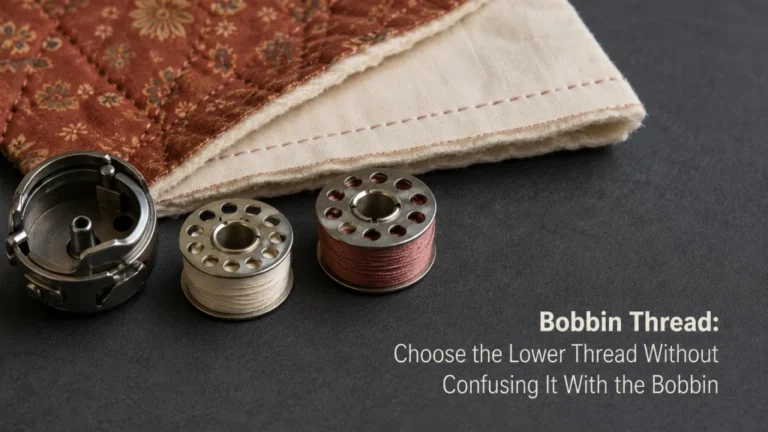
The top thread controls much of what the viewer sees, but the bobbin thread is part of the same stitch system and should not be treated as an afterthought. The two threads do not always need to match in fiber, size, or color, provided the combination is appropriate for the exact machine and project. A finer, smooth lower thread can reduce visual bulk on the back and increase how much thread fits on the bobbin, while matching top and bobbin choices can simplify color planning. The bobbin thread selection criteria covers the lower-thread decision in greater depth.
Choose the relationship by deciding what should be visible on the quilt front and back, then verify that the machine supports the chosen thread combination. Decorative or heavier top thread may pair with a different lower thread because the two sides have different visual jobs, while a reversible quilt may make bobbin color and appearance much more important. Keep the combination tied to the exact domestic machine and thread documentation rather than relying on a generic bobbin formula. If stitch balance becomes a troubleshooting problem, follow the exact manual rather than turning this buying page into a tension-adjustment procedure.

This New brothread set contains 25 prewound Size A, Class 15, SA156 bobbins filled with white polyester thread. Amazon identifies the bobbin thread as 70D/2, 60 weight and uses clear plastic-sided bobbins. The listing describes the prewound bobbins for sewing and embroidery machines and specifies the bobbin format so compatibility can be checked against the individual machine.
Check On AmazonIf you click this link and buy, we earn a commission at no additional cost to you.
Keep Domestic Machine Quilting Separate From Longarm Thread Decisions
Thread marketed for quilting may be used across both home and longarm machines, but the machine context still matters. Longarm systems can operate with different thread paths, speeds, tension assemblies, needles, bobbin systems, and continuous-use expectations than a standard domestic sewing machine. Technical thread references therefore separate home-machine and longarm guidance instead of treating them as one setup. A thread’s success in a specialist quilting system does not automatically validate the same configuration on a domestic machine.
For a domestic machine, verify spool or cone handling, thread size, bobbin format, and other machine-interface limits in the exact manual before adopting advice from another system. Large quilting cones can also raise a practical thread-delivery question because not every home machine is designed to hold every package format directly. That is a machine and packaging compatibility issue, not evidence that the thread itself is unsuitable for quilting. Keep the thread application, package format, and machine setup as three separate checks.
| Question | Domestic machine | Longarm system |
|---|---|---|
| Thread application | Machine quilting on a home sewing machine | Machine quilting on a specialist quilting system |
| Setup authority | Exact domestic machine manual and thread documentation | Exact longarm documentation and thread guidance |
| Settings transfer | Do not import specialist settings automatically | Do not assume domestic settings apply |
This boundary matters most when a search result recommends a thread together with machine-specific tension, needle, or delivery settings. The thread itself may still be a reasonable domestic candidate, but the specialist setup belongs to the machine for which it was written. Preserve the application evidence and discard the unsupported settings transfer. That keeps a useful thread option from becoming bad machine advice.
Final Thoughts: Define the Quilting Look Before the Spool
Choosing quilting thread for a sewing machine becomes much easier when the decision begins with appearance instead of fiber loyalty or a favorite weight number. Decide whether the quilting should blend, remain visible, or become decorative, then choose a fiber family and thread size that support that visual goal. Read the size system carefully and keep the top-to-bobbin relationship inside the exact domestic machine’s operating limits. This sequence gives each spool a job before technical details start competing for attention.
If weight is still the unresolved variable, continue with the thread-size comparison rather than guessing from the label. Once the thread itself is chosen, use the thread quantity guide if spool quantity is the remaining purchase question. If the lower thread is the problem, evaluate the bobbin separately, and if a spool is specifically labeled for hand quilting, use the hand quilting thread machine-use check before putting it through a domestic machine. Keep longarm-specific settings outside the domestic setup unless the exact documentation supports them. The right machine quilting thread is the one that creates the intended look while remaining a documented fit for the machine and quilt.
FAQs
🧵 What thread is best for machine quilting?
There is no single best fiber or weight for every quilt. Choose by the visibility you want, then verify fiber, size, and domestic-machine suitability for the exact thread.
👀 Should machine quilting thread blend into the fabric?
Only if that supports the design. Fine, low-contrast thread can recede, while heavier, contrasting, or lustrous thread can make the quilting pattern part of the visual design.
📏 Is a higher thread weight number thicker?
Not in the common weight system. A higher weight number indicates a finer thread, so confirm the measurement system before comparing two labels.
🪡 Can I use different thread in the bobbin for machine quilting?
Yes, the top and bobbin threads do not always need to match in fiber or size. The combination still needs to fit the exact machine, bobbin system, desired front-and-back appearance, and thread guidance.
✨ Can metallic or invisible thread be used for machine quilting?
They can be machine-quilting options when the exact thread is documented for that application and fits the domestic machine. Treat them as specialty choices with their own handling requirements rather than direct substitutes for ordinary quilting thread.
🧰 Can I copy longarm thread settings to my domestic sewing machine?
No. Longarm and domestic machines can differ in thread delivery, tension systems, needles, bobbins, speed, and other operating conditions, so use the exact machine documentation.
References and Sources
- Superior machine quilting guidance: Supports the range of quilting fibers and the distinction between blending, visible, and decorative thread effects.
- Superior thread weight reference: Verifies how the weight system is read and explains why thread size must be interpreted by its measurement system.
- Superior bobbin thread guidance: Supports treating top and bobbin thread as related but not necessarily identical choices.
- Superior machine reference guides: Supports keeping home-machine and longarm-machine guidance separate.