Why Is My Bobbin Not Winding Evenly? Diagnose Lopsided, Loose or Overfilled Winding Before You Sew With It
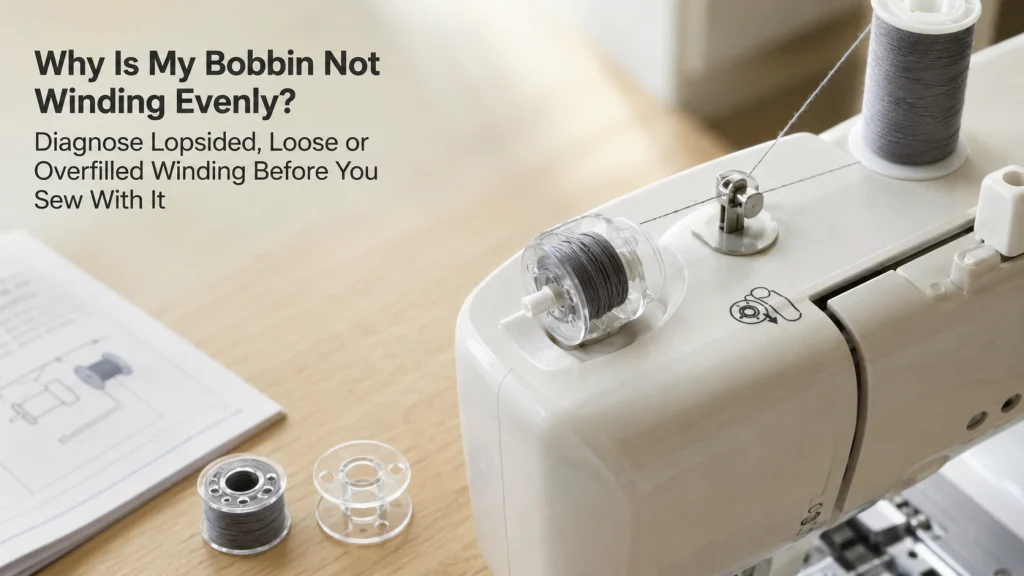
Why Is My Bobbin Not Winding Evenly

A bobbin can rotate and collect thread yet still be badly wound, so inspect the wind before it reaches the bobbin case. Loose, lopsided, uneven, or overfilled winding calls for checks of the exact bobbin type, documented winding-tension path, starting method, and shaft seating. Rewind from an empty, undamaged bobbin when the existing wind is
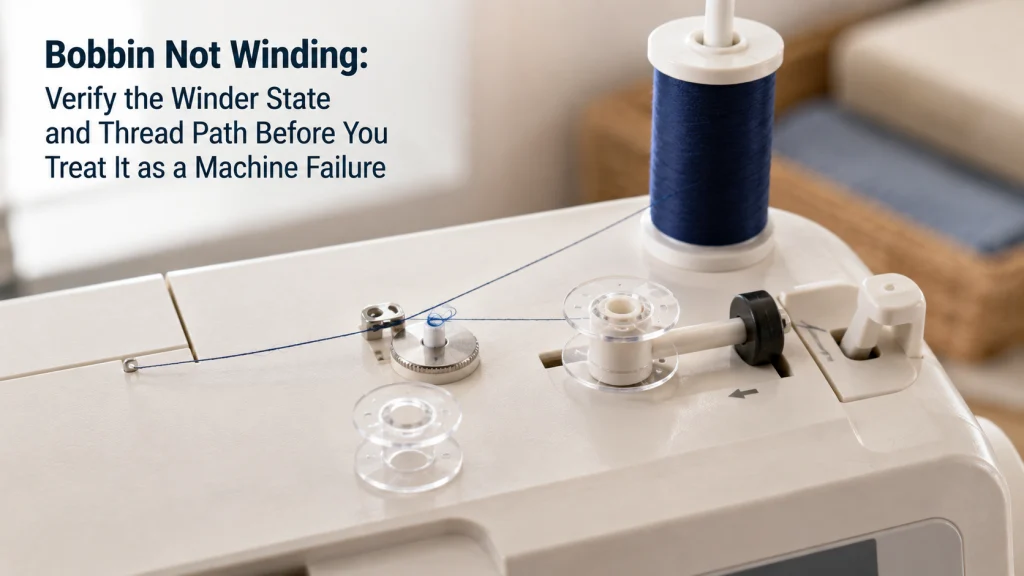
Bobbin Not Winding: Verify the Winder State and Thread Path Before You Treat It as a Machine Failure

Bobbin Not Winding

A bobbin not winding is first a state-and-thread-path problem to diagnose, not proof that the machine has a failed internal winder. The key distinction is whether the winding shaft stays stationary or the shaft spins while the bobbin fails to take up thread. Verify the exact model procedure, correct bobbin, winder engagement, and winding path

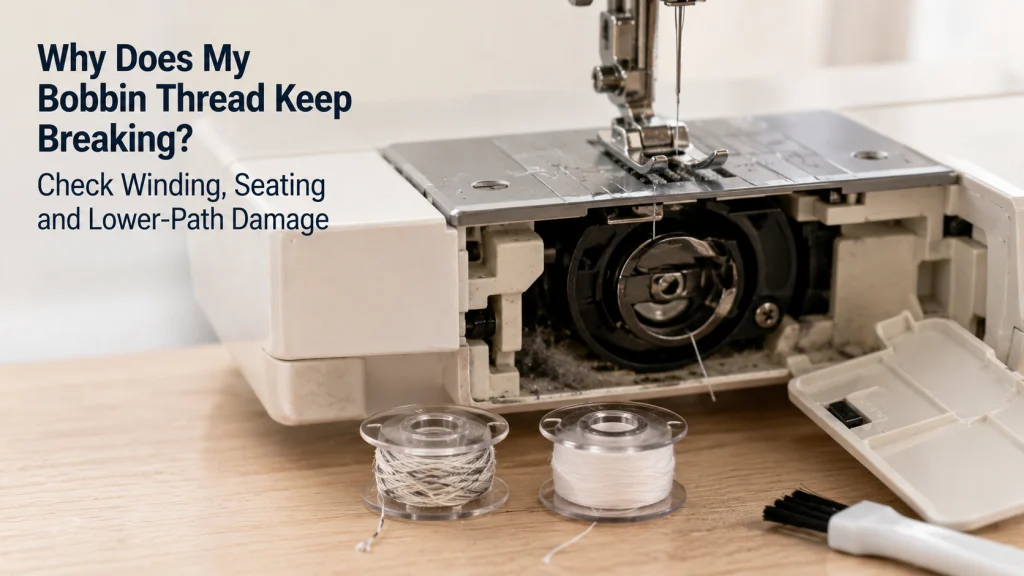
Why Does My Bobbin Thread Keep Breaking? Check Winding, Seating and Lower-Path Damage

Why Does My Bobbin Thread Keep Breaking

Repeated bobbin-thread breakage is best diagnosed from the lower thread path first, not by immediately changing upper tension. The useful sequence is to prove which thread snapped, inspect the installed bobbin and remaining tail, confirm winding quality and exact bobbin type, verify insertion, and clean only the areas the machine manual makes owner-accessible. A scratched,

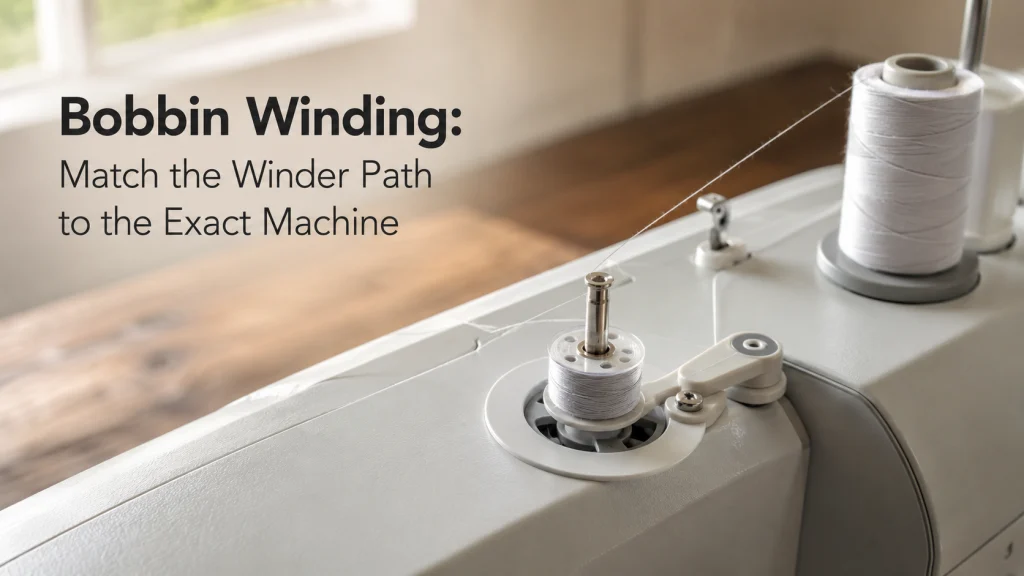
Bobbin Winding: Match the Winder Path to the Exact Machine

Bobbin Winding

Winding a bobbin is a normal setup task, but the correct path is not universal across domestic sewing machines. The reliable method is to confirm that the empty bobbin already fits the machine, then follow the exact spool position, winder guide or pretension path, spindle engagement, starting-tail instruction, and stop point shown for that model.

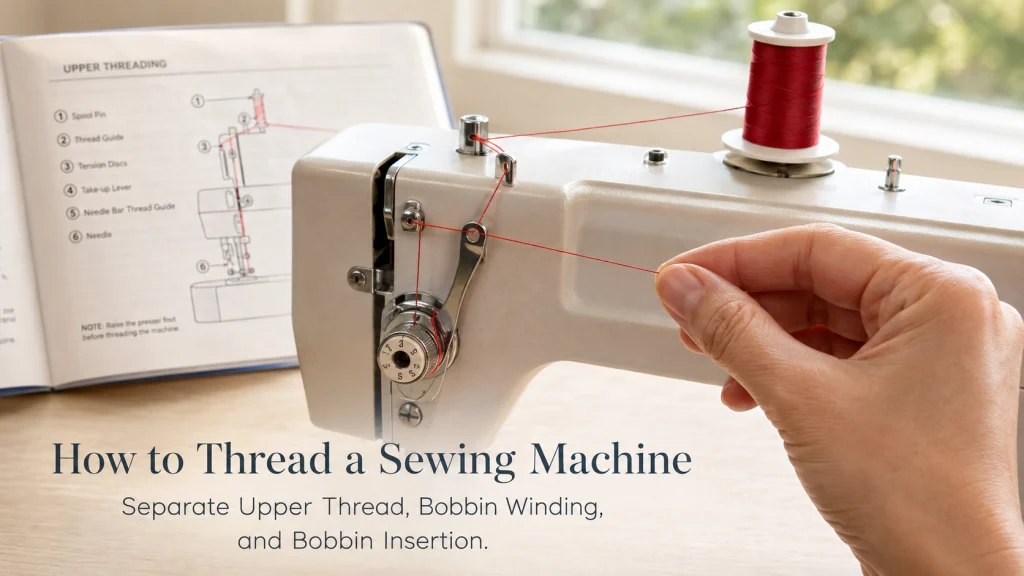
How to Thread a Sewing Machine: Separate Upper Thread, Bobbin Winding, and Bobbin Insertion

How To Thread A Sewing Machine

Threading a domestic sewing machine is not one continuous universal path. It is a set of separate jobs: preparing the upper thread path, winding a bobbin, inserting that bobbin correctly, and, on machines or techniques that call for it, bringing the lower thread to the top. The exact model manual controls spool orientation, bobbin direction,