Sewing Machine Not Feeding Fabric: Separate Feed, Stitch-Length, and Material Faults Before You Repair Anything
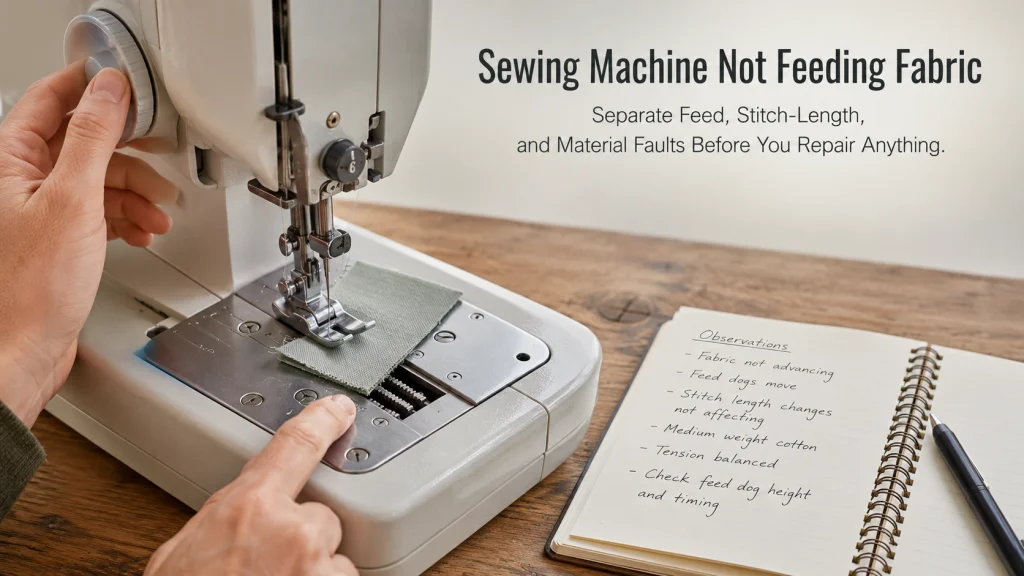
Sewing Machine Not Feeding Fabric

A sewing machine not feeding fabric can come from several different states that look similar at first: the presser foot is not in its normal sewing position, the feed dogs are disengaged, the feed system has not completed its re-engagement cycle, stitch length is set to no-feed, the material stack changes how the machine advances,
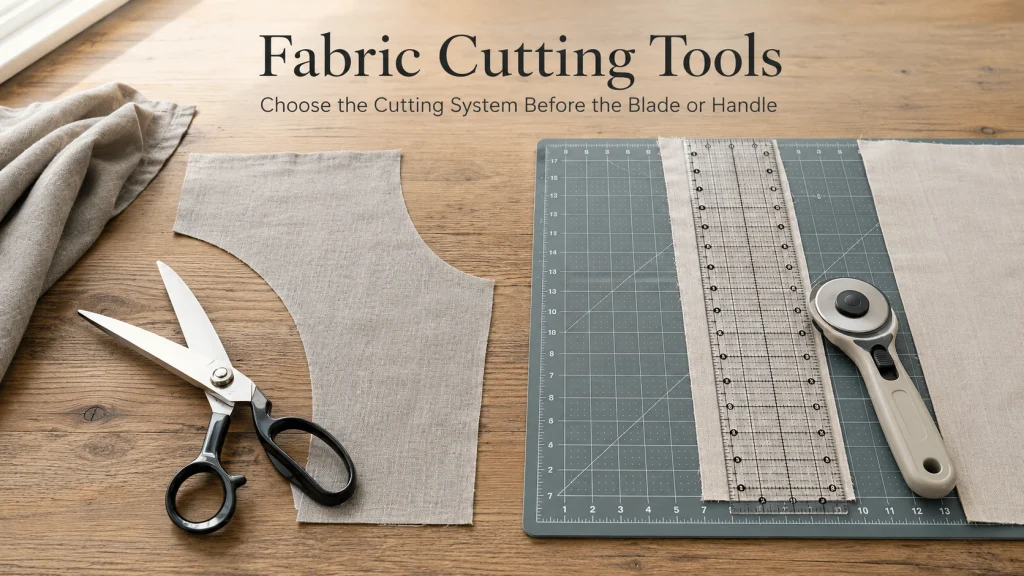
Fabric Cutting Tools: Choose the Cutting System Before the Blade or Handle

Fabric Cutting Tools

Fabric cutting tools make more sense when you choose the cutting system before comparing blades, handles or sizes. Scissors lift and advance through fabric in a different way from a rotary cutter, while specialty scissors, powered cutters and rotating mats solve narrower jobs rather than replacing every general cutter. The practical choice depends on the

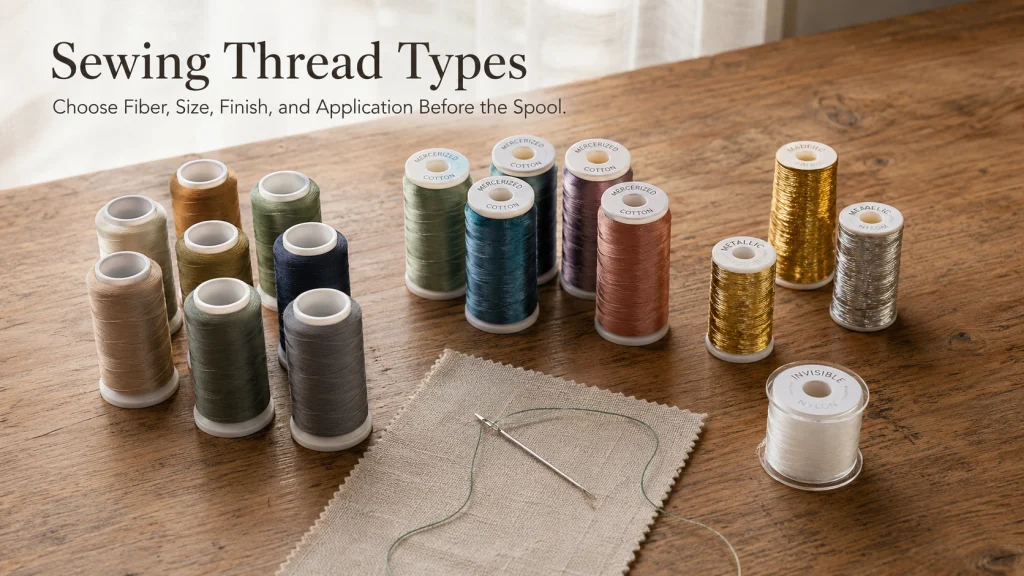
Sewing Thread Types: Choose Fiber, Size, Finish, and Application Before the Spool

Sewing Thread Types

Sewing thread types make more sense when you separate four questions that spool labels often compress together: what the thread is made from, how it is constructed, how its size is expressed, and what job it is intended to do. A polyester core-spun thread, a mercerized cotton thread, a metallic composite thread, and a water-soluble

Sewing Machine Needles: Verify the System Before Type, Size, or Brand

Sewing Machine Needles

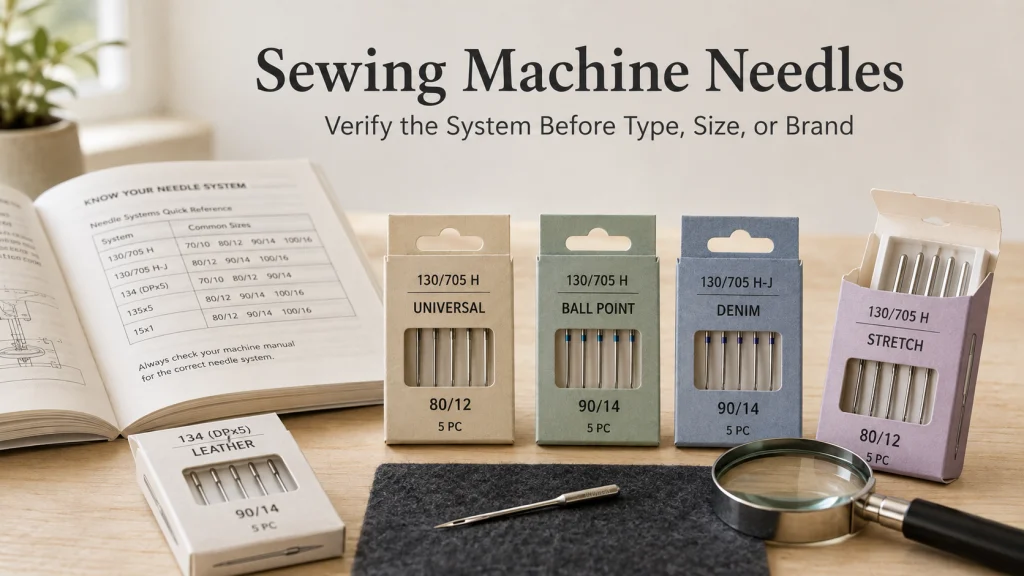
Sewing machine needles should be bought in a fixed order: verify the exact machine’s permitted needle system first, then check any special-format limits, needle type, allowed size, and brand. A fabric label such as Denim, Leather, Stretch, or Microtex describes application, but it does not prove that the needle physically belongs in a particular machine.

Best Serger: Choose the Overlock System Before the Model

Best Serger

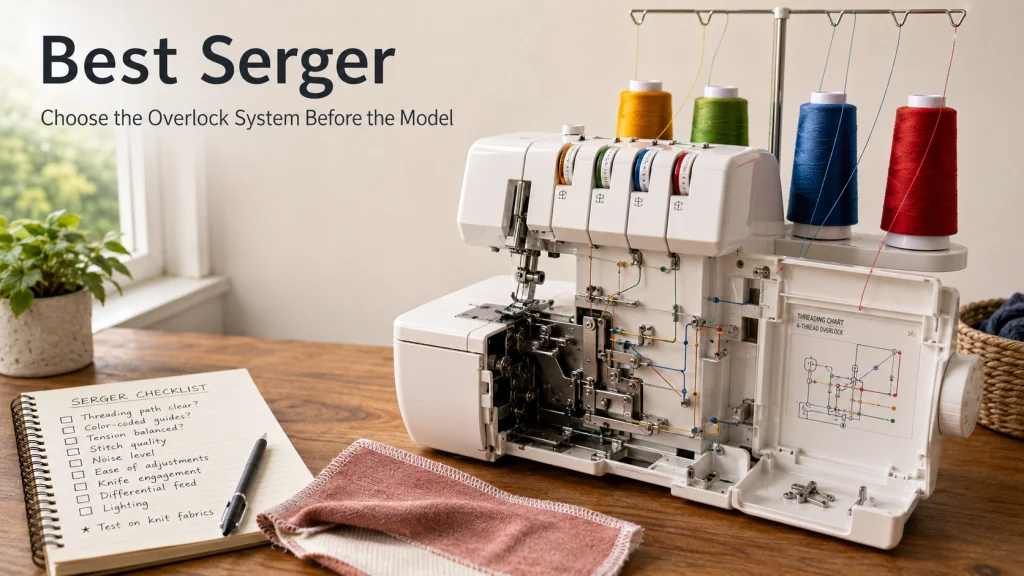
The best serger is not the machine with the longest feature list. It is the overlock system whose thread configurations, threading workflow, differential feed, edge-finishing options, documentation, and service route match the work you will actually repeat. Current home sergers range from relatively simple manual-threading machines to premium air-threading designs, and both can be sensible

How to Thread a Sewing Machine: Separate Upper Thread, Bobbin Winding, and Bobbin Insertion

How To Thread A Sewing Machine

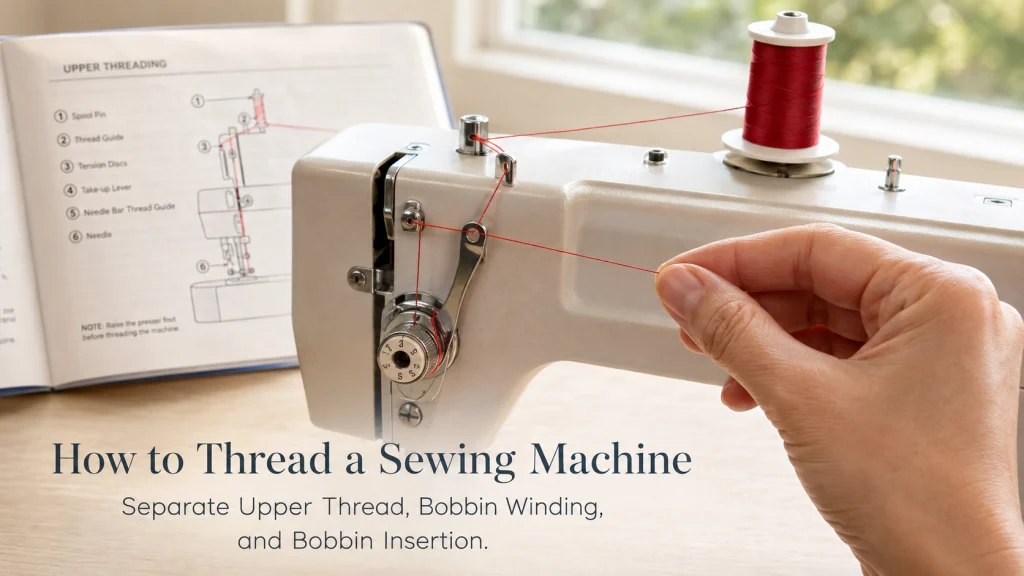
Threading a domestic sewing machine is not one continuous universal path. It is a set of separate jobs: preparing the upper thread path, winding a bobbin, inserting that bobbin correctly, and, on machines or techniques that call for it, bringing the lower thread to the top. The exact model manual controls spool orientation, bobbin direction,

How to Choose a Sewing Machine: Write the Job Description Before the Model List

How To Choose A Sewing Machine

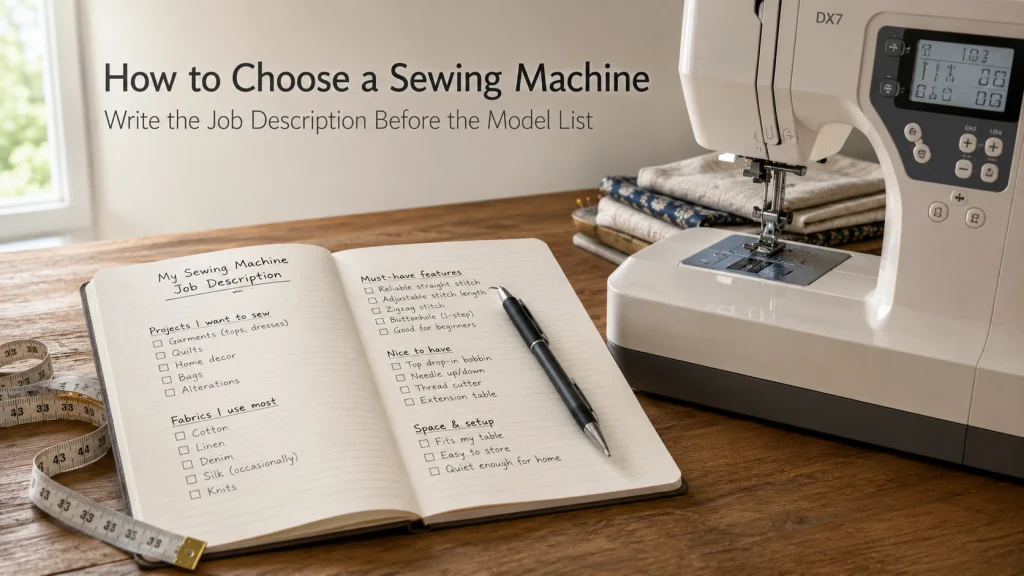
Choosing a general-purpose domestic sewing machine gets easier when the machine has a written job description before any model enters the shortlist. The useful brief records what the machine must do, who will operate and move it, which controls are non-negotiable, what support is available, and which claims still need verification. A feature can be

Sewing Machine Parts: A Job-First Map for Reading Any Home-Machine Manual

Sewing Machine Parts

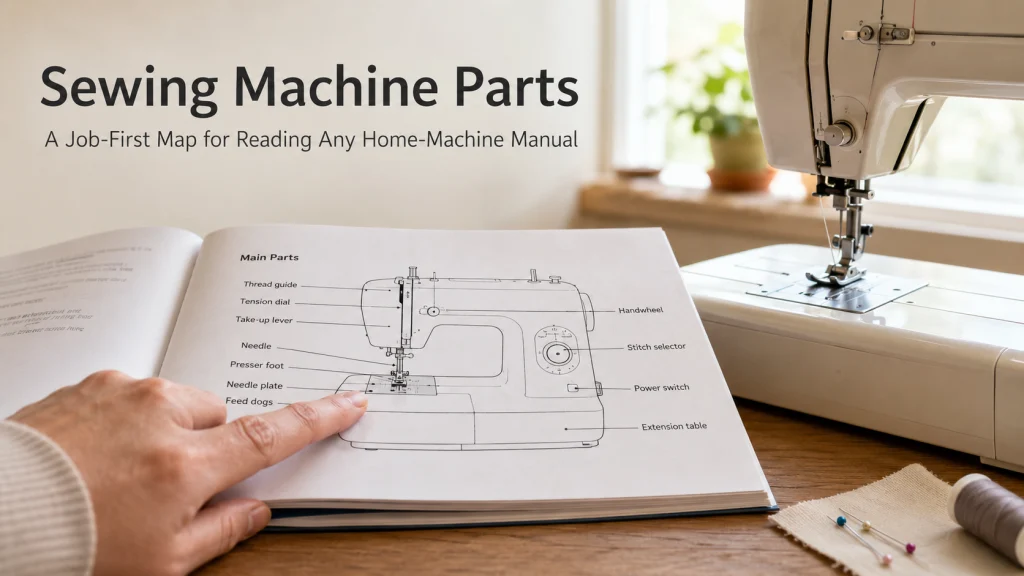
Learning sewing machine parts is easier when each label is tied to a job instead of memorized from one generic diagram. The useful questions are what system the part belongs to, whether it moves or controls something else, and whether the exact model manual treats it as owner-visible, owner-removable or service-only. That approach also prevents

My Sewing Machine Repair or Replace Decision: Cost, Attachment, Uncertainty, and What Happened Next

My Sewing Machine Repair Or Replace Decision

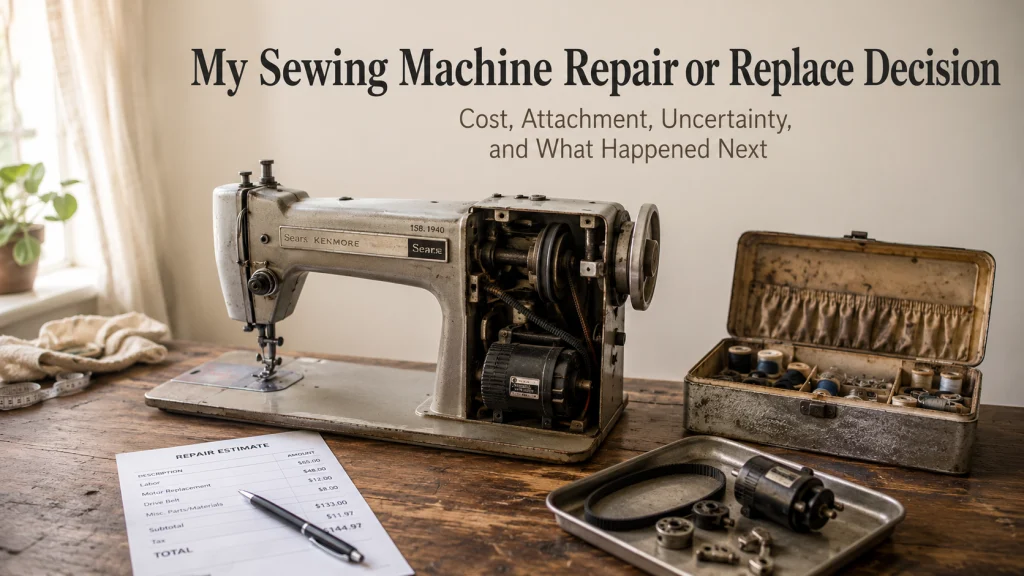
My sewing machine repair-or-replace decision started when a written estimate for a Janome 4120QDC was high enough to make replacement a realistic alternative. The price mattered, but it was not the whole decision: the machine still matched my work, I already knew its controls and setup habits, and the replacement options introduced their own cost

The Sewing Purchase I Regretted: The Assumption I Made Before Checking Fit, Use, and Return Cost

The Sewing Purchase I Regretted

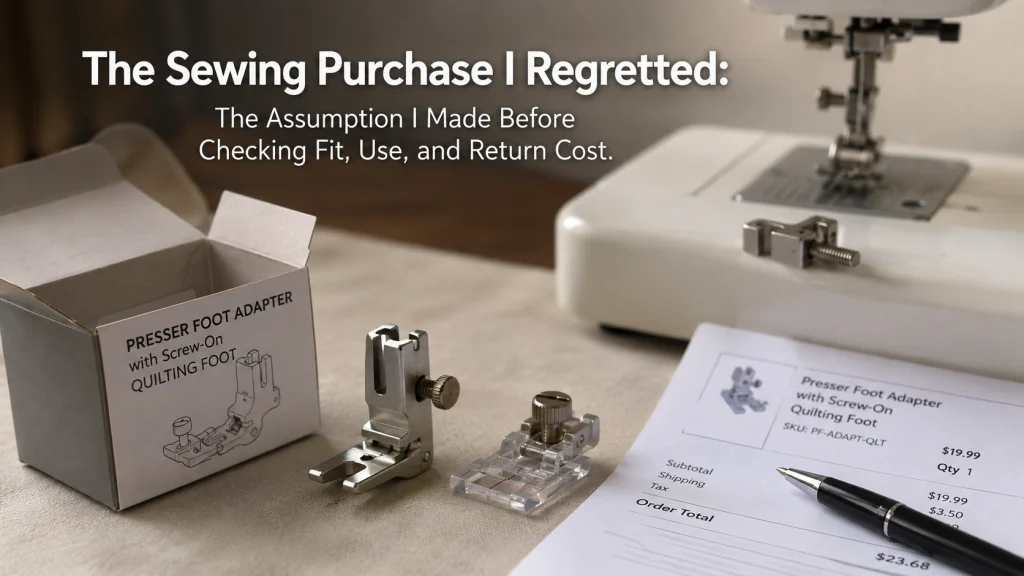
One sewing purchase I regretted was a Brother SA131 adapter I bought for a Brother CS7000X because I treated the phrase “low shank attachments” as if it proved compatibility. It did not. Brother’s own SA131 page gives a specific model list, and the CS7000X is not on it. The adapter itself was not defective; the

The Sewing Project I Almost Abandoned: The Point Where I Had to Continue, Change It, or Stop

The Sewing Project I Almost Abandoned

I once took on a structured formal dress that looked straightforward on paper but became much harder once the final fabric and construction came together. I measured carefully, made a test garment, and thought the project was moving in the right direction. At the final try-on, the bodice stood away from the body, the waistline

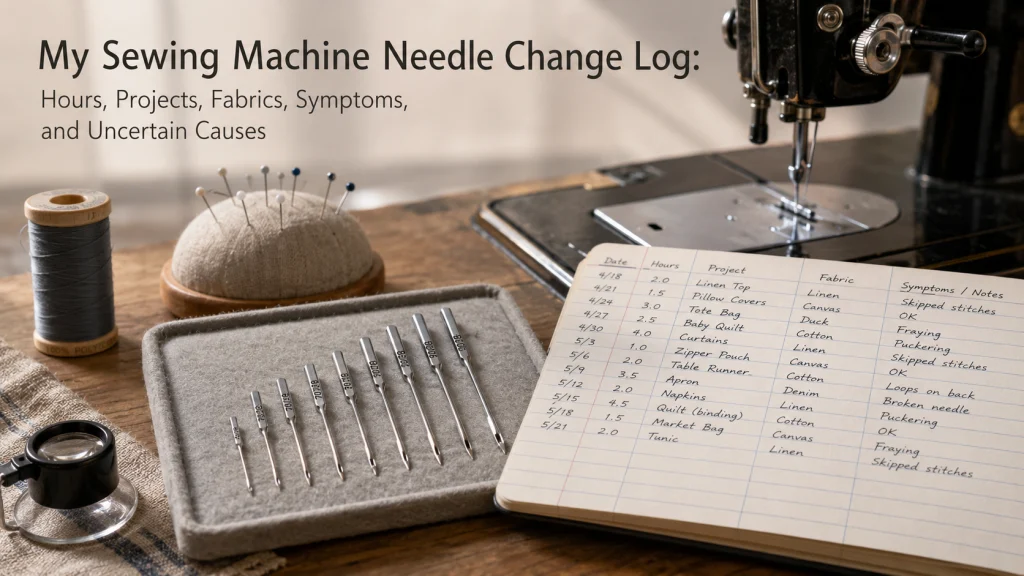
My Sewing Machine Needle Change Log: Hours, Projects, Fabrics, Symptoms, and Uncertain Causes

My Sewing Machine Needle Change Log

My needle changes on a SINGER 4423 have been shaped more by material, symptoms, and setup than by any single replacement interval. Some changes were routine, one followed a pin strike, one coincided with an improvement in a thread problem after I also rethreaded, and one fresh needle did not fix the skipped stitches I

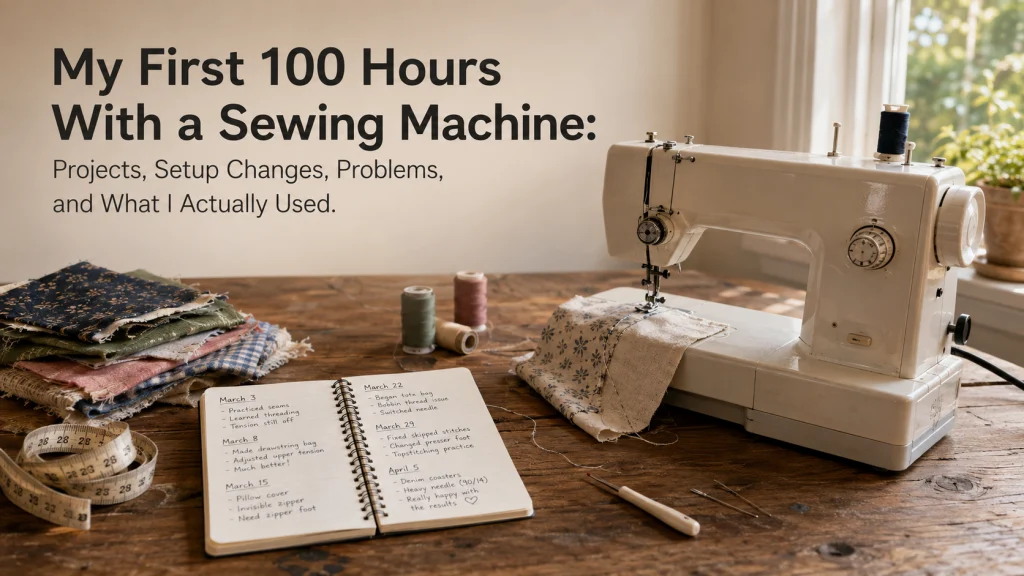
My First 100 Hours With a Sewing Machine: Projects, Setup Changes, Problems, and What I Actually Used

My First 100 Hours With A Sewing Machine

After spending substantial time with a Brother CS7000X, the machine became much easier to judge by what I actually reached for rather than by its feature list. I kept returning to speed control, needle position, the standard zigzag foot, the walking foot, and the quick-set bobbin, while most decorative stitches and several included feet rarely

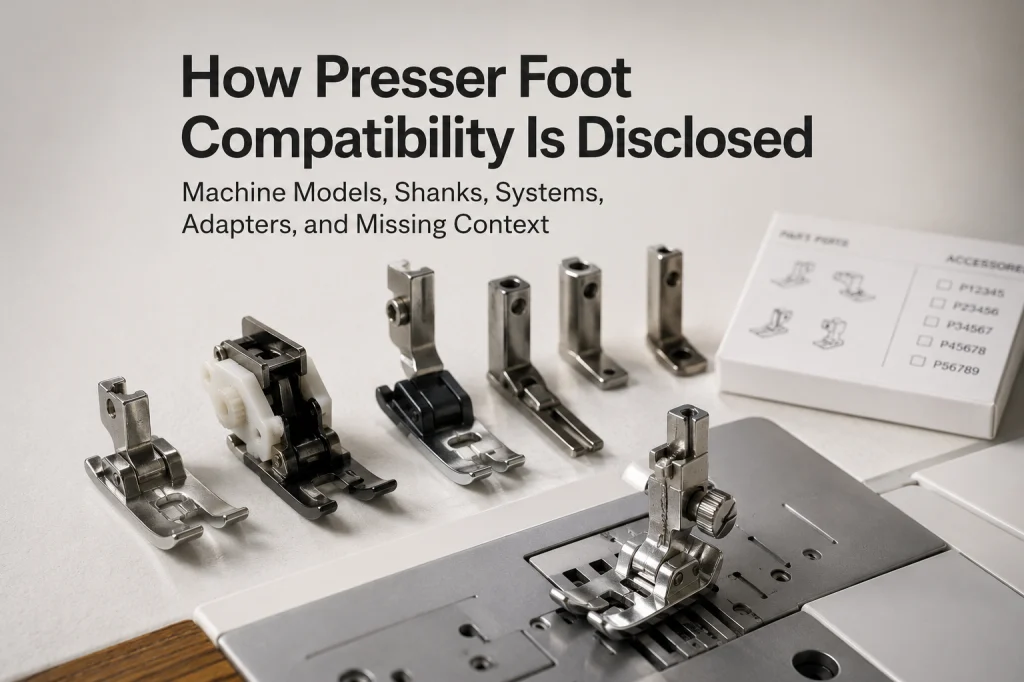
How Presser Foot Compatibility Is Disclosed: Machine Models, Shanks, Systems, Adapters, and Missing Context

How Presser Foot Compatibility Is Disclosed

Presser foot compatibility labels do not all answer the same question. A broad mounting description can identify a useful starting point, while an exact manufacturer part number and model list provide much stronger evidence for a specific machine. This audit compares current official accessory and support pages to show which fields are disclosed, which are

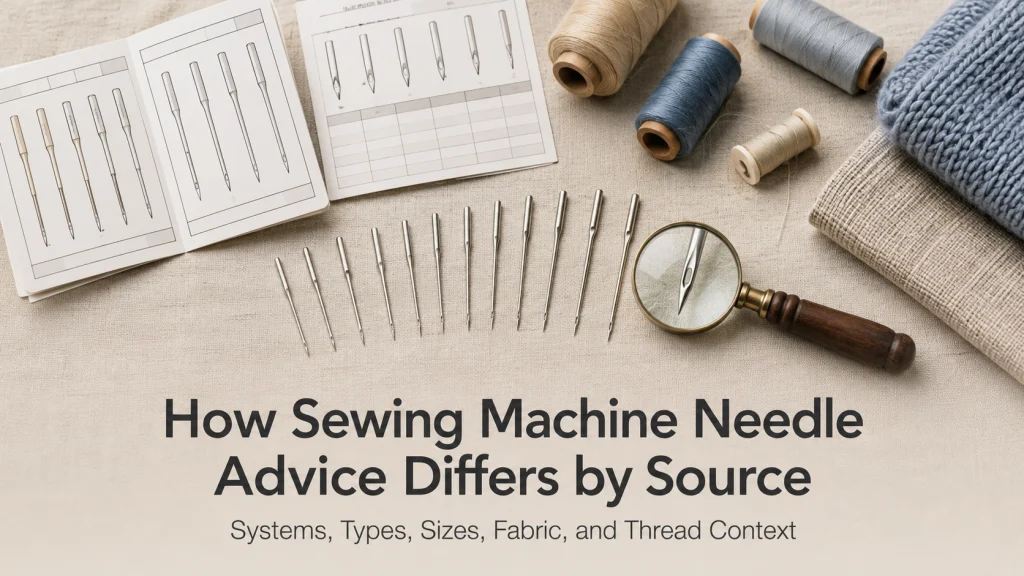
How Sewing Machine Needle Advice Differs by Source: Systems, Types, Sizes, Fabric, and Thread Context

How Sewing Machine Needle Advice Differs By Source

Needle charts often look as if they disagree because they are not always answering the same question. One source may be naming a household needle system, another may be grouping needles by fabric, and a machine manual may narrow the answer to the styles and sizes expected by one model. This source comparison separates system,

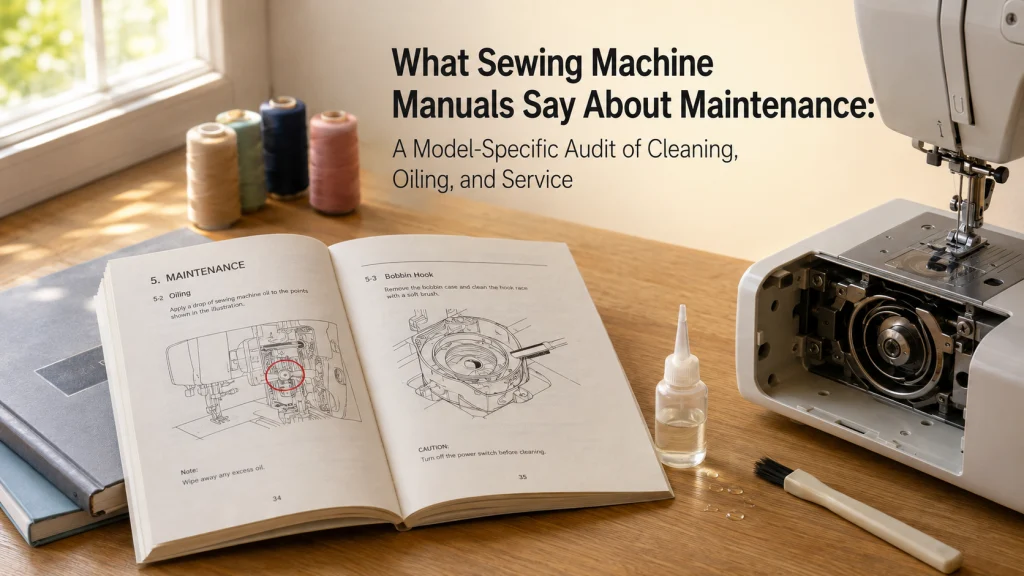
What Sewing Machine Manuals Say About Maintenance: A Model-Specific Audit of Cleaning, Oiling, and Service

What Sewing Machine Manuals Say About Maintenance

The maintenance instruction that matters is the one tied to the exact machine, not a habit carried over from another model. In a fixed audit of five official records from Brother, Janome, and Singer, the permitted owner actions ranged from specific oiling instructions to explicit no-owner-oiling language, while cleaning and service boundaries also differed. The