Serrated fabric scissors make sense when the unresolved cutting problem is fabric slipping away from a smooth edge. The useful feature is grip at the cutting edge, not a decorative zigzag finish and not a promise that every fabric will cut better. Before buying, verify which blade is serrated, how the maker describes the edge, the tool’s length and intended role, and whether your existing smooth fabric shears already handle most of your work. The goal is to add a specialty cutting edge only when that edge solves a specific control problem.
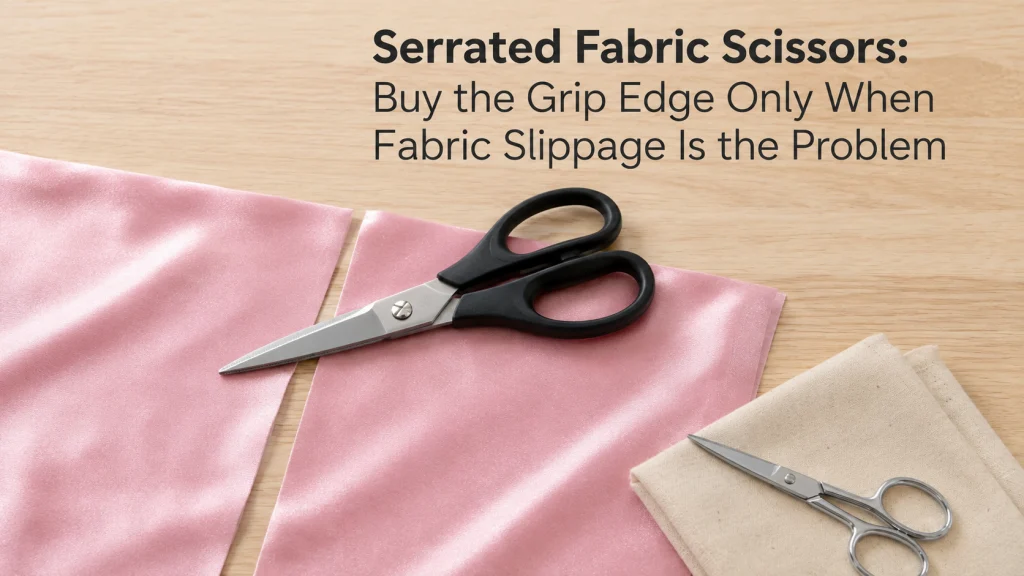
Buy Serration for Grip, Not for a Decorative Edge
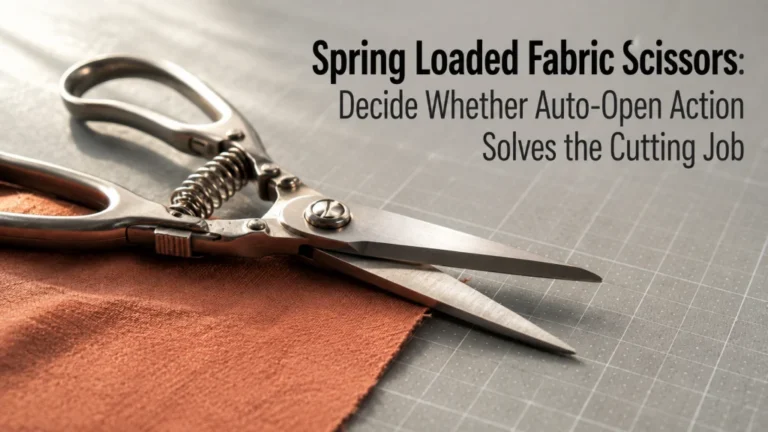
Put a smooth cutting edge and a micro-serrated edge against fabric that wants to slide as the blades close, and the purchasing question becomes easier to define. Serrated fabric scissors are relevant when the tiny teeth are intended to hold shifting material at the cut instead of letting it skate forward. That is different from pinking teeth, which intentionally shape the cut edge into a repeating pattern. The word serrated alone is therefore not enough to tell you what a pair of scissors is designed to do.
Current manufacturer descriptions support that distinction. Micro-serrated sewing scissors are marketed for extra grip on smooth, slippery, stretchy or delicate fabrics, while pinking tools are described around edge finishing rather than holding the fabric during an ordinary cut. This article stays with that grip decision. For the broader tool family, start with fabric cutting tools for sewing, then return here only if edge grip is still the unresolved requirement.
That comparison is a selection framework, not a claim that one edge is universally better. A stable woven cotton that already cuts cleanly with an owned pair of smooth shears presents a different problem from satin or another slick material that visibly moves at the cut. Start with the behavior you need to change, then decide whether a different edge is justified.
Identify the Fabric-Slippage Problem First
The strongest reason to consider micro serrated fabric scissors is not that the fabric is expensive, delicate or difficult in a general sense. It is that the material moves away from the cutting edge in a way your current smooth scissors do not control well. Silk-like surfaces, satin, chiffon, some knits and other shifting fabrics appear repeatedly in current manufacturer descriptions because grip is the feature being sold. That evidence supports a narrow use case, not a blanket rule for every light or stretchy textile.
Look at the cut itself before shopping. If a smooth pair closes cleanly while the fabric stays where you placed it, serration may duplicate a job you already have covered. If the material repeatedly slides ahead of the blade despite the scissors being appropriate and in serviceable condition, a gripping edge becomes a more specific requirement. For a first or general-purpose pair, the broader decision about how to choose general fabric scissors should come before adding a specialty edge.
Key point: Buy the feature for the observed cutting problem. “Slippery fabric” describes the material; “fabric moves away from a smooth cutting edge” describes the tool requirement.
If you are shopping for scissors for slippery fabric, that distinction keeps the comparison useful. It also prevents a common category error: assuming that any unusual tooth pattern must be a better all-purpose fabric edge. The next step is to inspect what the manufacturer actually means by serrated.
Read Whether One or Both Blades Are Serrated
Do not assume every micro-serrated pair has the same blade construction. Current product documentation uses different wording: some scissors are explicitly described as having one micro-serrated blade, while other listings refer to micro-serrated blades without describing the geometry in the same way. That difference matters because the label on the front of a package does not prove which edge carries the teeth. The exact product page, packaging or manufacturer specification should answer that question.
This is also why visual similarity is weak evidence. Fine serrations can be difficult to interpret from a distant product photo, and the word micro does not by itself tell you the tooth pitch, depth or profile. Record what the manufacturer actually discloses and leave undisclosed geometry unknown. A specialty tool is easier to compare when you separate verified edge construction from marketing shorthand.
| Listing detail | What it can establish | What it does not establish |
|---|---|---|
| “One micro-serrated blade” | Which side of the pair carries a serrated cutting edge, if the listing is explicit | That every tool from the brand uses the same construction |
| “Micro-serrated blades” | That the maker describes serration as part of the cutting system | A universal tooth size or cross-brand standard |
| Product photograph only | A visual clue that may help identify the tool | Reliable tooth geometry when the edge is not clearly documented |
When only one blade is serrated, treat that as a construction detail first, not as proof of a particular cutting feel. The serrated side may matter in how a specific tool is designed to engage the fabric, but handedness, blade orientation and use instructions still have to come from that exact product documentation. Do not infer a preferred grip or cutting direction from the presence of teeth alone.
The practical outcome is simple: compare construction only at the level the maker documents. If you cannot tell which blade is serrated or how the edge is intended to work, the specification is incomplete for this particular purchase decision. That is a reason to verify, not a reason to invent the missing detail.
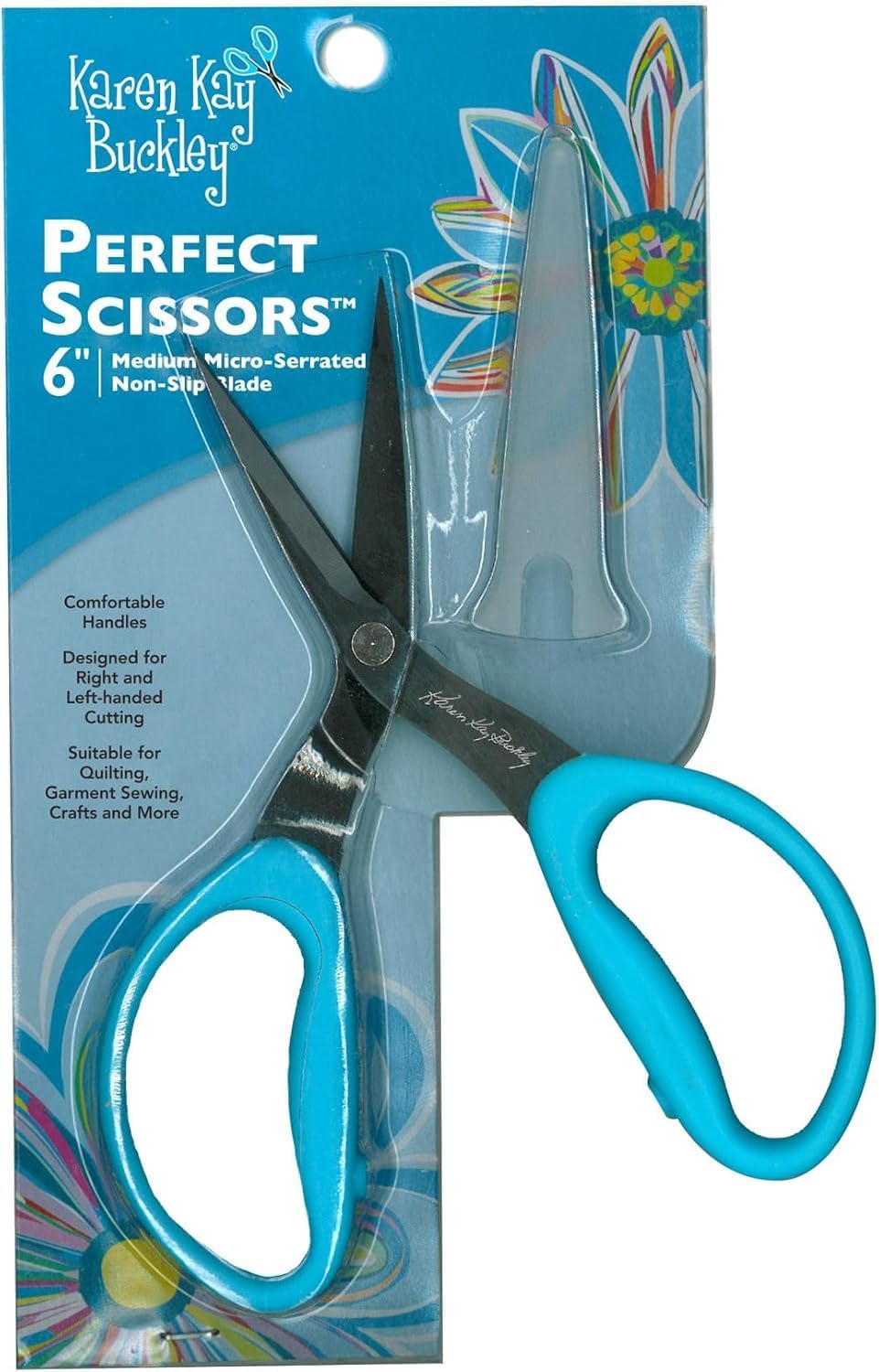
These 6-inch Perfect Scissors use one micro-serrated blade and one regular blade. The micro-serrated edge is designed to help keep fabric from slipping during cutting. A protective cover and soft grip handle are included, making this pair a useful example of why the exact blade arrangement should be checked instead of inferred from the serrated label.
Check On AmazonIf you click this link and buy, we earn a commission at no additional cost to you.
Check Tooth Description and Cutting Length Separately
Two pairs can both be sold as serrated sewing scissors and still be built for different jobs. One may be a compact trimming tool, while another is a longer dressmaking shear intended for extended cuts. The word micro-serrated tells you something about the edge category, but it does not replace the dimensions, blade shape or intended use listed for the exact tool. Compare those fields separately instead of treating the edge label as the entire specification.
Be careful with length language as well. An overall length is not automatically the same as usable blade length, and a larger number does not prove that every extra fraction of an inch is added to the cutting edge. If the maker publishes only overall length, use it as an overall dimension. If cutting length matters for the work you do, look for a blade measurement or a clear manufacturer description rather than estimating it from a photo.
- Confirm whether the listing says serrated, micro-serrated or another specific edge term.
- Confirm which blade carries the serration when the maker discloses it.
- Check overall length and blade length as separate measurements when both are available.
- Match the intended role, such as trimming or longer fabric cuts, to the work you actually need to do.
- Check claims about right-handed or left-handed use only from the exact product documentation.
- If two tools have the same edge role, record disclosed handle material and total weight as secondary comparison specs, not as proof of comfort or cutting performance.
- Read the maker’s storage and service guidance before assuming a serrated edge can be maintained like a smooth blade.
This checklist is deliberately more boring than a “best size” rule, and that is useful. Blade length and tooth construction affect what the tool is, while your project determines whether those details solve anything. Keeping those two questions separate prevents a specialty feature from becoming a substitute for basic fit.

The KAI GSP set includes 4.5-inch, 6-inch, and 8-inch serrated patchwork scissors for different cutting scales. KAI describes the smaller pair for finer detail work, the middle size for detail and longer runs, and the 8-inch pair for longer cuts. The micro-serrated edges are intended to add grip when working with slippery fabrics.
Check On AmazonIf you click this link and buy, we earn a commission at no additional cost to you.
Separate Gripping Teeth From a Zigzag Cutting Edge
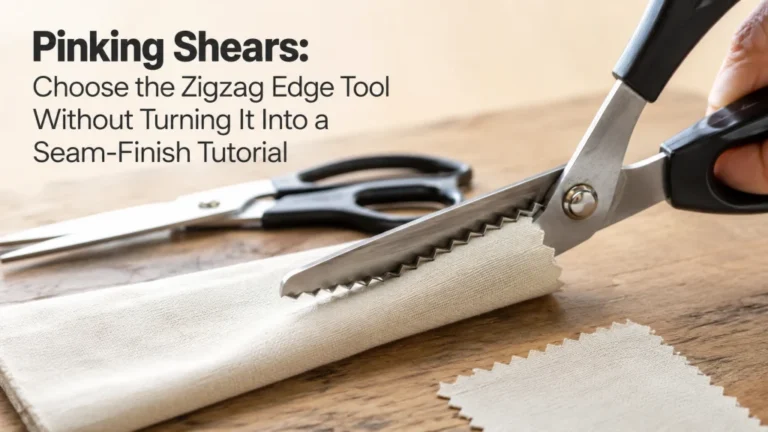
Micro-serration and pinking are easy to confuse because both involve teeth, but the visible result and the intended job are different. A gripping serration works at the blade edge while the scissors make what is still fundamentally a normal cut line. Pinking shears use a notched blade pattern to leave a visibly shaped edge. If the result you want is a zigzag or pinked fabric edge, read how pinking shears differ rather than choosing a micro-serrated pair for the wrong reason.
That boundary also matters when a seller uses loose wording such as “serrated scissors.” Ask what happens to the fabric edge after the cut. If the product is sold to hold slippery material while cutting, that belongs to the grip decision here; if its blade geometry intentionally creates a repeated zigzag edge, it belongs to the pinking-tool decision. The presence of teeth does not make the two tools interchangeable.
There is a third nearby tool that should stay separate too. Duckbill applique scissors for layer separation use their distinctive blade geometry for close trimming and protecting or separating layers, not for solving the same edge-grip problem. Sorting tools by the job of the blade is more reliable than sorting them by how unusual they look.
Let Smooth Fabric Shears Keep the Work They Already Do Well
A micro-serrated pair does not automatically replace a smooth pair. If most of your cutting is stable woven fabric and your existing shears keep the material controlled, a second edge may add specialization without adding much everyday value. The purchase becomes stronger when you can name a recurring material or task where slippage remains the limiting problem. That is a narrower and more defensible reason than buying serration because it sounds more technical.
Think in terms of tool coverage. Smooth shears can remain the main pair for work where they provide the cut behavior you want, while a serrated edge can be reserved for material that benefits from extra hold. If you are deciding whether scissors are even the right primary cutting format, compare fabric scissors and rotary cutters before treating serration as the only variable. A different cutting system solves a different decision.
| What happens with the current tool? | What that suggests |
|---|---|
| Fabric stays controlled and the cut is satisfactory | No clear grip problem has been established |
| Slick or shifting fabric repeatedly moves at the closing edge | A documented gripping edge may address the missing tool function |
| The goal is a shaped zigzag edge | Evaluate pinking shears instead |
| The task is close trimming beside another layer | Evaluate the blade geometry used for layer separation instead |
The table is not a ranking of cutting tools. It is a way to keep one symptom, one edge function and one purchase decision connected. Specialty scissors earn their place when that connection is clear.

These 7.5-inch Perfect Scissors use a micro-serrated cutting edge designed to help keep fabric from slipping away during cutting. The larger format is intended for fabric cutting rather than only small trimming work. They make sense as a specialty option when an existing smooth pair works for most projects but does not provide enough grip on shifting material.
Check On AmazonIf you click this link and buy, we earn a commission at no additional cost to you.
Keep Edge Selection Separate From Slippery-Fabric Technique
A gripping edge can change how the scissors engage shifting material, but it does not replace the rest of the cutting setup. Fabric support, layout, pattern control, grain direction and how the material is handled can also affect whether a slippery textile moves during cutting. Those are technique questions rather than proof that a specialty pair is required. This article stops at choosing the edge type because expanding into a full slippery-fabric workflow would answer a different question.
The separation is useful when evaluating a disappointing cut. If the problem begins with a worn, damaged or inappropriate tool, buying a different tooth pattern without identifying that starting condition may not answer the real issue. If the scissors are functioning normally and the specific remaining problem is loss of grip at the edge, serration becomes a cleaner decision. That is the point where the broader sewing tools and workspace equipment decision narrows to this specialty feature.
Warning: Fabric scissors are sharp cutting tools. Follow the exact manufacturer’s instructions for storage, blade guards, servicing and any replaceable components. Do not handle exposed cutting edges or use a maintenance method that the maker does not authorize for that tool.
Maintenance is especially worth checking before purchase because serrated edges are not all serviced the same way. Some current suppliers caution that micro-serrated edges are difficult to sharpen at home, while other specific tools are sold with a sharpening or reconditioning route. The safe conclusion is not “serrated scissors cannot be sharpened” or “all serrated scissors can be sharpened.” It is to verify the service path for the exact pair before treating sharpening as part of the ownership plan.
Final Thoughts: Buy Serration for a Defined Grip Problem
The strongest case for a micro-serrated pair is simple: a functioning smooth edge does not adequately hold the material you regularly cut, and the exact scissors you are considering are documented for that grip role. Verify the blade arrangement, dimensions, intended use and service guidance instead of assuming that every tool labeled serrated has the same geometry. Keep pinking, close-trimming blade shapes and general cutting-tool choices in their own lanes.
If your existing smooth fabric shears already control the material, there is no requirement to replace them merely because another edge exists. A specialty pair is most useful when it fills a specific gap in the toolkit. Buy the edge for the job its documentation supports, not for novelty.
FAQs
✂️ Are micro-serrated scissors the same as pinking shears?
No. Micro-serrated scissors are sold to increase grip at the cutting edge, while pinking shears intentionally leave a patterned zigzag edge. Check the exact blade description because the word serrated can be used loosely.
🧵 Do serrated fabric scissors stop fabric from fraying?
Do not choose them on that assumption. Their defining purchase role here is grip during cutting, not creating the pinked edge used for an edge-finishing purpose. Fraying behavior depends on the fabric and the edge treatment used in the project.
🪡 Are micro-serrated scissors useful for knits?
Some manufacturers explicitly include knits and stretch fabrics among the materials their micro-serrated edges are intended to grip. That does not mean every knit requires serration. Use the feature when shifting at the cutting edge is the unresolved problem.
🔍 Is one blade or both blades supposed to be serrated?
There is no safe assumption across products. Current documentation includes tools that explicitly identify one micro-serrated blade, while other listings use broader wording. Verify the exact pair rather than transferring one construction to another.
📏 What size serrated sewing scissors should I buy?
Match the documented dimensions and intended role to the cuts you need to make. A compact trimming tool and a longer dressmaking shear can both use micro-serration but serve different tasks. Do not treat overall length as blade length unless the maker specifies both.
🛠️ Can micro-serrated scissors be sharpened?
It depends on the exact tool and the service route its maker or specialist supplier supports. Do not run a serrated edge through a generic sharpening method by assumption. Check the manufacturer or an appropriate specialist before servicing the edge.
The repeated theme is verification rather than a universal edge rule. Serration is useful when its documented grip function matches the material behavior you actually need to control.
References and Sources
These sources are included because the article depends on current manufacturer and specialist-tool descriptions of grip serration, blade construction, pinking function and service boundaries.
- Prym micro-serrated sewing scissors: documents a micro-serrated edge for extra grip on smooth or slippery fabric and provides a concrete example of a compact sewing-scissors role.
- KAI micro-serrated scissors documentation: explicitly describes a tool with one micro-serrated blade used to add grip on slippery fabrics.
- Famore serrated scissors collection: documents the broader grip purpose of micro-serrated edges and notes that maintenance and sharpening should not be assumed to match smooth blades.
- Fiskars scissors selection guide: distinguishes pinking shears as an edge-finishing tool, supporting the boundary between grip serration and a deliberately shaped fabric edge.
Together, these references support the selection boundary used here without turning one manufacturer’s construction into a rule for every pair of scissors.