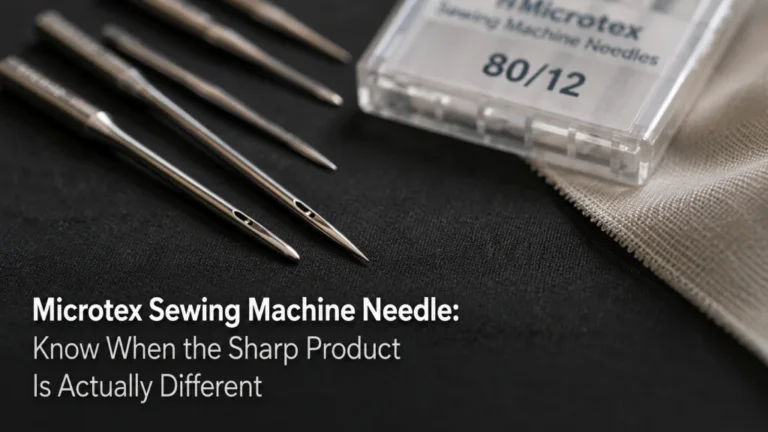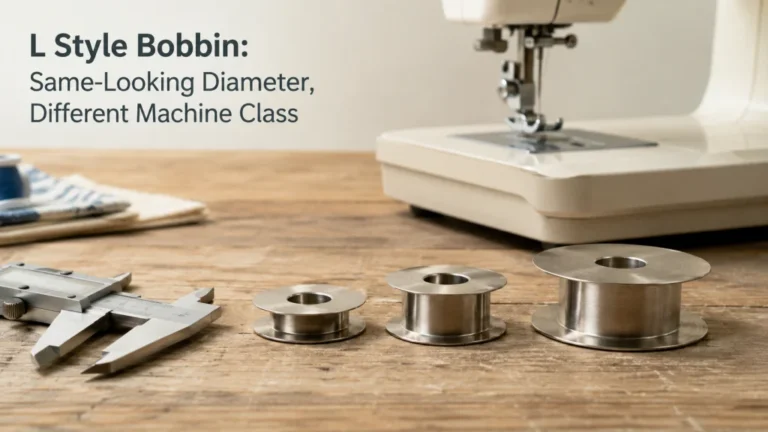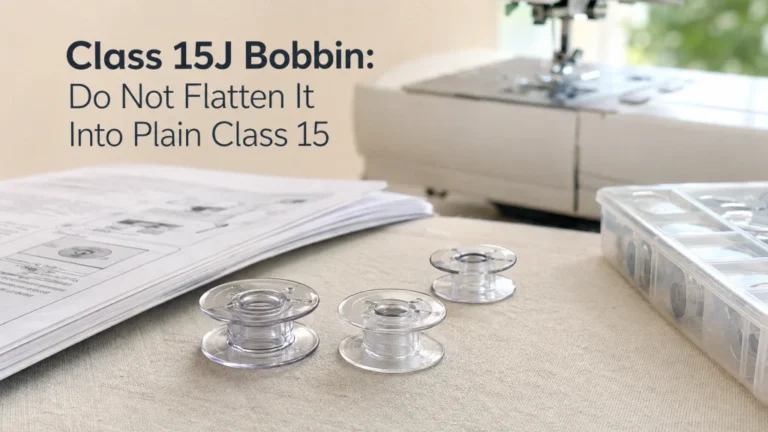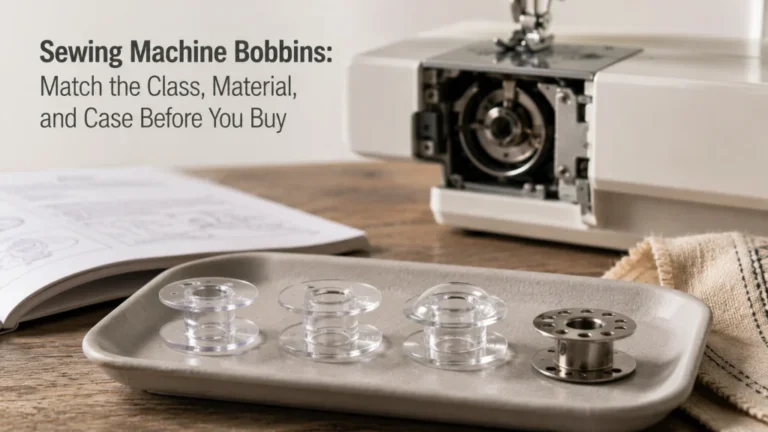
A sewing machine bobbin case replacement should be matched to the exact machine, manufacturer part number, and documented compatibility list, not to a product photo alone. The bobbin case or holder is a separate component from the bobbin itself, even when both are described with the same broad class language. This article starts after the need for replacement is already established, so it focuses on proving fit rather than diagnosing a fault, adjusting tension, or installing the part. The goal is to leave you with a short record that makes the purchase decision traceable before any replacement part goes into the machine.
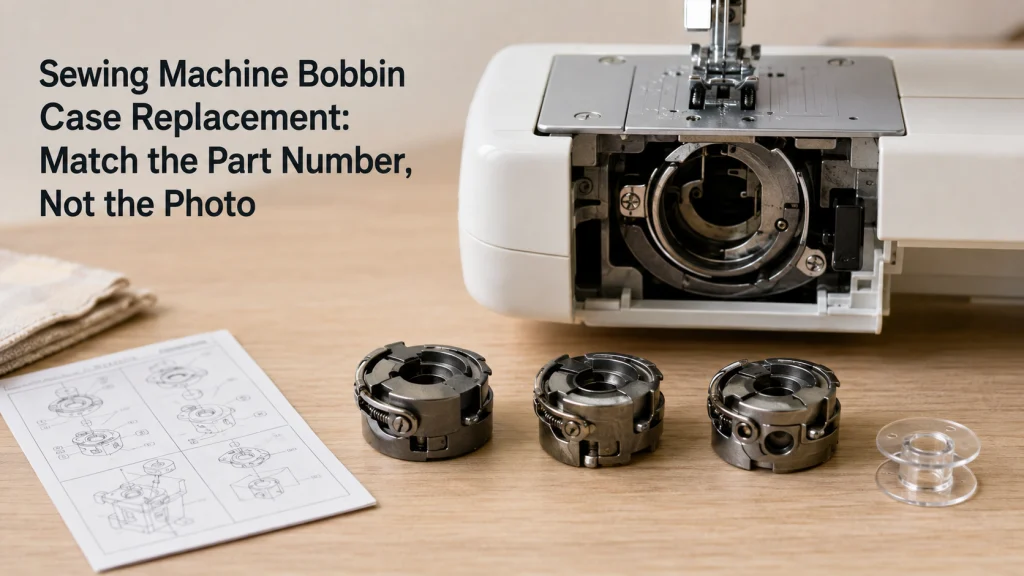
The Photo Is Not the Part Number
A sewing machine bobbin case replacement can look almost identical to the original and still be the wrong part. Front-loading cases often share a familiar metal shape, while drop-in systems may use black or gray holders that look interchangeable across several machines. Those visual similarities are useful for recognizing the general component, but they do not prove the dimensions, locating features, tension geometry, or machine fit. The first buying rule is therefore simple: treat the photo as identification help, not as compatibility evidence.
Manufacturer documentation shows why that distinction matters. Singer describes its Class 15 replacement case for Singer machines with Class 15 front-loading systems, while Janome assigns exact part numbers and model lists to its bobbin-case units. A marketplace image can imitate either shape without establishing the same fit. Before comparing listings, move the decision away from appearance and toward the identifiers that can be checked against the exact machine.
Confirm That This Is a Known Replacement, Not an Unresolved Diagnosis
This article assumes the replacement need is already known: the original case is missing, the correct case has been identified as damaged, or the manufacturer documentation calls for replacement. A stitch problem by itself does not meet that threshold because thread, needle, bobbin, threading, seating, debris, or setup can create symptoms that look like a case problem. Buying a part before the faulty component is established can replace a good case while leaving the real cause untouched. Keep the purchase decision separate from the upstream question of whether the case is actually bad.
If the problem is still symptom-led, stop the shopping process and resolve the cause first. The replacement path should begin only when the component itself is the known target, which prevents a compatibility article from turning into improvised repair advice. Once that gate is cleared, the question changes from “Is the bobbin case bad?” to “Which exact case belongs in this exact machine?” That narrower question is much easier to verify with model and part information.
Record the Exact Machine Make and Model
Start the replacement record with the brand and complete model designation exactly as it appears on the machine label or official manual. Family names are not enough when several machines share a cosmetic design or a similar lower-thread arrangement. Small suffixes, letters, or model-series differences can matter because manufacturers can assign different parts within a broader family. Copy the identifier rather than relying on memory or a seller title that shortens the model name.
- Machine brand and full model designation
- Manual or manufacturer support page used for verification
- Original bobbin case or holder terminology
- Original or superseding manufacturer part number, when documented
- Compatibility-list result for the exact model
This record also keeps neighboring compatibility questions from being mixed together. If the bobbin itself is unidentified, use the separate explanation of whether sewing machine bobbins are universal before treating the case as confirmed. A known bobbin class can support the case check, but it cannot replace the machine model. The machine identifier remains the anchor for every later step.
Identify the Lower-System Arrangement Without Reteaching the Mechanism
Use the terminology the manufacturer uses for the lower-thread component before searching for a replacement. A front-loading machine may use a removable bobbin case, while a top-loading or drop-in design may use terms such as bobbin holder, bobbin case unit, or another model-specific name. These labels describe different arrangements even when sellers use “bobbin case” as a catch-all phrase. Matching the manufacturer term reduces the chance of comparing parts that do not belong to the same lower system.
The distinction matters because a listing can correctly mention a familiar bobbin class while selling a case that does not fit the machine. If you need the broader relationship between the bobbin, case, and lower system, the sewing machine bobbin compatibility overview provides that context without changing this article’s purchase boundary. Here, the only task is to name the replacement component the same way the manufacturer does. That gives you the right vocabulary for the part-number search that follows.
Find the Original or Superseding Manufacturer Part Number
A manufacturer part number is stronger evidence than a generic title such as “Class 15 bobbin case” or “drop-in bobbin holder.” Look for the number in the official accessory page, parts documentation, service-support material available to owners, or a manufacturer-backed compatibility guide. If the original number has been superseded, the replacement should be supported by a manufacturer or authorized parts record that connects the old identifier to the new one. Do not assume two numbers are interchangeable because the parts look alike.
| Replacement ledger field | What to record | Why it matters |
|---|---|---|
| Exact machine | Brand and full model designation | Prevents family-name matching from replacing model proof |
| Component name | Manufacturer term for the case or holder | Keeps different lower-system parts separate |
| Part number | Original or documented superseding number | Provides a traceable identifier beyond appearance |
| Compatibility evidence | Official model list or manufacturer lookup result | Connects the replacement to the exact machine |
Janome provides a useful bounded example: its Bobbin Case Unit carries part number 647515006 and is paired with a stated model list on the manufacturer page. A different Janome bobbin case for Quilt Maker machines uses part number QM10585, even though both components can be described generically as bobbin cases. The lesson is not to buy either specific part, but to see how the manufacturer separates parts by identifier and supported machines. Your replacement ledger should preserve that same level of specificity for the machine in front of you.
Verify the Compatible-Model List
After finding a plausible part number, check whether the exact machine model appears in the manufacturer’s compatibility information. A part number without a model match may identify a real component while still failing to prove that it belongs in your machine. Conversely, a model list can reveal that a case sold under a broad family description is limited to only part of that family. Treat the model match as a separate check, not as something implied by the listing title.
Read exclusions as carefully as inclusions, especially when a manufacturer groups accessories by machine series or lower-system type. If the exact model is absent, do not fill the gap with visual similarity, a seller’s “fits most” wording, or an assumption based on year or appearance. Use the manufacturer’s support channel or an authorized parts source if the documentation is incomplete. The buying decision is ready only when the part identifier and the exact model point to the same replacement.
Use Bobbin Class Only as a Secondary Check
Bobbin class can narrow the search, but it should not carry the whole compatibility decision. Singer’s Class 15 case is explicitly described for Singer machines with Class 15 front-loading systems, which ties the class to a defined machine arrangement rather than claiming every Class 15 case fits every machine. That distinction is important because the bobbin and the case are separate parts with separate fit requirements. A shared bobbin class does not automatically make every surrounding case interchangeable.
Use class language as a consistency check after the exact model and part number are known. If the machine documentation specifies a certain bobbin type and the candidate case belongs to a different system, that mismatch is a reason to stop. If the class matches but the exact model is not supported, the class still does not close the gap. The hierarchy should remain model first, manufacturer part evidence second, and broad class language only as supporting context.
Reject a Case That Merely Looks Similar
Photos are weakest when two parts share the same overall silhouette. A locating finger, latch, opening, spring, tension component, or molded feature can differ in a way that is difficult to judge from a marketplace image. Even a dimension shown in a listing may not establish the internal geometry needed for correct seating and thread control. Visual comparison is therefore useful for spotting an obvious mismatch, but not for proving a match.
Do not modify a candidate part to make it resemble the original more closely. Grinding, bending, filing, forcing, or shifting components changes the part instead of proving compatibility and can create a new mechanical problem. If the documented replacement does not seat or correspond to the manufacturer’s description, stop rather than treating resistance as an installation challenge. The correct purchase should arrive as the correct part, not as a near-match that needs physical persuasion.
Keep Tension-Screw Adjustment Out of the Purchase Decision
Some manufacturer pages mention bobbin-case tension adjustment for specialized thread use, but that does not turn the tension screw into a compatibility tool. A case that needs an improvised tension change before its fit is established is still an unverified replacement. The purchase decision should answer whether the component is the correct part for the machine, not whether a screw can be moved until sewing appears acceptable. That boundary protects both the compatibility check and the later setup process.
Leave any model-appropriate adjustment to the instructions that apply after the correct case has been identified and installed through the proper setup path. This article does not provide tension values, screw directions, or trial-and-error corrections because those details depend on the exact machine, case, thread, and intended use. A replacement part should not be “made compatible” through tension changes. Compatibility comes from documented fit; adjustment, where permitted, is a separate operating decision.
Keep Installation Separate From Compatibility
Buying the correct case and installing it correctly are two different tasks. The replacement search ends when the exact machine, part number, system description, and compatibility evidence agree. Seating direction, latch handling, orientation, cleaning before installation, and any model-specific checks belong to the machine’s operating instructions rather than to the shopping decision. Mixing those steps into the purchase process makes it harder to tell whether a problem comes from the part choice or from setup.
For the same reason, do not use “it seems to fit” after installation as retroactive proof that the purchase was correct. A component can enter the lower area and still be wrong for the machine’s geometry or intended system. Verify the part before installation, then follow the exact model documentation for the physical replacement step. Other sewing machine accessory compatibility decisions follow the same principle: prove the interface first, then move to setup.
Send Damage Questions and Stitch Symptoms Back to Diagnosis
If you are still asking whether the bobbin case is damaged, the purchase decision is not ready. Scratches, thread nests, skipped stitches, broken thread, unusual noise, poor tension, or a bobbin that behaves badly can involve more than the case itself. Those symptoms need a fault-finding path that checks the relevant machine, bobbin, threading, needle, debris, seating, and service boundary before a component is condemned. This page deliberately starts after that work has already identified replacement as the next action.
That separation also prevents a compatibility article from encouraging unnecessary parts purchases. If diagnosis points somewhere else, keep the existing case and address the established cause instead of buying a lookalike replacement. If diagnosis confirms the case as the known part to replace, return to the ledger and prove the exact replacement with model, part number, and manufacturer compatibility evidence. The decision stays clean because diagnosis chooses the component, while compatibility chooses the part.
Final Thoughts: Replacement Begins With the Exact Part, Not a Generic Class
A replacement bobbin case should be boring in the best possible way: the machine model is exact, the component name is clear, the part number is traceable, and the compatibility list supports the match. Broad class labels and photos can help you search, but they should never outrank the manufacturer’s model-specific evidence. If any one of those checks conflicts with the others, stop before ordering or forcing the part into the machine. A short replacement ledger is more useful than a long listing description because it shows exactly why the candidate fits.
Keep the boundaries just as clear after the purchase decision. Diagnosis belongs before the replacement is selected, while installation and any permitted adjustment belong after the correct part is established. If the bobbin itself is still unidentified, resolve that separate fit question before assuming the case is known. The safest next move is the one supported by the exact machine and exact part, not by the closest-looking photo.
FAQs
🧵 Are all Class 15 bobbin cases interchangeable?
No. A Class 15 label can describe part of the bobbin or lower-system context, but it does not prove that every case fits every Class 15 machine. Verify the exact machine model and manufacturer part compatibility.
🔎 Can I match a replacement bobbin case by photo?
Use photos only to reject obvious mismatches or recognize the general component. A matching photo does not prove locating geometry, tension geometry, dimensions, or model compatibility.
🏷️ Where should I find the bobbin case part number?
Start with the manufacturer’s accessory page, parts information, compatibility guide, or model support documentation. If an older number has been superseded, look for a manufacturer or authorized parts record that explicitly connects the two numbers.
⚙️ Is the bobbin case the same part as the bobbin?
No. The bobbin carries the lower thread, while the case or holder is a separate component in the lower-thread system. Each can have its own compatibility requirements.
🪛 Should I adjust the bobbin tension screw to make a replacement fit?
No. Tension adjustment does not prove mechanical compatibility and should not be used to turn an unverified case into a replacement. First establish the correct part, then follow the exact machine instructions for any permitted setup or adjustment.
🧰 What if the replacement case does not seat as documented?
Stop rather than grinding, bending, filing, or forcing the part. Recheck the exact model, part number, compatibility list, and manufacturer terminology before proceeding.
References and Sources
- Singer Class 15 Bobbin Case: Confirms the manufacturer-scoped Class 15 front-loading system description used to explain why class language must remain bounded.
- Janome Bobbin Case Unit: Provides part number 647515006 and a specific compatible-model list, supporting the model-and-part-number verification method.
- Janome Bobbin Case QM: Shows a separate bobbin-case part number and machine group, illustrating why generic component names do not establish interchangeability.