Silk sewing thread should be chosen by verified fiber content, intended use, and size rather than by the word “silk” on the front of a spool. A true silk thread can still be made for hand sewing, decorative work, or another application that does not match ordinary domestic machine construction. The useful buying sequence is simple: confirm the fiber, confirm that the manufacturer labels the thread for machine sewing, then read the size, twist, and stated use before comparing price or color. That sequence keeps silk-finish cotton, hand silk, and other look-alike products from being mistaken for machine silk.
Silk in the Product Name Is Not Enough
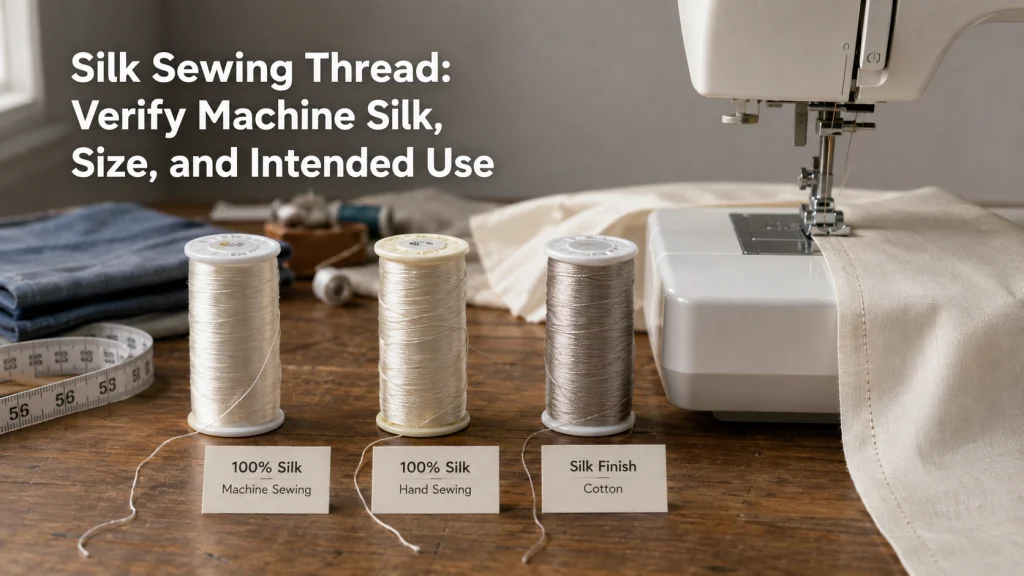
Silk sewing thread can be easy to misidentify because search results place several different product types next to one another. One spool may contain actual silk and be labeled for machine sewing, another may contain actual silk but be intended for hand sewing, and a third may use “silk finish” while the fiber itself is cotton. Those distinctions matter before color, sheen, or brand preference enters the decision. The first job is therefore not to find the prettiest spool, but to identify what the thread actually is.
Current manufacturer documentation makes the distinction concrete. Fujix lists TIRE silk machine sewing thread as 100% silk, Z twist, with machine-sewing uses, while its TIRE hand sewing thread is also 100% silk but is labeled for hand sewing and uses an S twist. Mettler’s Silk-Finish Cotton line provides the opposite naming lesson because the “silk-finish” name sits on thread identified by the manufacturer as 100% mercerized cotton. These are not recommendations for those specific products; they are evidence that the product name alone cannot establish fiber or machine use.
Key point: Treat “silk,” “silky,” and “silk finish” as prompts to read the specification, not as proof of fiber content or intended use. Start with the composition line because that identifies the declared fiber. Then check the intended application because true silk can still be made for hand work rather than machine sewing. Only after those two checks should finish, color, and price influence the comparison.
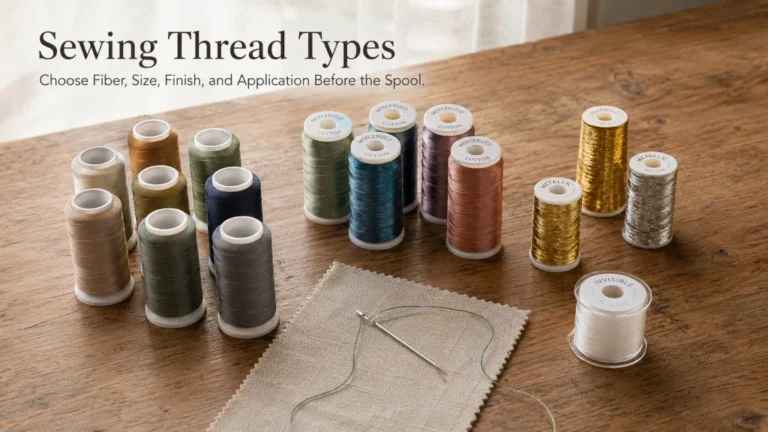
That identity check also keeps this article in the right lane. It is about choosing actual silk thread intended for a domestic sewing machine, not about how to sew silk fabric, optimize an embroidery system, or select a universal needle setup. For a broader look at thread families, start with how sewing thread types differ, then return here when the fiber you are considering is silk. The rest of the decision becomes much clearer once the spool has passed that first identity gate.
Verify Fiber Content Before Comparing Finish
The fiber declaration is the strongest first filter because surface appearance can be misleading. A glossy thread may be silk, cotton, polyester, rayon, or another material that has been processed to create a smooth or reflective surface. Words such as “silk-like” describe appearance or feel, while a material statement such as “100% silk” identifies the fiber itself. When the goal is true silk thread for a sewing machine, the fiber field should settle that question before any claim about softness, luster, or premium finish is considered.
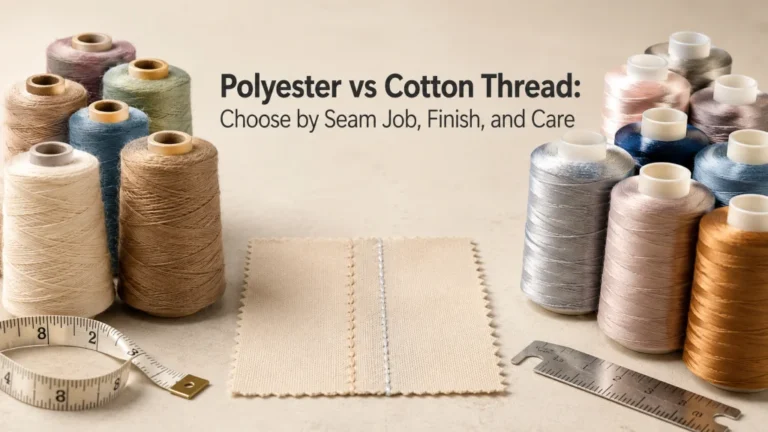
This matters especially when the packaging puts a finish term in larger type than the composition. A silk-finish cotton thread can be a legitimate sewing thread and may even be machine-suitable, but it is still cotton rather than silk. That makes it a different purchase decision, with different material properties and a different place in a comparison of polyester and cotton sewing thread. The error is not buying cotton; the error is paying for or choosing it while believing the fiber is silk.
| Label evidence | What it proves | What it does not prove |
|---|---|---|
| “100% silk” in the composition | The declared fiber is silk | That it is intended for machine sewing |
| “Silk finish” or “silk-like” | A finish, appearance, or feel claim | That any silk fiber is present |
| “Machine sewing” in the stated use | The manufacturer intends that thread for machine use | That every size suits every fabric or machine setup |
Use the same reading order on marketplace listings, specialty-thread sites, and physical packaging. Look for a composition field, material line, technical chart, or manufacturer page that states the fiber plainly, then check whether the seller’s title matches that evidence. If the listing says “silk” but never states the fiber, do not fill in the missing information from a photograph or marketing language. A fiber claim is useful only when it is actually declared.
That rule also prevents one common shortcut: assuming that a natural sheen means natural silk. Processing can change the appearance of cotton, and synthetic threads can also be made smooth and reflective. The safer approach is boring but effective: read the composition first and let the finish description come second. Once the fiber is verified, the next question is whether that particular silk thread was built for the machine work you intend to do.
Verify That the Silk Thread Is Intended for Machine Sewing
True silk fiber does not automatically make a spool a silk thread for sewing machine use. Manufacturers can sell different silk constructions for machine stitching, hand sewing, buttonholes, decorative work, or specialized applications, and those products may sit in the same family or use similar branding. The deciding evidence is the stated application, not the shared fiber. If the product page or label says hand sewing while another product in the same line says machine sewing, treat that difference as intentional.
Fujix provides a clear example because its machine silk and hand silk are both identified as 100% silk, yet the documented twist and uses differ. The machine thread is listed as Z twist, while the hand-sewing line is listed as S twist and is assigned to hand-sewing uses. Threads Magazine likewise explains that twist direction and thread construction can matter when silk is used in a sewing machine. The practical takeaway is not that every spool must follow one universal label format, but that a machine-use statement and construction details are meaningful evidence when the manufacturer supplies them.
- Confirm that the product is labeled for machine sewing, not only “sewing.”
- Check whether the stated use is construction, machine embroidery, decorative stitching, hand sewing, buttonholes, or another specific task.
- Read the twist or construction information when it is published instead of assuming all silk thread is built the same way.
- Follow the exact machine manual when it places limits on thread size, needle pairing, threading, or specialty-thread use.
A broad label such as “sewing silk” needs more context because “sewing” can include both hand and machine work. A retailer category can also be too broad to serve as technical proof, especially when multiple thread types are grouped under one search heading. Manufacturer application data carries more weight because it identifies what that exact thread was designed to do. This is the point where a silk machine thread becomes a plausible candidate rather than merely a spool containing silk.
Do not turn that evidence into a guarantee of perfect stitching on every domestic machine or fabric. Machine path, needle, tension system, stitch formation, fabric structure, and thread size still affect the result, and this article does not prescribe a universal setup. The purchase decision here is narrower: verify that the silk itself is sold for machine work before spending money on it. Setup belongs after the thread has passed that intended-use check.
Read Thread Size, Twist, and Intended Application Together
Once fiber and machine use are confirmed, size becomes the next meaningful filter. Silk thread can be sold in several numbering systems, and the number alone is not useful unless you know which system the manufacturer is using. Fujix, for example, lists different TIRE machine-silk sizes for different uses, including a finer option assigned to machine embroidery and another assigned to clothing. That is a better buying clue than simply assuming a smaller or larger printed number means “better for silk.”
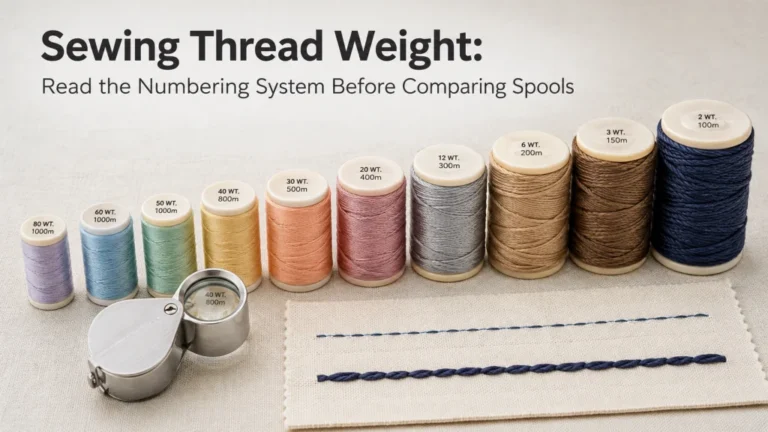
This is where how sewing thread weight labels work becomes useful. Thread numbering is not a single universal scale, so two numbers from different systems cannot be compared as if they were inches or millimeters. The manufacturer’s own chart should connect its size designation to intended use, construction, needle guidance, or linear density when those details are published. A shopper choosing silk machine thread should therefore read the size and application as a pair.
When a manufacturer publishes several size systems together, read the headings before comparing the values. A commercial size label, metric count, denier value, or another numbering convention can describe the same thread from a different measurement system, so the printed number is only meaningful inside its own scale. The useful evidence is the combination of the manufacturer’s size designation and the application assigned to that exact thread. That keeps a buyer from treating two unrelated numbering systems as though a larger number always means a thicker thread.
Finish still matters, but it comes after identity and function. Natural silk has its own luster, while other fibers can be processed to produce a smooth, glossy, or silk-like surface. A finish description can help predict appearance, but it cannot override a composition field or application label. If the silk fiber itself matters to the project, a cotton or polyester thread with a similar sheen is still a different material.
Needle guidance should be treated the same way: use the thread maker’s published range as product evidence, then verify it against the exact sewing machine manual and the fabric being sewn. Do not copy a needle number from one silk product and apply it to every other silk thread. If a machine manual restricts a specialty thread, needle combination, or threading path, that machine-specific instruction takes priority. The result is a selection process based on matching evidence rather than on a single attractive specification.
Separate Machine Silk from Hand Silk and Silk-Finish Products
The easiest way to avoid a wrong purchase is to split similar-looking products into separate buckets before comparing them. The first bucket is true silk explicitly intended for machine sewing. The second is true silk intended for hand sewing or another non-machine task, while the third is thread made from another fiber but marketed with a silk-like or silk-finish description. All three can be legitimate products; they simply answer different questions.
This separation is more useful than ranking every spool that appears in a mixed set of search results. A hand-silk product can contain exactly the fiber you want and still fail the machine-use gate. A silk-finish cotton thread can be machine-suitable and still fail the true-silk gate. The correct candidate has to satisfy both conditions at once: verified silk fiber and verified intended machine use, followed by a size that fits the intended sewing job.
This method also helps when a marketplace listing is incomplete. If the seller title says silk but the manufacturer page describes cotton, polyester, or another fiber, the manufacturer’s composition is the evidence that controls the identity decision. If a listing shows a spool but does not state whether it is for hand or machine work, do not infer the use from spool shape or packaging color. Missing evidence is a reason to keep looking, not a reason to invent the answer.
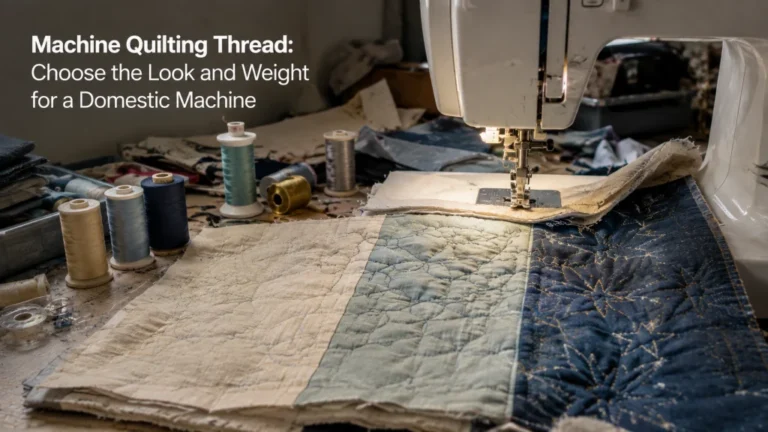
After the correct silk thread has been identified, the next question may shift depending on the project. For ordinary construction, the broader machine sewing supplies overview helps place thread beside needles and other consumables, while choosing thread for machine quilting addresses a different task where thread construction and visual effect can change the decision. If the concern is an older spool rather than a new purchase, use how to assess aging sewing thread instead of assuming silk has a universal shelf-life rule. Keeping those questions separate prevents a thread-identity article from turning into a general sewing-technique page.
Final Thoughts: Verify Fiber and Use Before Paying for Silk
The most reliable way to buy silk machine thread is to make the label prove three things in order. First, the composition should confirm actual silk fiber. Second, the manufacturer should identify the thread for machine sewing or the specific machine application you need. Third, the published size, twist, and use guidance should make sense for that job rather than being borrowed from a different thread in the same brand family.
That sequence keeps similar names from collapsing into one category. Hand silk remains hand silk even when the fiber is genuine, and silk-finish cotton remains cotton even when it has a smooth sheen and works in a machine. If the evidence for fiber or intended use is missing, there is no need to guess or pay a premium on the strength of the word “silk.” Verify identity first, then compare the qualified options on size, color, availability, and the requirements of the exact machine and project. That is enough evidence to narrow the purchase without pretending every true silk machine thread will behave identically.
FAQs
🧵 How do I know if sewing thread is really silk?
Check the material or composition field for an explicit fiber statement such as 100% silk. Do not treat words such as “silky” or “silk finish” as proof that silk fiber is present.
🪡 Can any 100% silk thread go in a sewing machine?
No. True silk thread may be manufactured for hand sewing, machine sewing, embroidery, buttonholes, or another use. Confirm the intended application on the exact product label or manufacturer page before putting it in a domestic machine.
⚙️ What does Z twist mean on silk machine thread?
Z twist describes the direction of the thread’s final twist. Some manufacturers specifically document Z twist on their machine-silk products, so treat it as a construction detail tied to that exact thread rather than a label to assume across every silk product.
🔎 Is silk-finish thread made from silk?
Not necessarily. “Silk finish” can describe surface appearance or processing while the underlying fiber is cotton or another material. Read the composition line to identify the actual fiber.
📏 Which silk thread size should I buy for machine sewing?
Use the manufacturer’s size chart and intended application for the exact thread, then check the sewing machine manual and fabric requirements. Thread numbering systems vary, so a size number should not be compared in isolation across unrelated systems.
References and Sources
- Fujix TIRE machine silk specifications: Confirms 100% silk, Z twist, machine-sewing use, published sizes, and application guidance for the machine-silk line.
- Fujix TIRE hand silk specifications: Confirms that a separate 100% silk product is labeled for hand sewing and uses an S twist.
- Mettler Silk-Finish Cotton specifications: Demonstrates that a product using “silk-finish” naming can be composed of 100% cotton rather than silk fiber.
- Threads silk thread explanation: Provides technical context on spun and filament silk, twist direction, and matching silk thread construction to machine-sewing use.